Provide medical care to Haiti

 
$242,045
$57,954
Raised
Remaining
Sep 23, 2010

Letter from Dr. Jojo Cangao, Medical Director in Haiti

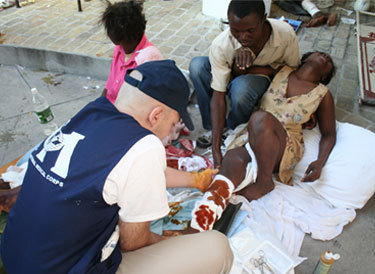
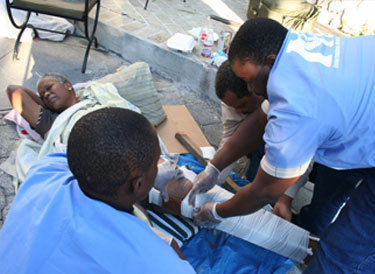
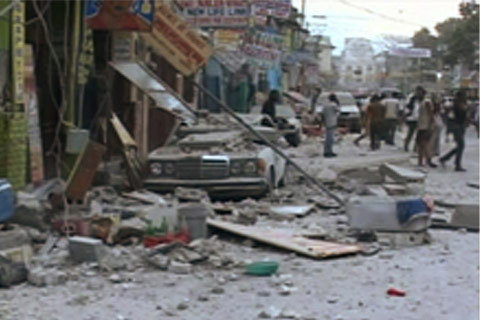
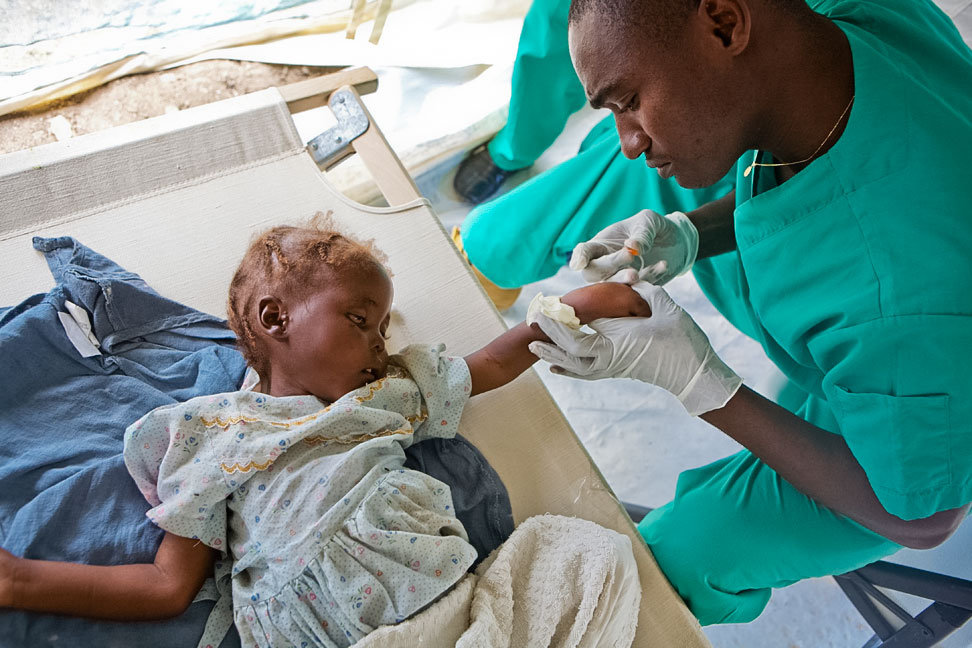
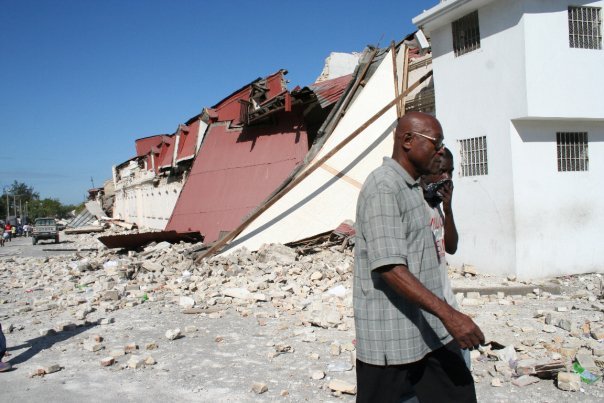
It’s hard to believe that it’s only been five months since I became International Medical Corps’ Medical Director in Haiti. Looking back, I am really proud of the number of people we reached and the level of medical care we provided - especially when so many were at their most vulnerable to diseases like malaria, dengue and typhoid fever. To date, there has been no outbreak of disease in Haiti following the earthquake, even with 1.5 million people displaced. Through our 13 mobile clinics throughout the quake-affected regions, International Medical Corps was able to quickly deliver health care services, critical medicines and protect those who lost everything.

We not only successfully cared for people’s physical wounds, but their emotional wounds as well by making mental health care services available to quake-affected Haitians. Mental health care scarcely existed in Haiti before the earthquake and now, because of the training we have provided, our doctors and nurses are able to identify, handle, and if necessary, refer mental health cases for advanced care. In fact, some of our doctors are now going to be certified by the Ministry of Health as providers of mental health care!

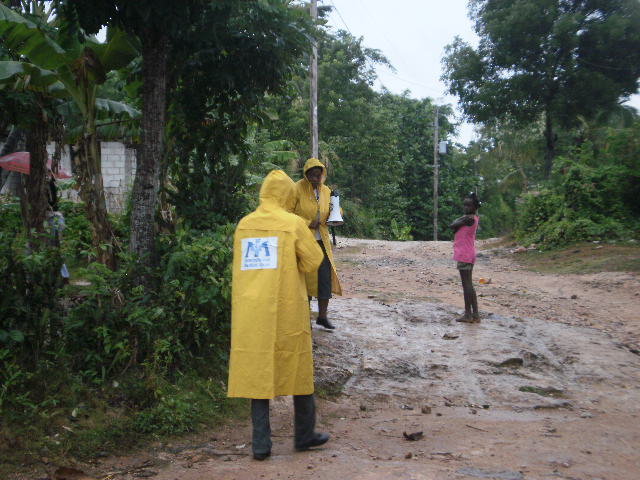
Although we’ve made a lot of progress in Haiti, we definitely have some challenges coming our way, namely with the current hurricane season, which could cause larger displacement and even more health problems for an already vulnerable population. Flooding always poses a threat to health, as waterborne diseases become more prominent. With this risk, we have been prioritizing disease surveillance in the areas where we work and contributing to a national system so that outbreaks are tracked and responded to effectively. As our primary health clinics are a vital prevention mechanism, as well as a platform to track outbreaks of diseases, we’ve been working with the government, other international NGOs, and the U.S. Centers for Disease Control and Prevention on a disease surveillance system through our primary health clinics.

In addition, we are also rolling out our disaster response and preparedness program in Petit Goave and Jacmel, two disaster-prone areas in southern Haiti. Through this program we will train Ministry of Health staff and local communities in emergency preparedness and response, including first-responder training for health professionals. Our biggest challenge will be making sure that we are building an effective health care system that improves upon what t existed previously in Haiti. Even before the earthquake, only 47% of Haitians had access to health care. Seeing the progress made so far though, I believe we can create a health care system that serves all Haitians and I’m excited to be part of the rebuilding process.

Jun 13, 2010

Double Your Impact

Because of your generosity after the earthquake in Haiti, we were able to rapidly mobilize and provide life-saving care to tens of thousands, and we thank you for your support. But the people of Haiti still need our help. On June 16th, Global Giving has pledged to match all contributions up to $1,000 per donor per project between 12:00am and 11:59pm. Only online donations made via credit card or PayPal are eligible and donations made on www.globalgiving.co.uk will not be considered eligible.

This is a wonderful opportunity to double the impact of your support for Haiti’s recovery.

Below are just a few examples of the work we are doing in Haiti right now:

• Since arriving 22 hours after the earthquake, we have provided medical care to more than 79,000 Haitians.

• We are operating 15 mobile clinics in the most underserved regions along the coast, treating approximately 1,500 patients daily.

• We’ve created the first Emergency Department at a public hospital in Haiti.

• Our childhood nutrition program provides supplementary nutrition and care for malnourished children.

• We’ve implemented an early childhood development program in our mobile clinics to mentor new mothers affected by the earthquake about infant stimulation and proper nutrition.

With the help of our supporters, we’ve made impressive strides over the past few months – but there is still so much to be done. As we work to rebuild Haiti and restore hope to those devastated by this disaster, we look forward to your continued commitment.

Links:

Jan 27, 2010

Update from Haiti

Our team is currently providing medical care via mobile clinics in nine geographic regions, including Petit-Goâve, Grande Goave, Petionville, Boloise, Carrefour, Jacmal, and Gressier, Leogane, and Miragoane. We are also working in one hospital and two static clinics.

Hôpital de l'Université d'État d'Haiti

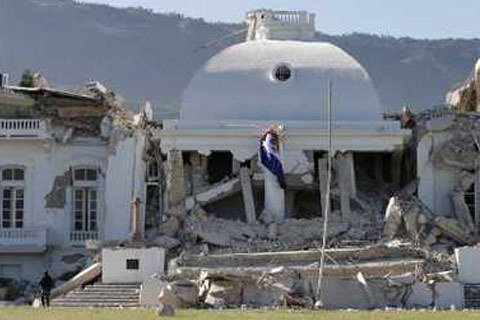
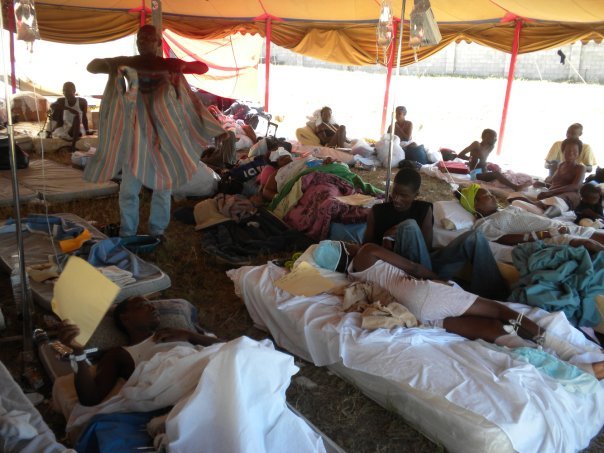
The team is providing medical care at the 700-bed general hospital near the Presidential Palace, the Hôpital de l'Université d'État d'Haiti. Our physicians and nurses are working together with other nongovernmental organizations that have joined us in the hospital. We have established eight basic emergency operating rooms, and are currently providing medical supplies for the hospital.

Doctors and nurses are currently performing 30-50 surgeries and treating approximately 250 patients at the hospital daily. By request of the hospital administration, International Medical Corps is organizing triage and acute treatment of new patients. The acute triage center has seen over 240 new patients in last three days, and is receiving patients from outside clinics via a newly-established ambulance service. The hospital is partially intact structurally and about half of the buildings are currently in use.

International Medical Corps physicians assisted in significant reorganization of the hospital including establishing the first inpatient/post-operative unit in Port-au-Prince post-earthquake. Under International Medical Corps’ guidance, patient management and flow has recently improved and the hospital is now able to accept referrals (and is perhaps the only hospital accepting referrals right now which can provide overnight care).

Other hospital wards opened including medical/surgical and post-operative, and the hospital now provides for 24-hour care with 45 patients in the in-patient ward and another in-patient ward opening shortly. Electricity and water are available in some areas of the hospital. However, there are no laboratory or x-ray services, and the hospital is in the process of establishing a cold chain. Ultimately, the hospital will need reconstruction and refurbishment.

International Medical Corps is prioritizing the return of national staff, as very few have returned. We have also led a tetanus immunization program on the hospital campus and vaccinated over 300 people.

At the Marcel Cline Psychiatric hospital attached to Hôpital de l'Université d'État d'Haiti, there are now 7 male and 3 female in-patients. Pre-earthquake, the hospital had 50 male and 30 female patients residing there. There is currently no food supply. Approximately 250 people are camping on the grounds, of which 30 are psychiatric patients. International Medical Corps delivered psychiatric drugs and distributed guidelines to the hospital and the Ministry of Public Health. We have deployed two psychiatrists, including our Senior Mental Health Advisor. International Medical Corps places a special emphasis on mental health during emergencies.

Mobile Clinics and Field Sites: Reaching the Underserved

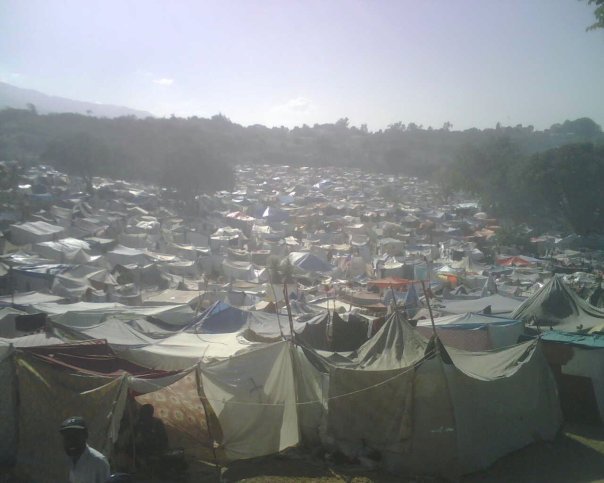
• Petit-Goâve: International Medical Corps is serving a population of 2,500 people in this area, where 100% of homes have been destroyed. Until now, no assistance has been delivered. People lack latrines and a safe water source. We are delivering basic health units to two clinics and a hospital. We are providing medical services at another hospital. Many people have fled the destroyed areas to settle with family in the mountains, placing additional strain on infrastructure and services. • Boloise: International Medical Corps has treated 100 patients for trauma, malaria and communicable diseases. Four camps of displaced people numbering approximately 20,000 lack any medical care and have limited access to latrines and sanitation. • Jacmel: We are supporting and treating patients at a local hospital. Despite access to emergency medical care, the area lacks general public health care. • Gressier: Operating out of a previously abandoned health clinic, the team has treated 80 people for trauma, malaria, and fractures, and immunized 100 people against tetanus. We see approximately 53 people per day. International Medical Corps is also identifying local health care workers. • Carrefour: International Medical Corps saw 70 patients and gave 150 tetanus vaccinations through the clinic. Approximately three-quarters of the community are homeless. We are working with a number of organizational partners to provide care and address the need for latrines. In addition, International Medical Corps liaising with local Haitian doctors and providing follow-up care for patients. The communities in camps have mobilized to support our team for logistics and security issues. • Country Club, Petionville: International Medical Corps is establishing a clinic for a spontaneous settlement of 20,000 people. We have also identified another four small clinics run by the local community where we will provide supplies and medical staff.

Building Capacity in the Midst of Emergencies

Going forward, International Medical Corps will build capacity in Haiti’s health care system through delivering medical services, training local health workers, providing administrative support to the health care system, and rehabilitating health facilities. Already the team has improved the management and administration of the Hopital De l’ Universite d'Etat d'Haiti, and local Haitian medical students were trained by our team to help triage incoming patients. International Medical Corps will continue to support health posts and clinics in underserved areas through rehabilitating,

Jan 22, 2010

Emergency Response Update

Within 23 hours of the earthquake, International Medical Corps’ Emergency Response Team arrived in Port-au-Prince. Our current team of 40 on the ground includes 27 medical personnel, a mental health specialist, and logistics, financial, communications, security, and coordination officers.

The team is providing medical care outside the general hospital near the Presidential Palace, the Hopital De l’ Universite d'Etat d'Haiti. Our physicians and nurses are working together with other nongovernmental organizations that have joined us in the hospital. We have established eight basic emergency operating rooms, and are currently providing medical supplies for the hospital.

President Clinton met with International Medical Corps’ Emergency Response Team on January 18th. He spoke with our doctors, and noted our urgent needs: • Our field hospital had 1,500 patients seeking treatment -- 70% to 80% need surgery. • About 75 amputations were performed on January 17th alone; another 150+ were needed. • Through a partnership dating back to Hurricane Katrina, the Service Employees International Union (SEIU), the largest public service employee union, has offered International Medical Corps 400 volunteer nurses, many Creole speaking. • We delivered desperately needed medical supplies to the field hospital, and more supplies—including emergency medical kits and food—are arriving via caravan from across the border in the Dominican Republic. • Our team is treating crush injuries, basic wounds, trauma, shock and other critical cases – with the few available supplies.

International Medical Corps physicians assisted in significant reorganization of the hospital including establishing the first inpatient/post-operative unit in Port-au-Prince post-earthquake. Under International Medical Corps’ guidance, patient management and flow has recently improved and the hospital is now able to accept referrals (and is perhaps the only hospital accepting referrals right now which can provide overnight care).

Reaching the Underserved

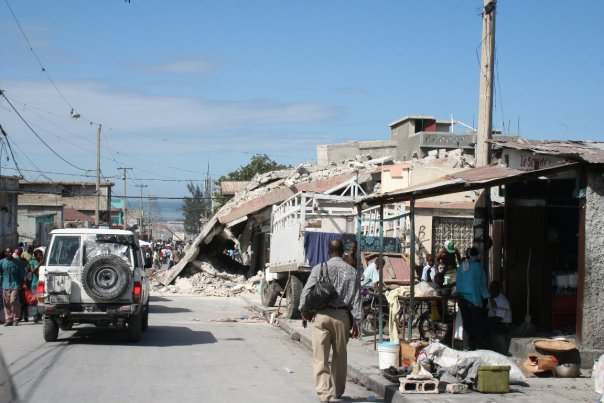
The team is also supporting small medical posts near the Villa Creole Hotel in Port-au-Prince. We have also begun operating mobile units in Leogane (the epicenter) to reach those who are underserved. Leogane (population 134,000) is severely affected with 80-90% of the buildings damaged.

The team has conducted assessments in Carefour, Grassier, Leogane, and Jimani. In Grassier, we have established primary health care support for a community clinic that had previously been abandoned. International Medical Corps will continue to assist in coordination of public health assessments with the World Health Organization and other nongovernmental organizations in the affected areas.

International Medical Corps will expand emergency medical care to underserved populations through both static and mobile clinics, and will provide primary health care as needs dictate, including immunization and disease prevention. Furthermore, International Medical Corps will continue to support devastated public health facilities by providing supplies, medicine, and personnel to manage the increased caseload of patients due to the emergency.

Building Capacity in the Midst of Emergencies

International Medical Corps will build capacity in Haiti’s health care system and infrastructure through training, administrative support, and rehabilitation of health facilities. Already the team has improved the management and administration of the Hopital De l’ Universite d'Etat d'Haiti, and local Haitian students were trained by our team to help triage incoming patients.

Going forward, International Medical Corps will support health posts and clinics in underserved areas through rehabilitating, restocking, staffing, and training. We will continue to work with the Ministry of Health, the government of Haiti, and local communities to conduct needs assessments and establish leadership committees representative of all stakeholders, including women. In particular, International Medical Corps efforts will include water and sanitation efforts to drastically improve living conditions and general health, and prevent disease from spreading. A hallmark of International Medical Corps’ work is training local doctors, nurses, midwives, and community health workers to care for their own communities.

In addition, International Medical Corps is known for its technical expertise in both medical and health care administration in humanitarian emergencies. We will support the Ministry of Health and health facilities throughout Port-au-Prince and the surrounding area in hospital and clinic operation; administration, disease-monitoring, and record-keeping; personnel management, recruitment, training, and retention; and logistics of stocking medical equipment and supplies.

International Medical Corps firmly believes that the best way to create lasting change is to invest in long-term recovery at the outset – it begins in the midst of emergencies. This year International Medical Corps marks its 25th anniversary of providing critical, lifesaving care to millions, while bridging the divide between relief and recovery. International Medical Corps’ mission—to restore devastated medical systems by arriving quickly in crisis, then training local practitioners to care for their own communities, restore well-being and build self-reliance—has been and continues to be crucial. International Medical Corps has worked side-by side with local doctors, nurses, and health workers; it has delivered the highest standard of medical care and training; it has elevated the level of primary health care in developing countries to a level second to none. The knowledge and skills that International Medical Corps leaves behind remain the great measure of its strength and impact.

Jan 25, 2010

Press Release - PSA

January 21, 2010, Los Angeles, Calif. – Sienna Miller, Global Ambassador for International Medical Corps, makes a passionate call to action in a public service announcement (PSA) to assist survivors of the 7.0 earthquake that struck Haiti last Tuesday.

“The need left by this earthquake is enormous,” says Sienna Miller. “Thousands need medical services and time is of the essence. If the injured do not receive medical care quickly, treatable ailments like fractures and open wounds can become life-threatening. The more people who come together and offer their support, the more lives we will be able to save.”

Funds raised through the PSA (http://www.imcworldwide.org/SiennaPSA) will directly support International Medical Corps’ emergency response in Haiti and save lives by helping acquire what is desperately needed on the ground, including medicines, medical equipment, food, clean water, and other emergency relief items.

International Medical Corps was on the ground in Haiti providing emergency medical care just 23 hours after the earthquake struck. “They are working around the clock to save as many lives as possible,” says Miller. “I hope this PSA will shed light on the incredible work they are doing in Haiti and encourage others to support it.”

In Port-au-Prince, International Medical Corps is working at the Hopital de l’Universite d’Etat d’Haiti, a 700-bed hospital, as well as supporting small health clinics throughout the city. An International Medical Corps mobile medical unit is also in Leogane, the epicenter of Tuesday’s earthquake, providing emergency medical care.

“We are so thankful to Sienna for speaking out for the people of Haiti,” says Rebecca Milner, VP of Institutional Advancement for International Medical Corps. “Every donation made as a result of this PSA will save lives on the ground in Haiti.”

About Project Reports

Project Reports on GlobalGiving are posted directly to globalgiving.org by Project Leaders as they are completed, generally every 3-4 months. To protect the integrity of these documents, GlobalGiving does not alter them; therefore you may find some language or formatting issues.

If you donate to this project or have donated to this project, you will get an e-mail when this project posts a report. You can also subscribe for reports via e-mail without donating or by subscribing to this project's RSS feed.

An anonymous donor will match all new monthly recurring donations, but only if 75% of donors upgrade to a recurring donation today.
Terms and conditions apply.
Make a monthly recurring donation on your credit card. You can cancel at any time.
Make a donation in honor or memory of:
What kind of card would you like to send?
How much would you like to donate?
gift Make this donation a gift, in honor of, or in memory of someone?

Organization

Project Leader

Chessa Latifi

Resource Development Officer
Santa Monica, CA United States

Where is this project located?