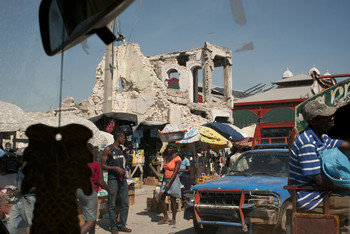
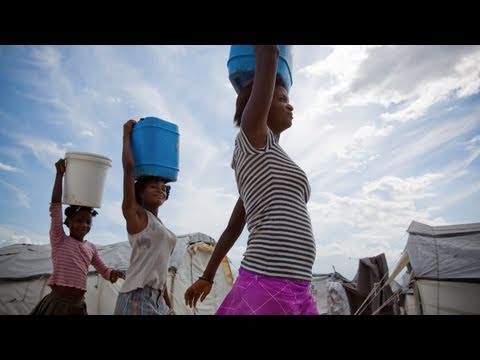
In January, 2010, a devastating earthquake hit Haiti, killing hundreds of thousands of people, and leaving more than a million homeless. Oxfam worked to save lives, with water, sanitation, and shelter programs.Now our focus is longer-term recovery and resilience. Through various programs, Oxfam is ensuring that families have access to food. We are also working to ensure that the people of Haiti have resources necessary to prepare for future disasters and can precent the spread of cholera.
Haitians are still recovering from the massive earthquake that hit their country in 2010. With more than half a million people still living in temporary camps at the close of 2012, the hard, slow work of rebuilding continues-and Oxfam has remained committed to the challenge. Our focus has shifted from emergency needs to working on initiatives aimed at boosting the country's reconstruction.
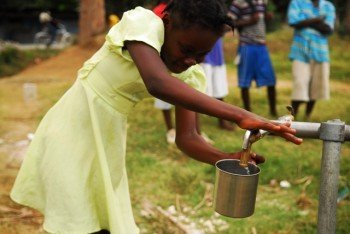
Oxfam was there when the earthquake struck in 2010, providing assistance aimed at saving lives - clean water, latrines, emergency shelter materials, and more. And in the face of storms and hurricanes since then, our preparedness work with communities has made a difference.We are committed to supporting Haitians, both in the capital and in rural areas, as they strive to create opportunities for jobs and economic growth and reduce their vulnerability to cholera.
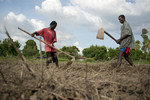
Oxfam aims to ensure that all of our efforts have sustainable impact and help make the people of Haiti less vulnerable to hazards in the future. Our long- term strategy is focused on two areas: Livelihoods recovery and Humanitarian Preparedness. In the rice sector, we are working with farmers to improve farm production and sell their rice. In our emergency preparedness program, we work with municipalities and farmers to reduce the loss of lives and crops in the face of recurring disasters.