SHI- Fund 70 Women's Micro-Credit Loans in Ghana

 
$17,260
$7,739
Raised
Remaining
Mar 7, 2013

Education for Akosua's kids

Akosua
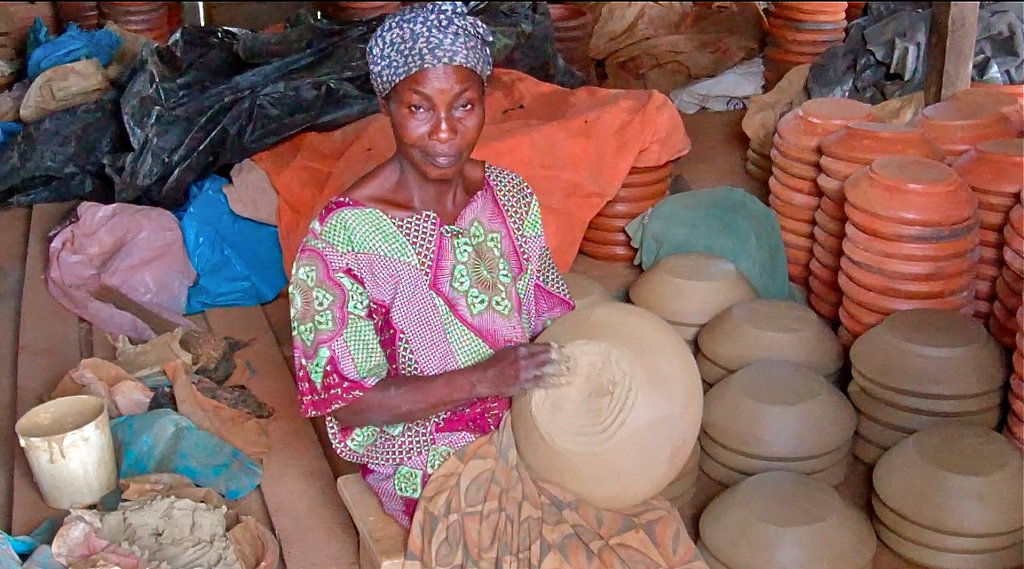
Akosua's pottery

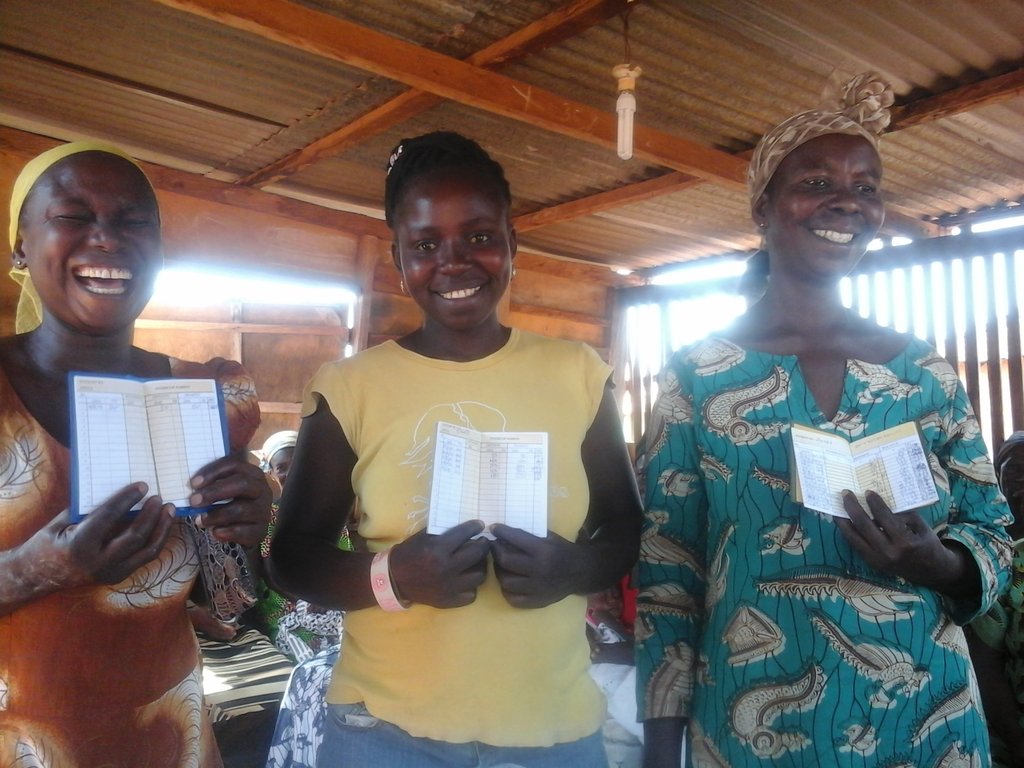
Akosua Ehu is the leader of a small group, but the size of her group does not adversely influence their ability to be successful in various ventures including pottery making and large scale farming. With only three other women in Akosua's group, many might assume they have had little influence in their community but surely her seven kids would have to disagree. In the last eight years, Akosua has taken out 14 loans to increase her inventory of clay for her pottery business but more importantly, to pay for her children's school fees. 

"With the loans, I have been able to send some of my kids to learn various apprenticeship trades," said Akosua.

With many of her kids now working or taking apprenticeships, Akosua has decided to put more resources into expanding her business. She has the contacts already as her business has been around for a long time but she has been unable to buy in large quantities and keep costs down.

Her goal is to expand her business by purchasing larger quantities of firewood and clay to produce more pottery to sell at the nearby markets. She is not interested in another type of business or training because she says "[Pottery making and selling] has more potential if well developed."

Over the past eight years as she has expanded her business, she has continually recognized how to further expand and stay on top of her expenses to continue earning money to pay for her children's school fees.

Your continued support is greatly appreciated. It helps women like Akosua grow their businesses and in turn keep their children in school.

Links:

Dec 5, 2012

Sarah's business grows with loan from SHI

Sarah
Sarah's business in 2009.

Sarah Tawiah is a 37-year-old mother of four children, three of whom are in school. She is married to Daniel Tawiah. Sarah is a native of Nkawie Panin, a farming community in rural Ghana. 

Self Help International has worked with Sarah since 2009. In 2009 her business was small. She could sell just a handful of vegetables on a small table. She received her first loan in 2009 and has progressed successfully. She has received three more loans since her first.

It is extremely satisfying when rural poor women take loans, provide for their families, and grow their businesses with the loans.

Sarah now owns a store and sells many different items ranging from fresh vegetables to canned fish. She is popular in her community for selling fresh and roasted fish.

With her last loan Sarah bought a medium size deep freezer. She tells Self-Help the days of travelling to Kumasi (25km away) daily to buy fresh fish are over.  She said, “I will travel less, sell more fish and make more profit.”

Sarah also boasts of a television and a cell phone, both things she did not have in 2009. With her television she gets to know of prices of goods in other parts of the country.

In the meantime, her four children are enjoying better nutrition, clothes, school uniforms and money to pay for school.

Success stories like Sarah’s are made possible by your generous donations.Thank you for your support!

Sarah
Sarah's business now.

Links:

Sep 5, 2012

More Women in Ghana Acquire Cell Phones

Farmer utilizing her cell phone

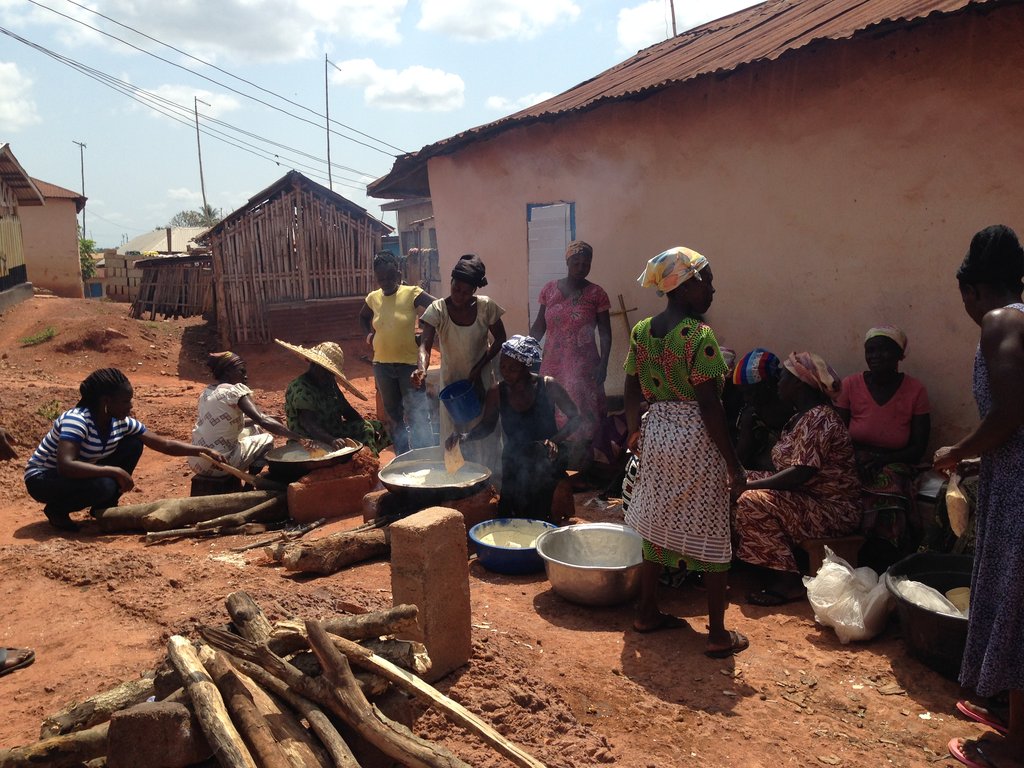
Beposo is a farming community in rural Ghana. It has no electricity but thankfully has a borehole for water. In 2011, nine women from this community benefited from Self-Help International’s micro credit program, receiving loans for petty trading and agro processing.

After two loans the beneficiaries saw positive changes in their lives, the most notable being the purchase of cell phones by four women.  In Ghana, cell phones can be purchased for $20-25.  The number of beneficiaries using cell phones has more than doubled in the past couple of years, with approximately 3 in 5 beneficiaries now using the devices.

  1. The use of cell phones is common among beneficiaries that specialize in trading because of the enhanced communication they provide with important trading partners. Without cell phones  they could travel several kilometres. without meeting their customers. Cell phones have provided them with the knowledge of when their trading partners will be available, saving precious time and energy while making their business more efficient.

The Women Behind the Phones

Some of the cell phones look attractive and expensive, but are still reasonable to purchase, as in the case of Elizabeth. Elizabeth is a hairdresser who has eyes for beautiful things and is doing well with her loans.

In front of Elizabeth are items for her hair dressing business such as wigs, hair cream and rollers. She tells Self-Help the phone makes it easier to schedule appointments with her clients. She tells clients, “…my cell phone number is written in front of my door...in case I am in the next village you just buzz me…” Instead of missing appointments, Elizabeth can communicate with her clients to let them know her whereabouts. Her cell phone can provide the vital link she needs to her clients, enabling her business to grow.

Cell phones aren’t just for trading businesses and emergencies, for Maame Adwoa her phone is a lifeline to her daughter who is in a teacher training college in the city. Maame is a farmer, whose participation in the micro credit program has improved her business, making it possible to send her children to a good school in the city.

The Challenge

There is no electricity in most villages, so how do they charge the batteries on their new cell phones without missing business calls? When batteries run down the phones are sent to nearby community with electricity, which will charge the phone for the fee of 50p (26 cents). Sometimes a phone sent in to be charges is either stolen or swapped. The search for a solution is still continuing. 

Hair Dresser contacting customers
Mother contacting her daughter at boarding school

Links:

Jun 5, 2012

Akousa Sends her son to School

Akosua Sends Her Son to
School

Akosua Pokua, a busy, 42-year-old mother of three boys and
one girl, is very appreciative of Self-Help International’s micro credit loans.

Akosua and her family live in Nkawie, a small farming town in
Ghana. In 2009 Akousa used her first microcredit loan to purchase sheep to
start a small trading business. SHI reports her loan repayment record is so
consistent she has continued to take out SHI micro credit loans each year
since.

Akosua’s eldest son has decided he wants to attend a Teacher
Training College, a school requiring a steep tuition. Proceeds from her small
business enabled Akosua to build a 3-room home for her family.  Now that extra money is needed for her son,
she is able to rent out one of her rooms. Happily Akousa reports that rent from
the room, combined with her savings, is enough to send her son to college. “We
are able to feed the family and send my son to school.  I am very appreciative of Self-Help’s
support.” 


Attachments:
Mar 6, 2012

The Confession of a Husband

Confession of a Husband

“I am an indirect beneficiary of your program,” confessed Antwi, husband of Akosua. “And I will be forever grateful!”  This was the happy confession Self Help staff heard from Antwi when visiting Worapong, Ghana last December.

 Antwi’s wife, Akosua, is on her third micro-credit loan from Self Help. She sells kose, a popular kind of doughnut prepared from cowpea and usually eaten in the morning with porridge. Akosua reports the loans have helped her start-up and expand her cocoa farm and pay for improvements to her food vending business. “The loans have  indirectly helped my entire family,” says Akosua.

 Akosua invested some of her micro-credit loan profits in her husband’s firewood business. According to Antwi, the couple is anticipating a profit this year. The funds helped buy a chainsaw which, in turn, allows Antwi to cut more wood, enabling him to produce and sell more lumber. “We will be able to build a new house for our family this year,” says Antwi.

Antwi is so appreciative of Self Help’s micro-credit loan program that he has occasionally made the 20 mile trek to Kumasi to make the loan payment for his wife.

 Worapong is a small farming community located outside of Kumasi. Except for the elementary and Jr. High schools, the village is very primitive with no electricity or running water.

 Being able to produce and sell firewood and kose in the village benefits the entire community. 


Attachments:

About Project Reports

Project Reports on GlobalGiving are posted directly to globalgiving.org by Project Leaders as they are completed, generally every 3-4 months. To protect the integrity of these documents, GlobalGiving does not alter them; therefore you may find some language or formatting issues.

If you donate to this project or have donated to this project, you will get an e-mail when this project posts a report. You can also subscribe for reports via e-mail without donating or by subscribing to this project's RSS feed.

An anonymous donor will match all new monthly recurring donations, but only if 75% of donors upgrade to a recurring donation today.
Terms and conditions apply.
Make a monthly recurring donation on your credit card. You can cancel at any time.
Make a donation in honor or memory of:
What kind of card would you like to send?
How much would you like to donate?
gift Make this donation a gift, in honor of, or in memory of someone?

Organization

Project Leader

Merry Fredrick

Executive Director
Waverly, IA United States

Where is this project located?

Map of SHI- Fund 70 Women's Micro-Credit Loans in Ghana