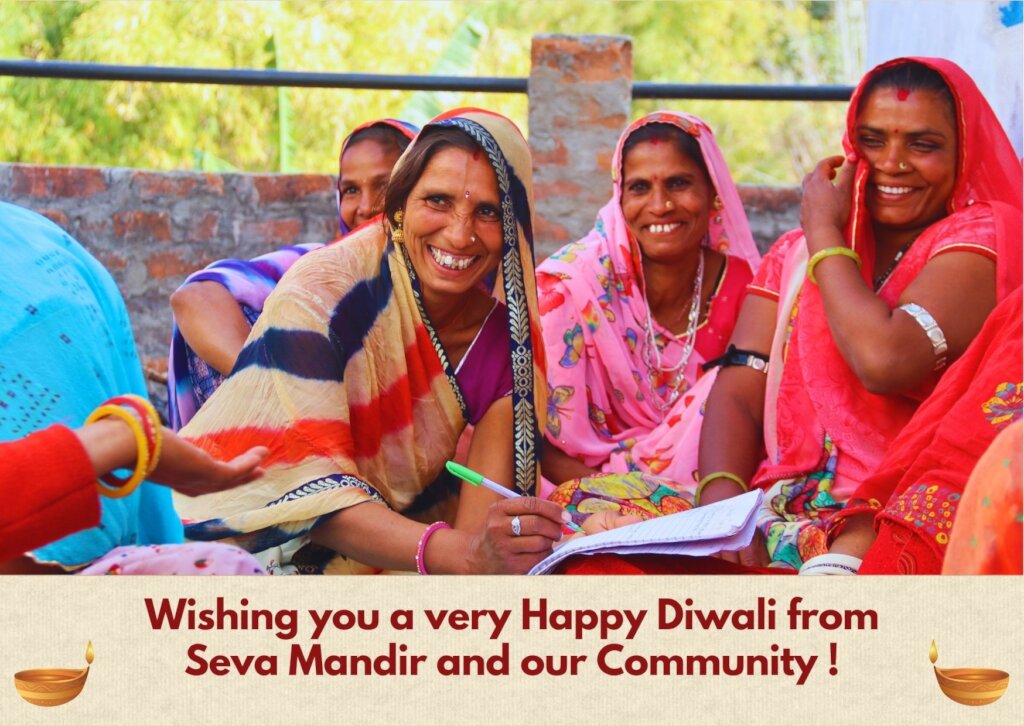
Rural women support their families and villages

 
$9,415
$90,585
Raised
Remaining
Dec 29, 2011

You, Seva Mandir and Happy 2012

Wish you a very Happy New Year 2012!

Dear Friend,


I very much hope that you are enjoying the holiday season. From all of us here at Seva Mandir, a very happy and prosperous New Year to you. May 2012 brings peace and success to you and to your family. We thank you for your kindness that you gift us always. With this letter, we love to share some key highlights of year 2011.


For Seva Mandir, the year 2011 has been a year of changes and success. Ms. Neelima Khetan stepped down after 12 years of her excellent leadership (total 25 years of association with Seva Mandir) in March. Ms. Priyanka Singh became our new Chief Executive in April 2011. Seva Mandir is ready to see many more years of its successful engagement with rural communities in Southern Rajasthan in her leadership.


In October, Seva Mandir became the implementing agency for the MNREGA projects for 32 sites in rural Udaipur. It is a significant achievement as well as an indicator of the faith of the 74 Panchayats in Seva Mandir’s work. These Panchayats have endorsed us to be their implementing agency for MNREGA. Of these 32 sites that were sanctioned, the work has begun on the 22 sites. Most of these sites of pastureland development and currently the building of boundary wall is going on.


In 2011, Seva Mandir has been included in two working (sub) groups –  {i) Child Survival & Development and Integrated Child Development Services (ICDS) and ii) Girl Child} constituted by the Ministry of Women and Child Development to review the existing priorities, policies, strategies, programs and their implementation for fulfilling the rights of children to survival, development (including early childhood care, early learning, elementary education). Also, to highlight emerging issues and recommendations, resources allocation and utilization for Twelfth Five Year Plan of Government of India.

Several of Seva Mandir's programs have seen a maturing in the last years. For example, in the villages where Seva Mandir organized regular immunization camps, the complete immunization of children is 60%, while in comparison villages it is only 35%.


Similarly, the work on Natural Resources is yielding a lot of benefits to the poor. Every year grass worth Rs. 52 lacs (5.2 million rupees) is being harvested from the common lands developed under this program.

In April 2011, Champa Devi from Vassela village was awarded the "Woman Exemplar Award 2011". It is another reason to look back and feel joyous to see that a community member of Seva Mandir was being recognized by rest of the society for her selfless services.


We are privileged to experience exciting stories of women like Champa Devi. A big credit goes to friends like you for this. Your support has always been the source of our emotional strength. It helps us keep going with our work. It is gratifying that with your support we have been able to create spaces where ordinary people can exercise truth force to bring about social and political transformation.


We hope you will continue to be with us in future too. Your faith and untiring support is very critical to us at the moment. Especially, when national and international scenario is changing rapidly for civil societies and the definitions of ‘development’ are being re-explored.


We believe that the full and deep impact of Seva Mandir's work lies not so much in the tangible development activities that it promotes, but more in bringing the poor and rich together and enabling them to  work for the commons of building more just  and oppression free communities.


We look forward to your continuing contribution in the year 2012 too. With this letter we also like to share with you our latest e-newsletter.


Wish you a very bright and successful New Year.


With warm regards,


Deepti

Nov 25, 2011

You helped 35 leaders for an MBA. Know more of it

Training of SHG women

Dear Friends,

Greetings from Seva Mandir!

Hope you are well. Earlier we told you about an MBA course that has been organized for SHG leaders. The program that you support offers a variety of oppurtunities to these leaders. The MBA course is one such opportunity. My colleagues have shared with me a blog that was written by one of the resource persons of this MBA program.

Also, a two day training on 8th and 9th September 2011 was conducted for 40 women leaders. The training focused on developing basic understanding on gender and included session on concept of sex and gender, patriarchy and socialization.

In addition, I also have some more news including a brief study carried out by one of our volunteers on the status of microcredit activities in our region. This time, my letter brings you a flavor of thoughts expressed by people who have been associated with the program you are supporting. Please find these snippets below my letter. 

I really hope you will enjoy reading about a different perspective of this work you champion. In my next letter to you, in a month, you will get to know the facts and figures of this program; as I will share with you the half yearly report of the program "Rural Women Support their Family And Villages".

Once again, thank you very much for being with us and supporting thousands of women of Rajasthan. Please do write to me in case of any queries.

With warm regards,

Deepti

------------------------------------------------

1)    The MBA program for women entrepreneur:

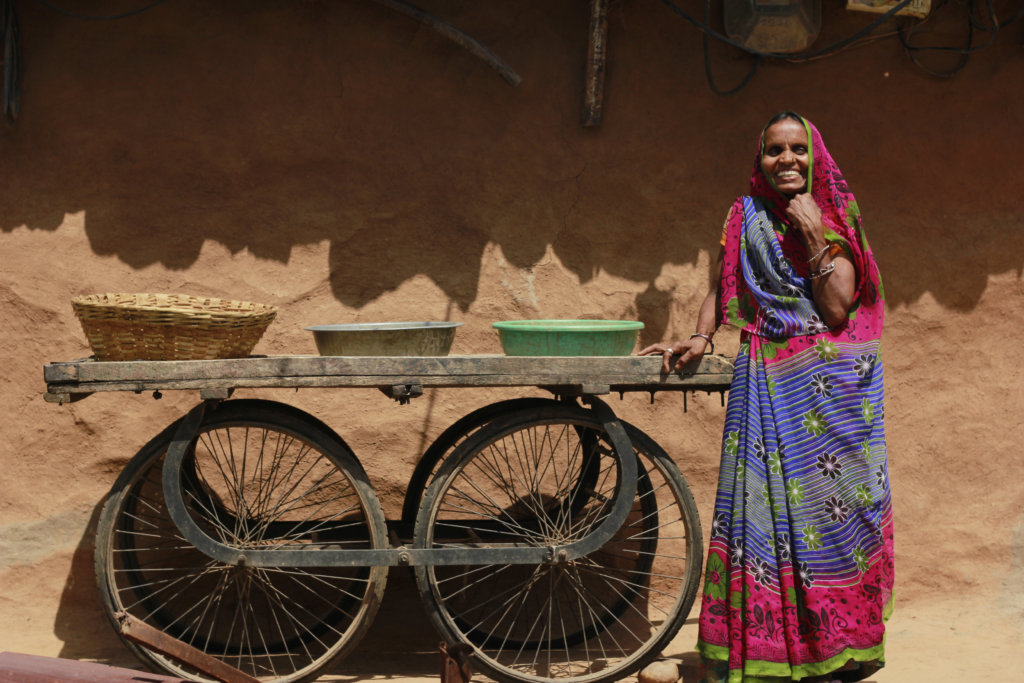
Ms. Zenobia Driver (a resource person for CREAM conducted for rural entrepreneurs) wrote a blog on Urja-Soy project of Seva Mandir. The blog gives details about problems in managing micro enterprises, market reach and its derived learnings.

She is currently working as Director at Escape Velocity (A business strategy and marketing consulting firm based in Mumbai). She also worked as a Senior Consultant with Momentum Strategy and as a Senior Product Manager with Johnsons and Johnsons.

She wrote: "In spite of having a lower-priced healthier product to offer, Urja initially struggled to grow. There were two main reasons for this – one, most people in Udaipur were not aware of the health benefits of soya paneer and were not sure how it would benefit them, and two –  the taste of soya paneer is different from that of paneer from milk, which is what people are used to. There is also a third problem of a reduced shelf life (2-3 days for Soya Paneer vs. 2 weeks for milk paneer), but this is less of an issue. Thus the key challenges facing Urja were to raise consumer awareness of the health benefits of paneer and to make the health benefit relevant, also to overcome the barrier of taste". Read her full blog on the following link  http://escape-velocity-blog.com/2011/06/30/%e2%80%98need-but-don%e2%80%99t-want%e2%80%99-%e2%80%93-solutions-from-a-microenterprise/

 (CREAM stands for Course in Rural Entrepreneurship, Administration and Management. It’s a curriculum designed and taught by industry professionals, NGO Leaders and academicians. It’s a part time MBA program designed for rural businessmen and employees of NGO’s running various livelihood projects. 18 people including 10 staff associated with the savings and credit programme and 8 rural entrepreneurs are associated with this programme)

2)    What a recent study on Microcredit says:

 A study on ‘An investigation into the status, problems and effectiveness of microcredit” was carried out by two volunteers in Urban and Badgaon Blocks during February to May 2011. The purpose of the study was to investigate the nature of microfinance, evaluate the risks of a crisis similar to that of Andhra Pradesh occurring in this region and investigate the effectiveness of microfinance as a tool for increasing socio-economic wellbeing.

The study revealed that there are 6 MFIs - Basix, SKS, Janalakshmi, Sahayata and Equitas and Asmitha operating in Urban block and one MFI – Sahayata,  also operational in Badgaon block. It also reflected that there is very little indication of any potential crisis due to MFIs in the near future, in this area. The interest rates are not unreasonably high, the number of loan per borrowers, at 1.8, is also within reasonable limits. Coercion by MFI employees is not something that was mentioned by borrowers and by far the majority intended to take future loans. However there existed the practice of taking commission by group leaders acting as middlemen between the MFIs and the borrowers as well as the issues of ‘fake lenders’ where deposits were taken without a loan being issued. For example - in one of the panchayats – Dhar, of Badgaon block in our area, a women claiming to be from an MFI took money from 35 people, Rs 1000 from each and promised to provide loan on that basis. The organization never visited the area again, and those who had given Rs.1000 did not receive a refund or their promised loan. No one knew this organization and our attempts of contacting them were not successful either. The organization has not been heard from, and attempts to contact them have been unsuccessful.

3)    Visitors in the city - observing women's meeting

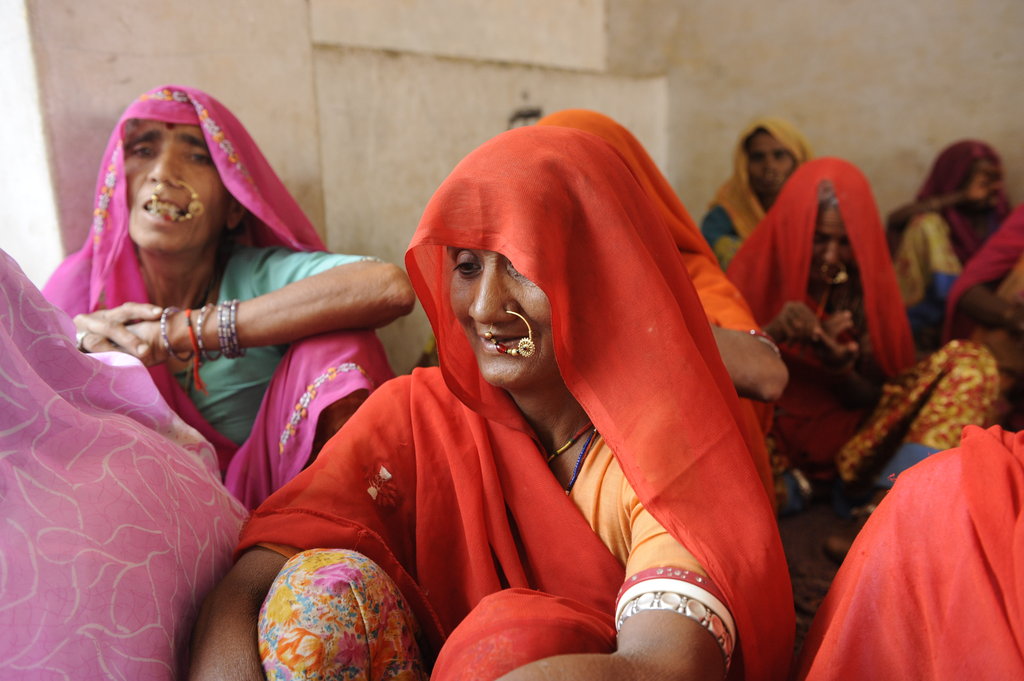
The Programme Officer CHF (Co-operative Housing Foundation) International – India, along with her 4 team members visited a women’s group associated with Sadhna (Women’s handicraft enterprise) and Pula SHG cluster (an association of 15 SHGs) of Urban block during 26 to 27 May 2011. The visiting team participated in Pula Kachi Basti’s cluster meeting. They appreciated the way the meeting was conducted and felt happy to see the functioning of cluster and active participation of women. They were also happy to see the well maintained records and the rules and regulations especially related to loan disbursement and repayment. The visitors also appreciated the fact that women also discussed social issues along with issues related to savings and credit.

Story of Kalu:

Links:

Jun 29, 2011

You enrolled 35 rural women entrepreneur for an MBA

Woman in Dairy business

Dear Friends,

Greetings from Seva Mandir!

Hope you are well. The monsoon has come to Rajasthan last week. Everyone is excited to have clouds in the sky and hoping to have a good monsoon year.

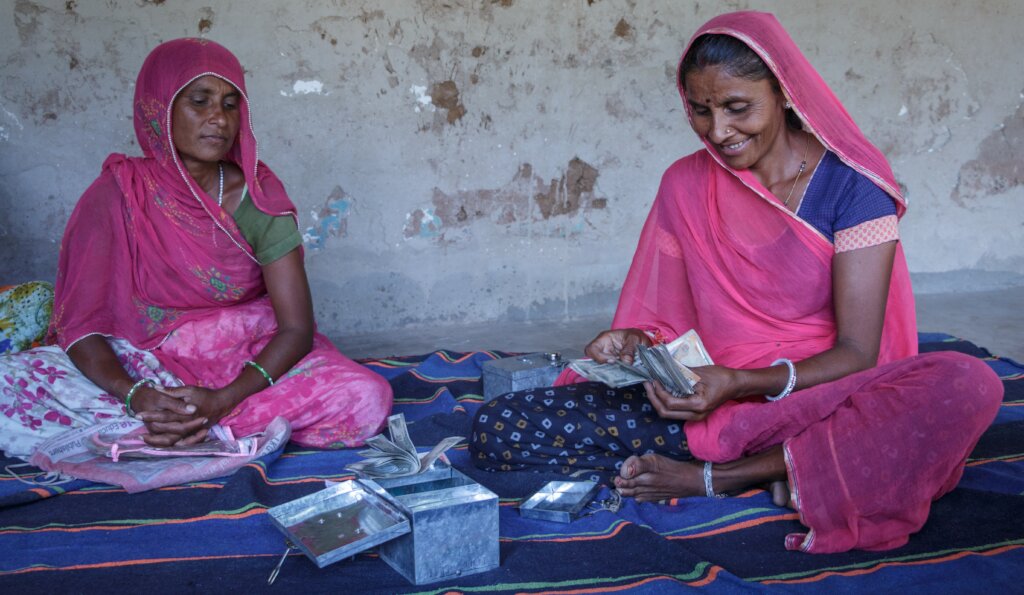
I am sharing the annual report of our Self Help Group (SHG) program that you are supporting. The report accounts detailed information on the total number of SHGs currently running as well as the total savings of these groups. In the last two years the efforts have been made in strengthening the smooth functioning of SHGs. A number of trainings and workshops that were organized during the reporting period which helped the participants learn skills of auditing of SHGs, profit distribution, qualitative monitoring, standardization of SHG norms and streamlining MIS (monitoring information system).

This year the SHGs took a step ahead and began to contribute towards the costs for auditing and book keeping. The groups are happy at their self-reliance they are achieving gradually.

The performance of SHGs is measured on the basis of six main indicators – regular meetings, regular savings, regular attendance, principal repayment, interest repayment, and safe portfolio.

After the audit in March 2010, for the first time, during April – June 10, profit distribution was done in all the SHGs. For this initially the criteria for profit distribution was discussed with the groups and it was decided that since it was being done for the first time, it should be based on total savings of members.

Seva Mandir has collaborated with a team of consultants for a short course (6 months) on Rural Entrepreneurship, Administration and Management. It’s a curriculum designed and taught by industry professionals, NGO Leaders and academicians. It’s a part time MBA program designed for rural businessmen and employees of NGO’s running various livelihood projects. For more details please see the report enclosed.

Following is a brief fact sheet for your quick reference –

1.   By the end of March 2011, we had 528 SHGs with 7,981 women members.

2.   The total savings of these SHGs is Rs. 19,055,983 (USD 423,466).

3.   The SHGs in the urban settings are outperforming the ones set up in rural areas. Interest repayment rate is 95 to 100% for all blocks except for Jhadol. The portfolio at risk is very high for Kherwara and Badgaon Block. Please see the report enclosed for more details.

4.   The members received a profit of Rs. 2,385,169 (USD 53,004) from their SHGs.

5.   During this period 85 campaigns (one day each) were organized in all blocks, in which 2,556 women from 174 SHGs participated. These campaigns mainly focused on the concepts of SHGs, performance indicators and addressing the specific problems of the SHGs.

6.    Six training programs were organized focusing on enhancing the skill for accountancy.

I very much hope that you will enjoy reading all the progress these women are making with your help. Many thanks to all of you for your continuing support to this program. Please do write to us if you have any queries. We will keep you updated about the progress of this program as well as about the monsoon.

With warm regards,

Deepti


Attachments:

About Project Reports

Project Reports on GlobalGiving are posted directly to globalgiving.org by Project Leaders as they are completed, generally every 3-4 months. To protect the integrity of these documents, GlobalGiving does not alter them; therefore you may find some language or formatting issues.

If you donate to this project or have donated to this project, you will get an e-mail when this project posts a report. You can also subscribe for reports via e-mail without donating or by subscribing to this project's RSS feed.

Make a monthly recurring donation on your credit card. You can cancel at any time.
Make a donation in honor or memory of:
What kind of card would you like to send?
How much would you like to donate?
gift Make this donation a gift, in honor of, or in memory of someone?

Organization

Seva Mandir
Seva Mandir

Udaipur, Rajasthan, India
http://www.sevamandir.org

Project Leader

Priyanka Singh

Executive Director
Udaipur, Rajasthan India

Where is this project located?

Map of Rural women support their families and villages