On Dec 17th 2012 the Fiji Islands were bombarded by a Category 4 Cyclone, gusting up to 270km/H and causing widespread damage across the island group. The eye of Cyclone Evan passed directly through the region of the Yasawa Islands where GVI has been working since June 2011, damaging infrastructure and destroying crops. The communities in the remote Yasawan Islands rely heavily on rainwater catchment and subsistence farming to provide food and water to the population. The damage caused by Cyclone Evan compromised both water and food security in the region significantly increasing the vulnerability of the island communities. In the aftermath of the cyclone GVI has been able to provide resources, funding and volunteer labour to assist the communities in their recovery.
Although all 9 villages that GVI has been working with were affected by the cyclone, reports from community members across the region suggested that Naisisili had experienced some of the most extensive damage in the Nacula Takina and was the first village to receive assistance from GVI. In order to assess the needs of the community GVI volunteers interviewed families and carried out visual inspections of damaged rainwater harvesting (RWH) systems. For each household the volunteers gathered information on family size and income, as well as assessing the structural damage to houses and the status of each families access to food and water provisions. From these discussions volunteers were also able to determine whether the families had already received aid from the government or other organizations and if they had begun to re-plant their crops.
After assessing all sixty-four families in Naisisili, it became apparent that food security was the community’s immediate concern. Although the Fiji government had provided the village with adequate food in the early aftermath of the cyclone, those rations were now running low and DISMAC efforts needed to be focused on assisting severely damaged villages on Yasawa-i-Rawa Island. GVI informed Government officials of GVI’s capacity to assist and was given the go ahead to take action. From the information gathered in the needs assessment, the volunteer team was able to calculate the quantity of food aid needed to help supplement current supplies in Naisisili whilst they waited for their crops to recover.
Using donations from the Charitable Trust, GVI was able to deliver 1964kg of dry food, which included flour, rice, lentils and sugar to our Yasawa Base for distribution. In Naisisili GVI worked with the village spokesman to distribute 4kg of flour, 2kg of rice, 1 kg of lentils and 500g of sugar per household, with extra rations given to the largest families and those who cannot work, such as the elderly or sick. A total of 495kg of food was distributed in Naisisili, and GVI completed repairs on 10 RWH systems.
The remaining 1469 Kg was then distributed across seven further villages by replicating the same needs assessment methodology used for Naisisili and in total GVI was able to provide food aid to 200 families. GVI volunteers were also able to carry out further maintenance on damaged RHW tanks and the repairs to a total of 25 RWH systems in the region has restored the ability to collect and store over 100,000L of drinking water. Through the GVI Charitable Trust almost $6000 FJD was fundraised to help fund these Disaster Relief Operations thanks to GVI’s network of donors and ex-volunteers.
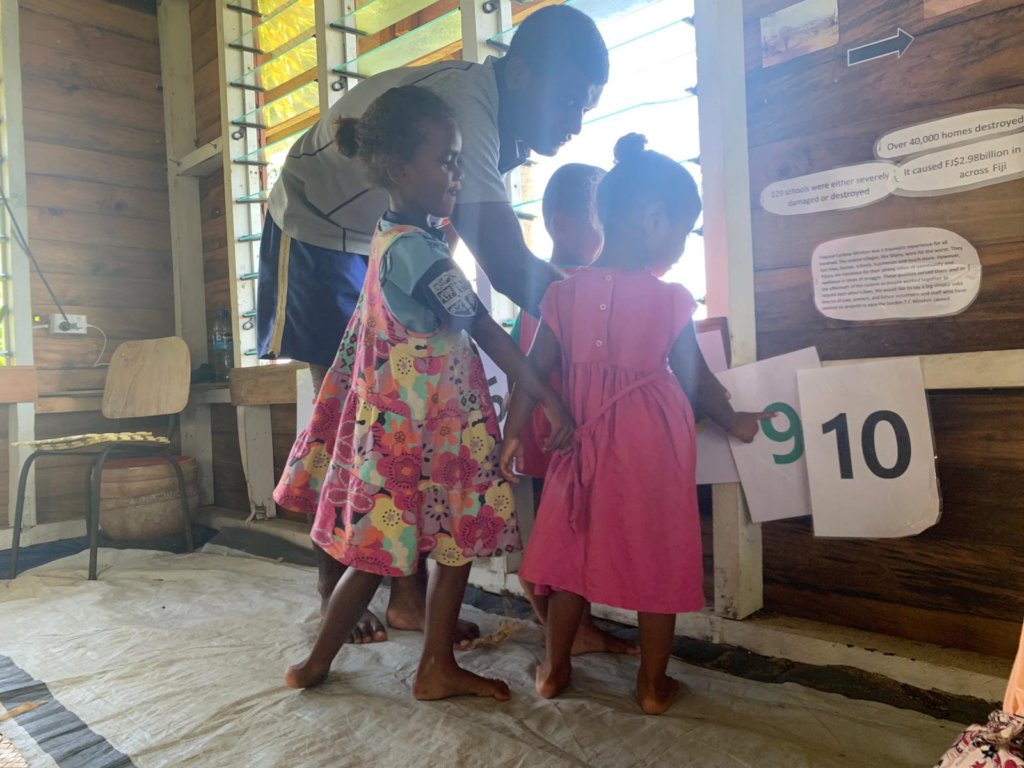
Two local primary schools also required assistance in re-opening for the new school year. At Ratu Meli Memorial School, which is the site of GVI Fiji’s Education Project, Cyclone Evan destroyed the roof of the boy’s dormitory and knocked down one of the walls in the school hall. The classrooms also suffered water damage, with the majority of the textbooks being ruined. Fortunately, AusAid has been extremely active in the area, providing generous grants to help affected schools recover as quickly as possible. GVI volunteers have been active on the ground, cleaning the classrooms, compiling an inventory of the damaged school materials and repairing the school RWH systems. The inventory has been used by the Headmistress to prioritise the allocation and application of AusAid funds. Nasomolevu Catholic School was not as severely damaged by the cyclone but there was still need for substantial repairs to the RWH systems.
Although GVI has made considerable progress in tackling the short term problems caused by Cyclone Evan, the communities of the Yasawas are still recovering. GVI will continue to repair the RWH systems that were damaged as part of the ongoing assessments of water security. GVI has also secured a major book donation that will supply enough books to contribute to both Ratu Meli’s and Nasomolevu’s library, replacing those that were lost. Finally, GVI is now working with the village communities to help replant vegetable gardens and crops. The gardens will provide a variety of vegetables for the community, facilitating a more nutritious diet and improving long term food security.
This information was provided to the Fiji Government, The Red Cross and relevant organisations in order to ensure data on GVI’s collaboration with Disaster Relief efforts was reported in keeping with DISMAC planning.


Links:

As the 2012 school year closed and the 2013 year began, the GVI Education team can now reflect on the progress and achievements made during the first full academic year completed at Ratu Meli Memorial School (RMMS).
Throughout this academic year there have been several key developments in the Education Program which have resulted in positive changes at RMMS. Literacy levels have improved across the whole school and international volunteers have helped foster new enthusiasm for reading, boosting the confidence of the pupils. The one-on-one tuition program now provides ongoing support to pupils with learning difficulties and over the last year has ensured that 26 pupils are no longer as far behind their peers. School environment improvements, including a new computer lab, have created a more stimulating learning environment for the pupils and a number of health initiatives have improved nutrition, sanitation and the availability of fresh water.
In order to successfully develop and improve the education program at RMMS in 2013, GVI asked the class teachers and headmaster to complete a questionnaire and participate in feedback sessions with GVI staff. The teachers’ response was extremely positive, particularly with respect to the increased confidence they have observed in their pupils when speaking English. All the teachers described how the additional support offered by GVI appointed class volunteers has alleviated the pressure of their workload and broadened the experience of the students. In addition, the teachers highlighted the impact the one-on-one program has had on the slow learners and that they would not normally have sufficient time to provide individual support to students who are furthest behind in their classes. All of the teachers articulated their thanks for GVI’s contribution to the school’s infrastructure with the improvements to the toilet block, library and classrooms.
Overall it has been a successful year for the GVI Education Program. The relationship between GVI and RMMS is cemented and has proven to be productive. Pupils, teachers and volunteers have responded positively and with enthusiasm to the teaching assistance program delivered. GVI Fiji is dedicated to providing long-term support and despite the successes of this year, there is still work to be done at RMMS. The Education Program will continue to evolve next year, building on the achievements of 2012 and working towards a new set of objectives to continue enriching the education provided at RMMS.
In collaboration with the RMMS community, GVI have established a set of core objectives that will shape the program in 2013
- Water and sanitation improvements, including additional RWH systems and compost toilets in time for the next dry season
- Waste management plan
- Health and Hygiene, Environmental Protection and Peace and Tolerance awareness lessons

Links:
On 17th December 2012, Severe Tropical Cyclone Evan hit the Fijian islands, causing catastrophic damage. Damaging heavy waves, rain and thunderstorms including severe flash flooding hit the Yasawas and Western Division. The Yasawas communities where the GVI Charitable Trust work was severely affected. Winds exceeding 125 mph brought down trees, blocking roads and blowing away homes/roofs with widespread power and water outages. Many have already lost all their belongings. Major flooding is a high concern with powerful swells hitting the coastal communities and more rains to come.
The community of Nacula in the Yasawa Islands, Fiji already has access to only very basic resources with a severe lack of fresh water, power, nutritious food and education. As a result of Cyclone Evan, many of these families will be much worse off. With currently 13,976 evacuees in 242 Evacuation centres, assistance is being provided to underprivileged children through the Care and Protection Program set up through organisations such as the Red cross.
GVI has a close relationship with the Red Cross and regional disaster preparedness operations and GVI Fiji 's Country Director is an elected Executive of Nadi Red Cross. As such, the GVI Charitable Trust has set up a new appeal to help raise funds for the communities we work with in Fiji. If you would like to help, please do have a look at our project page - http://www.globalgiving.org/projects/cyclone-evan-fiji/
Thank you for all your support in 2012 and we look forward to be in touch again in 2013!
Links:

Project Reports on GlobalGiving are posted directly to globalgiving.org by Project Leaders as they are completed, generally every 3-4 months. To protect the integrity of these documents, GlobalGiving does not alter them; therefore you may find some language or formatting issues.
If you donate to this project or have donated to this project, you will get an e-mail when this project posts a report. You can also subscribe for reports via e-mail without donating or by subscribing to this project's RSS feed.
Exeter,
Devon,
United Kingdom
http://www.gvi.org