Dear friends,
The holidays are here, and all of us at MAR Fund are taking a moment to reflect and give thanks for those who support us. We have received a number of donations through GlobalGiving this year, and we’re very grateful to all of you! We’d like to take this opportunity to thank donors who prefer to remain anonymous, since we are unable to send them individual thank you notes.
We made a lot of progress this year, but there is still work to be done. Among the multiple threats to the Mesoamerican Reef region, the lionfish invasion continues to loom large. And so we also look forward to the coming year, and the many activities ahead of us.
Lionfish wipes out large numbers of marine species, making it more difficult for these creatures to grow to reproductive age and continue furthering the species. The MAR Fund is supporting solutions to this issue in part through our GlobalGiving project: Lionfish Control.
Donating to the MAR Fund’s project on Global Giving is a gift to MAR region fish species.
We encourage you to make a contribution this holiday season that will directly work to control lionfish in the region. If you’re looking for a unique gift, GlobalGiving has the solution: tribute cards. You can give in someone’s name and GlobalGiving will send them a card announcing the gift. Right now, GlobalGiving is running a Tribute Card Challenge in which they will give $500 bonuses to the 15 projects with the most tribute donations. Help our project break into the top 15 and finish your holiday shopping at the same time!
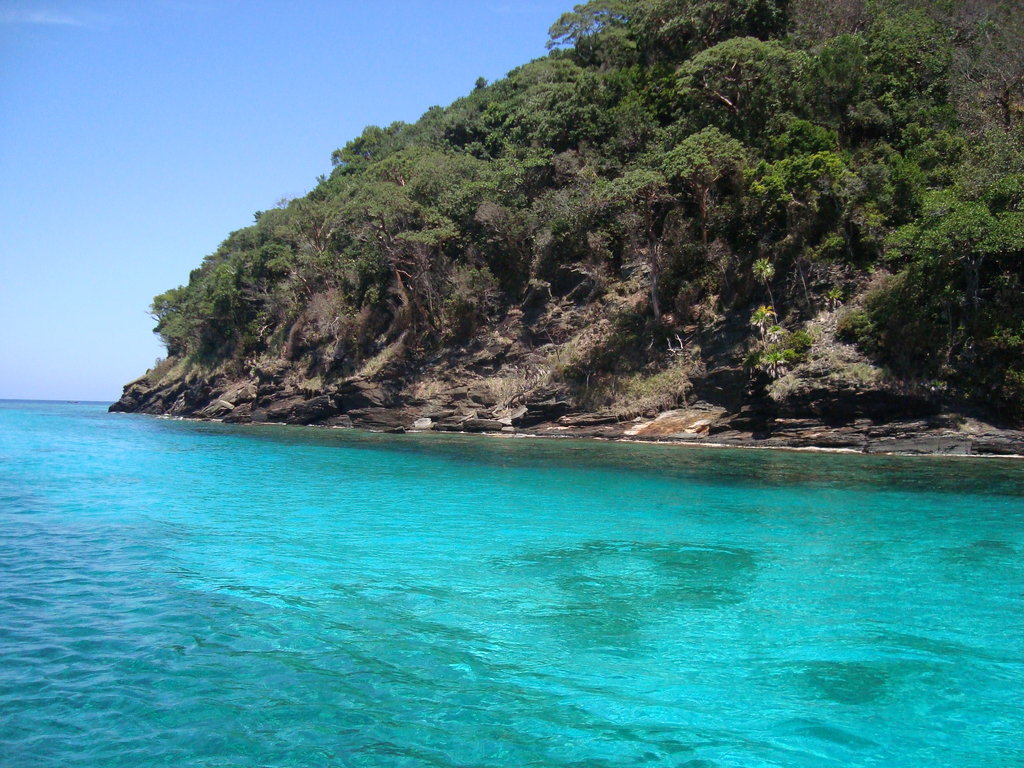
Give in honor of someone who loves to scuba dive, or someone who is enamored of the crystalline waters of the MAR region. Or because you feel compassion for fish and the reef ecosystem. Or because you think lionfish is delicious and should appear on more menus. Or because you want to preserve the treasure that is the Mesoamerican Reef for future generations. Whatever your reason to give, you can be confident that your donation will have a ripple effect.
Again, thank you for your support in 2011, and please consider a year-end gift to help us kick off our work in 2012!
Enjoy your holidays. Wishing you all the best for this season and a positive start to 2012,
The MAR Fund team: María José, Claudio, Patty, Claudia, and Edgar
Dear friends,
The first workshop "Invasive Lionfish Control and Management" will be held in Puerto Morelos in the first week of November 2011, during the 64th Gulf and Caribbean Fisheries Institute (GCFI) meeting.
This will be a "training of trainers" workshop, where the trainees are expected to take information and training back to their country and train others unable to attend, including key stakeholders and partners. The workshop is being organized by REEF and the SPAW-RAC, so we know that the event will be high-quality and have positive results.
We did the math and estimate that the costs for one fisherman to attend the meeting are at least US$1,250. This includes flights, ground transport, registration, and lodging.
This Wednesday, October 19, is a great day to support us to get as many fishermen as we can to this important event, as GlobalGiving is giving away US$100,000 during the final Bonus Day of the year! During this day and only this day, GlobalGiving is matching at 30% all on-line donations, up to US$1,000 per donor per project. In addition to the 30% match, GlobalGiving is offering a $1,000 bonus to the project that raises the most funds that day and a $1,000 bonus to the project that receives donations from the most individual donors! Please consider donating this Wednesday so that your donation will go even further. The number of fishermen we can send to the lionfish workshop depends directly on you!
Please, don't let this amazing opportunity pass by! Thank you very much for your continued support!
Lionfish can be found everywhere these days in the MAR region. In Roatan, Bay Islands Complex, Honduras, for example, you can find it as soon as you hit the water right under any dock or hiding in mangrove roots. It can also be found two hundred feet below the water surface.
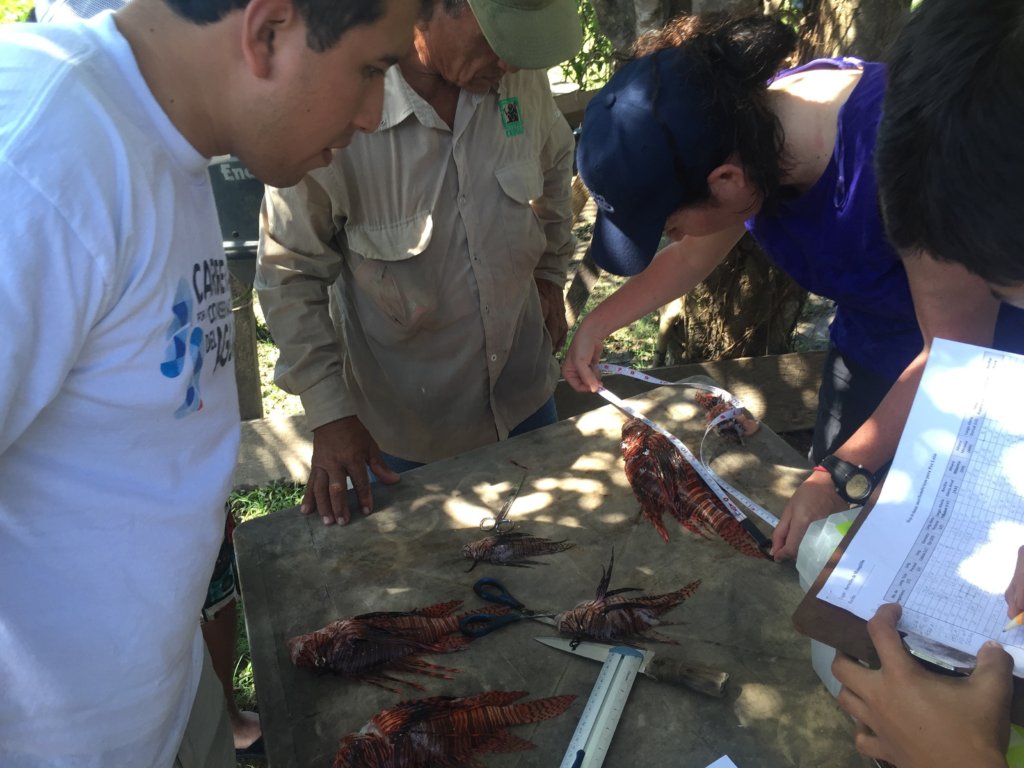
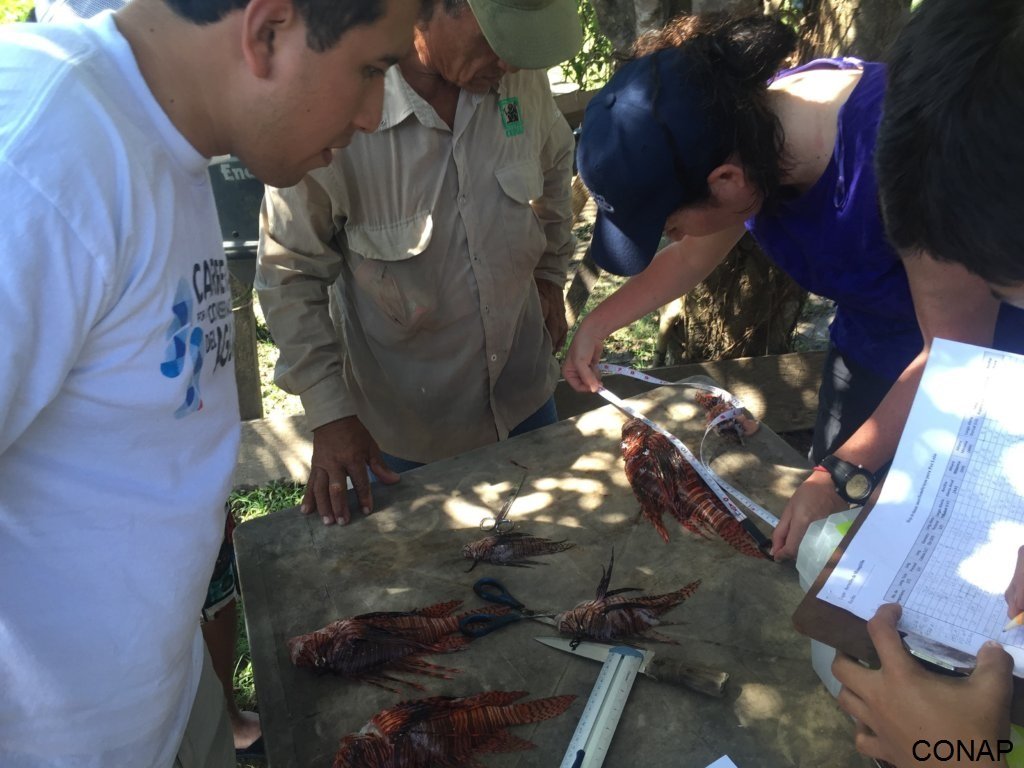
As part of the control campaign activities, the Utila Center for Marine Ecology (UCME) and the Roatan Marine Park (RMP) have delivered informative workshops to the population in general in the islands. Topics like the threat, biology, distribution and habits of lionfish have been covered so that people know what they are dealing with.
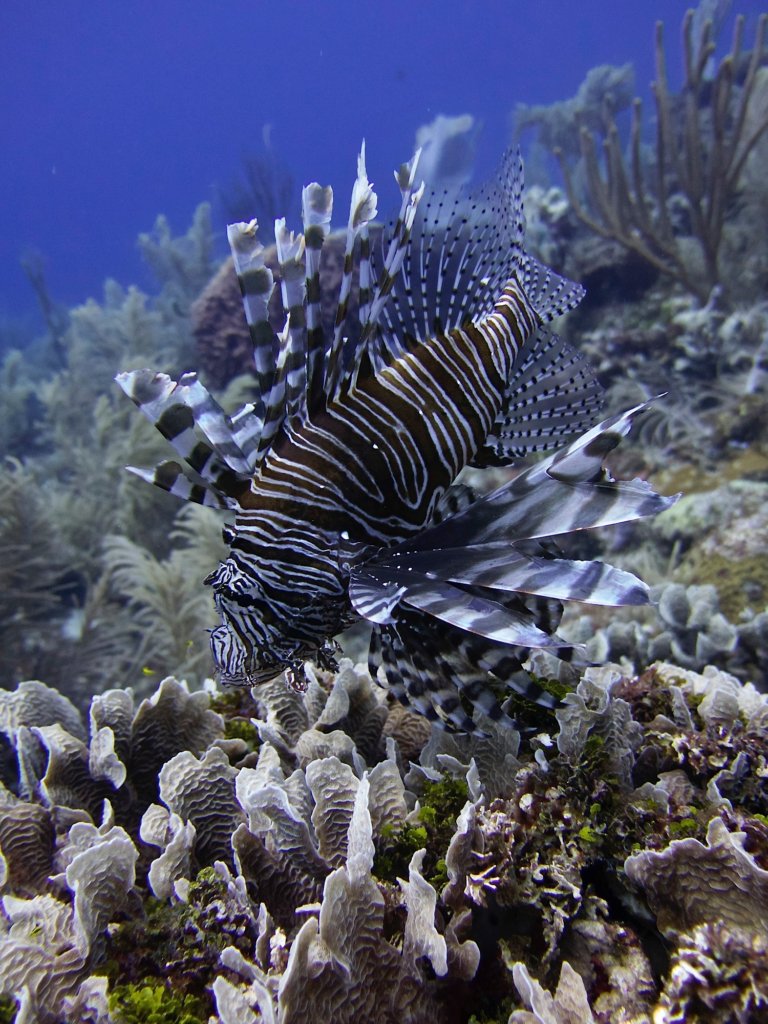
Now, people are aware that lionfish have over 15 venomous spines, they can survive for 12 weeks with no food because their stomachs can expand to 30 times its regular size, have a taste for shrimp, lobster and lots of kinds of fish, have a lifespan of 5 – 10 years and can reach 42 cm in length. They reach sexual maturity at 1 year and can produce 30,000 eggs at a time.
We understand that eradication is highly improvable. However, we can make an effort to control it and to keep dive sites as free of lionfish as possible. UCME and RMP are preparing a series of training workshops to address NGOs, authorities and fishermen and to explain the most common capture method.
To do this, we need to raise at least US$ 1,500 to prepare all the needed material and equipment. We are confident that with your support and collaboration, we will be able to prepare and develop these workshops. Thanks so much!
The exotic Lionfish (Pterois volitans) has invaded the Mesoamerican reef. This species is a predatory venomous fish that has no natural predators in the Caribbean, so it can significantly reduce biodiversity of the local habitat. It can drive important fish species to extinction, negatively affecting the MAR reef ecosystem and reducing the income to the coastal communities that depend on sustainable fishing activities within the region.
There are several local initiatives trying to control the lionfish. However, we need to embrace it and treat it as a regional issue in order to obtain a real impact on its population management.
Attached you will find a couple of videos that are being promoted by two entities: the Healthy Reef Initiative and the Roatan Marine Park. The first one shows a technique to train MAR reef native species to eat lionfish. The second one is promoting the lionfish fillet for human consumption.
Both initiatives are very worthy as control and management strategies; but it must be clear that lionfish cannot be consider a part of the MAR reef biodiversity or an income source to its fishing communities under any circumstance. Since it’s a terrible threat not only to other fish but crustaceous, coral species and even humans, it is imperative that its population decreases as much as possible.
I take this opportunity to invite you to donate and participate during GlobalGiving Bonus Day on June 15th! During that day and only that day GlobalGiving will match all donations at 30% up to $US1,000 per donor per project. There will be funds available in matching funds only during June 15th. Only on-line donations are eligible for matching. We encourage you to made donations in early, because matching funds will likely run out before the end of the day.
Thank you very much for supproting this initiative! The fishing communities within the MAR reef and its entire ecosystem appreciatte it the most!
Links:
Project Reports on GlobalGiving are posted directly to globalgiving.org by Project Leaders as they are completed, generally every 3-4 months. To protect the integrity of these documents, GlobalGiving does not alter them; therefore you may find some language or formatting issues.
If you donate to this project or have donated to this project, you will get an e-mail when this project posts a report. You can also subscribe for reports via e-mail without donating or by subscribing to this project's RSS feed.