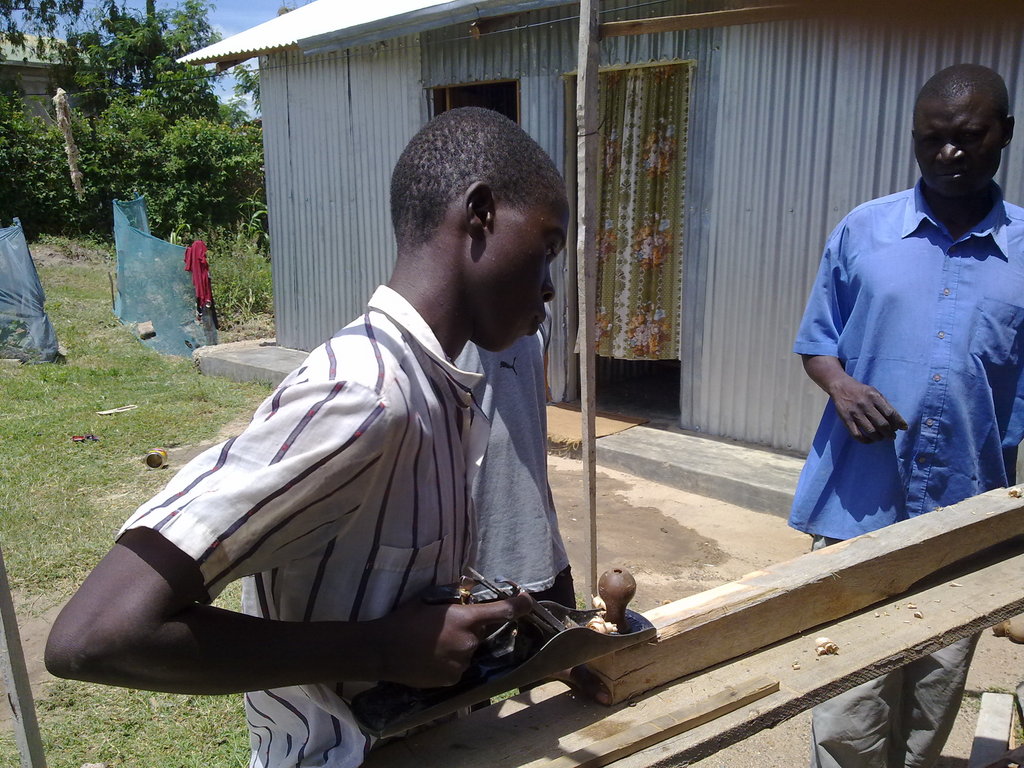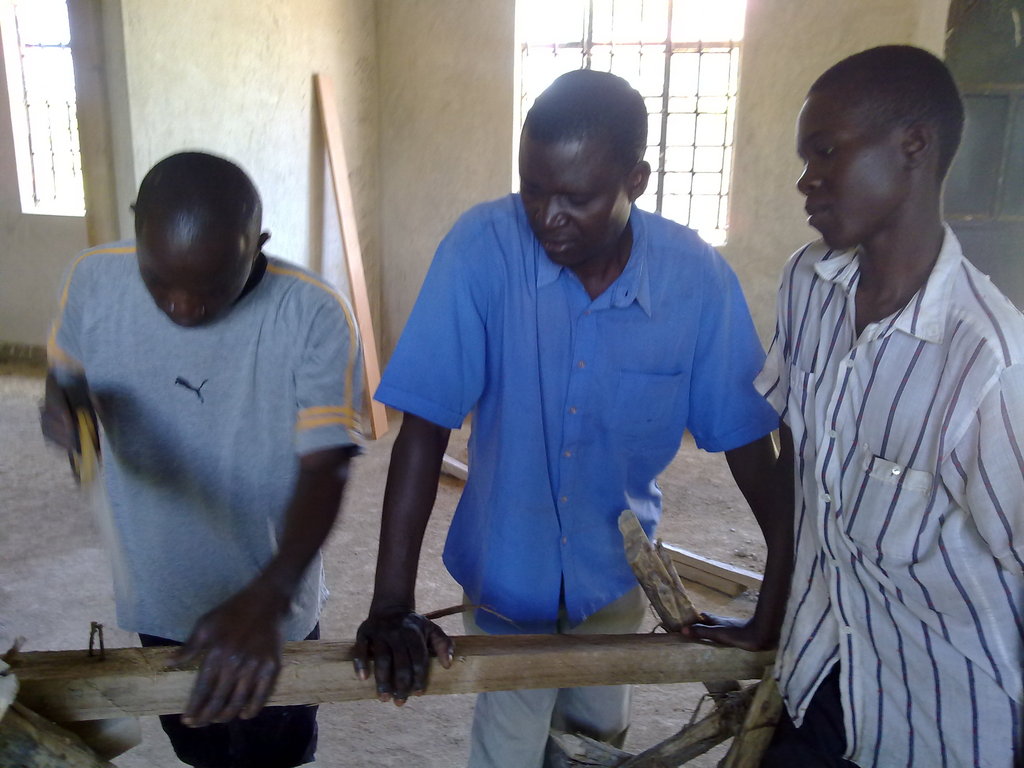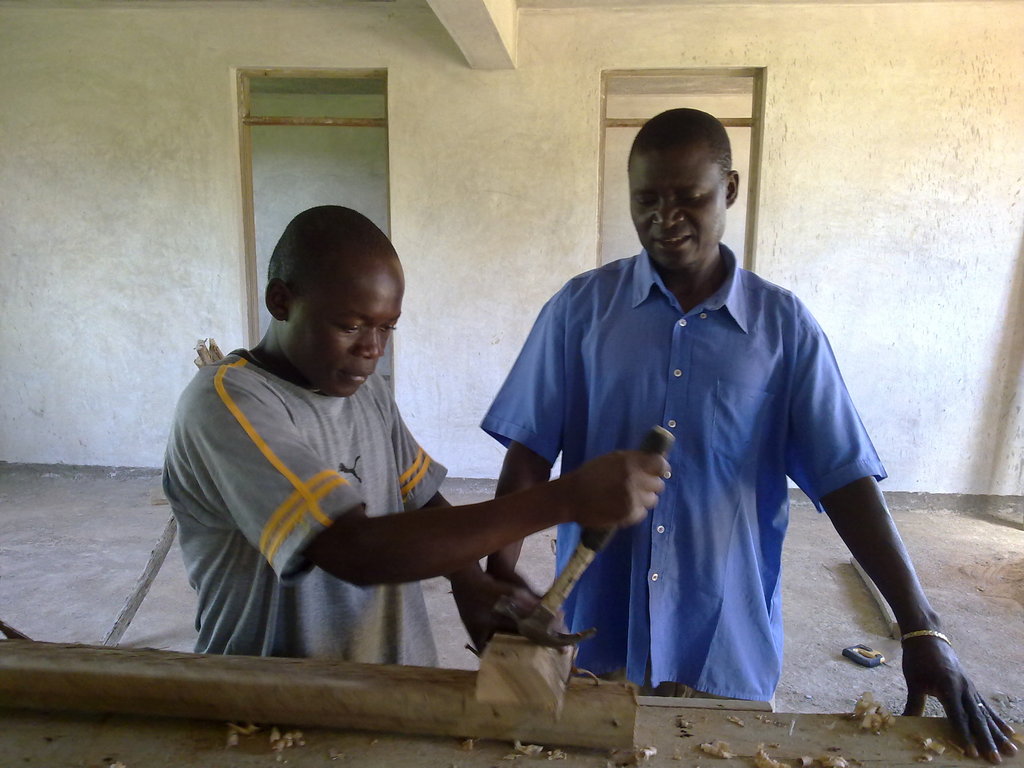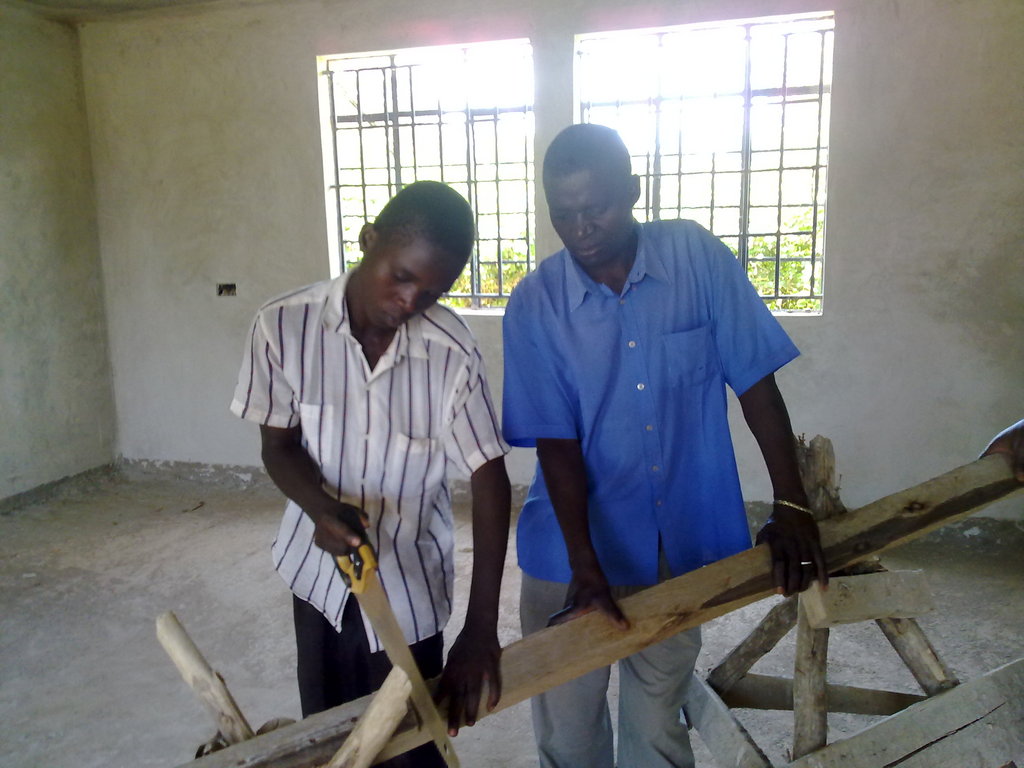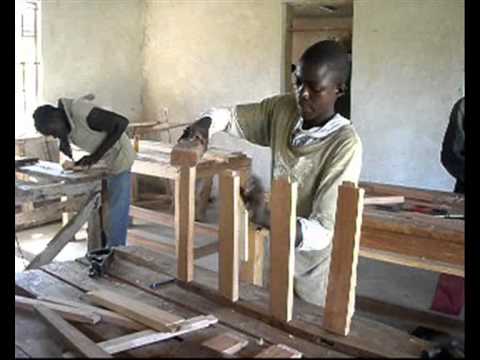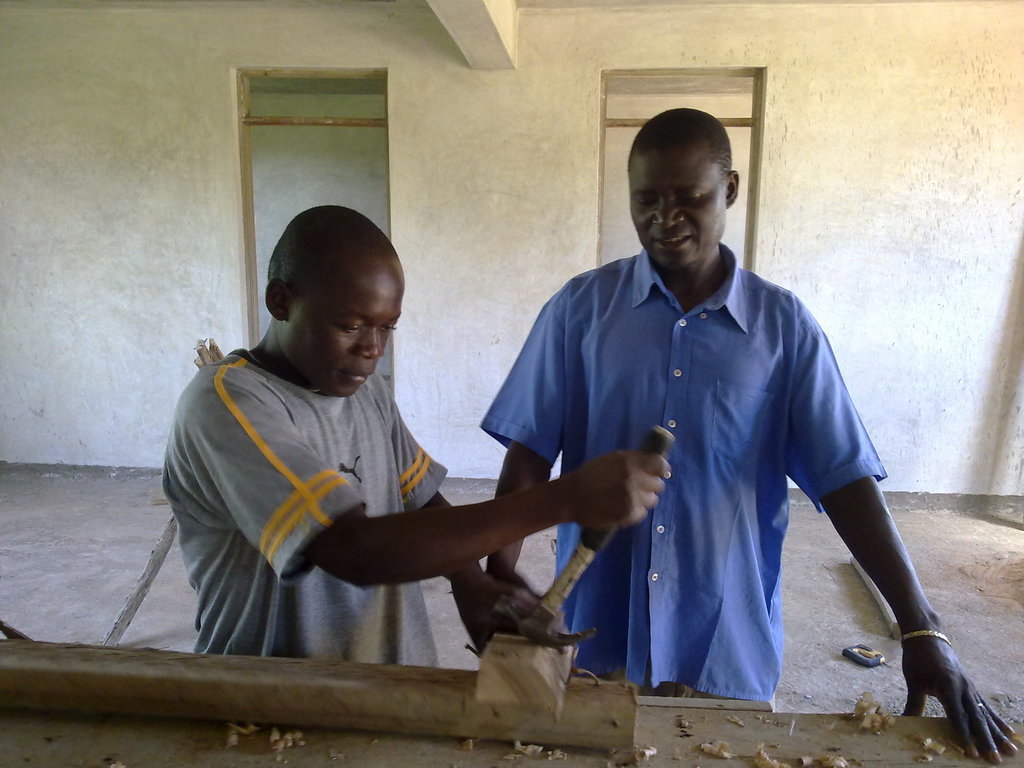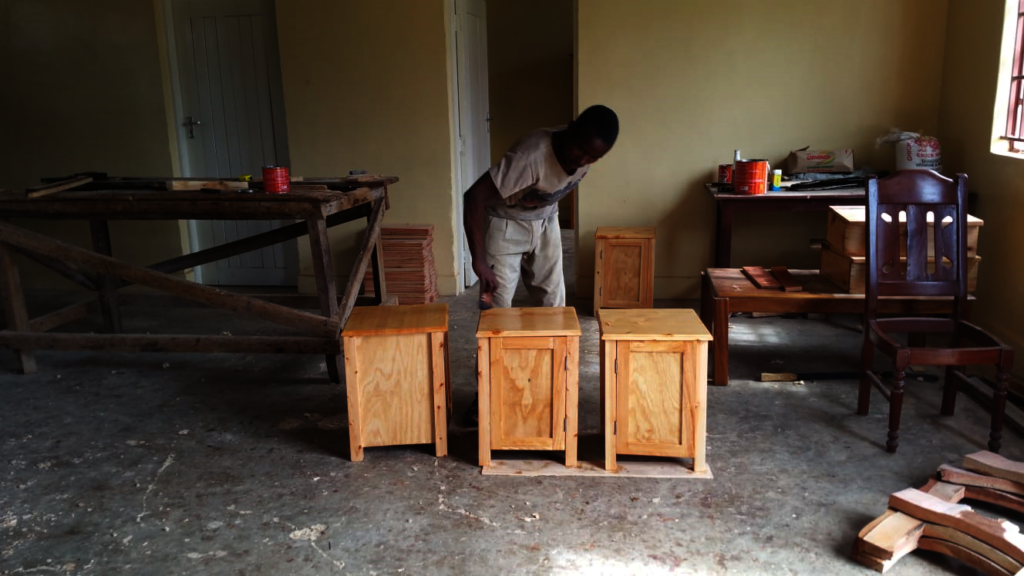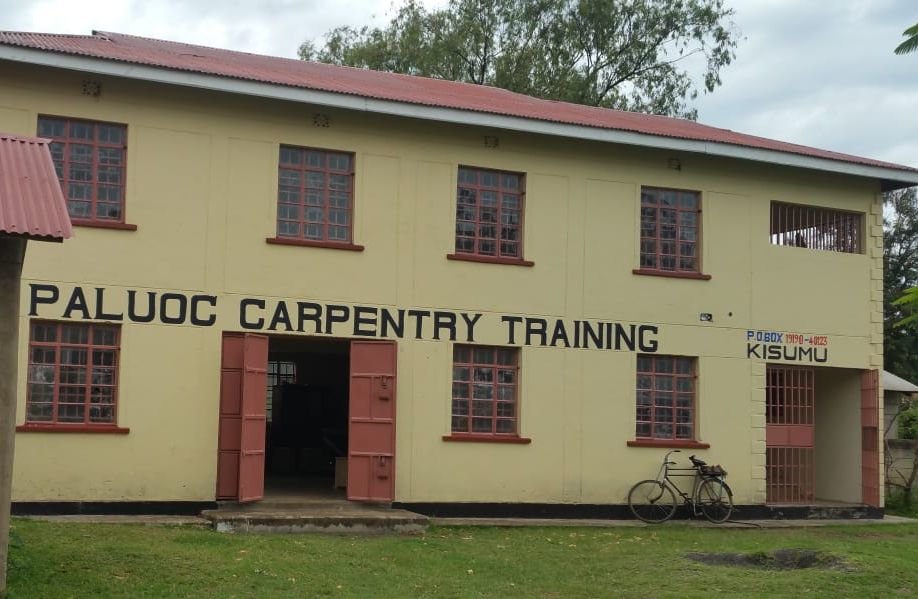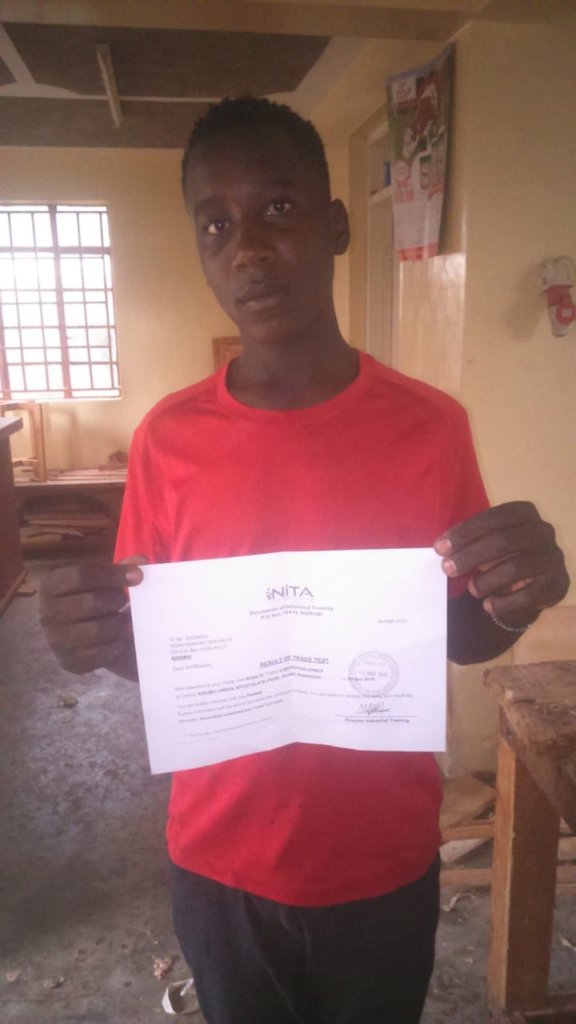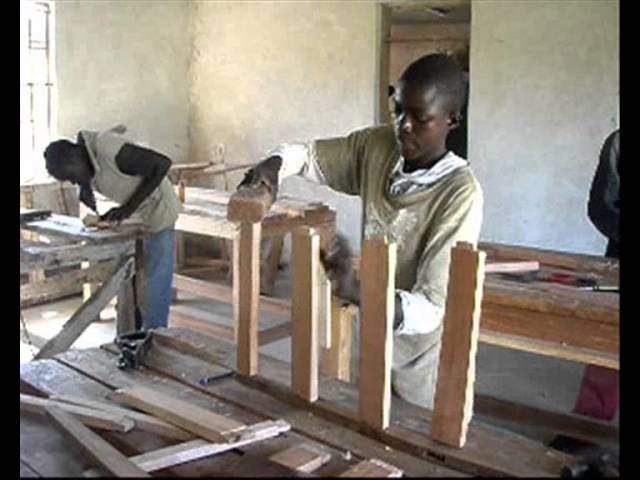
This is an important phase for Paluoc carpentry workshop. They are hoping to increase their number of trainees from the current 5 up to 10. They have been obtaining work from local schools, repairing school desks, and have made tables for meeting rooms at a local conference centre. This helps finance the training and is good practical experience for the trainees.
They have a planing/thicknesser machine which will also help generate income to help fund training. They have had a major setback with this due to the widening of the Nairobi to Kisumu road. It has meant that the whole area has been without electricity for an extended period of time whilst all of the power cables and poles have been moved. Hopefully this will be resolved soon.
Their reporting system, keeping sponsors informed of trainees' progress, has been working well. It also provides the trainees with a small insight into the capabilities of modern I.T.
They still need more sponsors so that they can continue to provide training free of charge for those who are not in a position to fund themselves and often have no family able to help them.
There are some thoughts about extending the provision so that a greater number can be helped in the future, but that is a problem for another day.
They currently have a good selection of refurbished hand tools that have been supplied by UK charities. It is good to have some decent quality tools to train with. Though they have a good stock currently, as they successfully train more youngsters and send them off into the world to earn a living, they will need to replenish their stocks. They hope to give each trainee a basic toolkit when they graduate. Before they get to that stage they have to persuade Paul, their instructor, that they know how to use the tools and also, very importantly, how to look after them. For some of the trainees that is a very new experience.
The workshop has been training youngsters now for a year. They are much better equipped with tools than they were 12 months ago and they have been able to obtain a few contracts for school desks, school lockers and for some tables for a local conference centre. This helps provide good training opportunities and a small income to help fund the training.
As with all new projects there have been teething problems. When you are living near the breadline there is a temptation to earn a small amount of money instantly rather than spend time training to learn skills which will see you and your family alright in the long term. As a consequence there has been some difficulty obtaining, recruiting and retaining trainees. They can earn a few shillings a day as a bicycle taxi. The situation has been exacerbated by the difficulty in obtaining the electricity which would run the planing machine which would provide a useful service for the local area, and a relevant skill. It would also help fund the training as well as provide a very small income for the trainees. The problem is that a major road improvement nearby has caused disruption to the power and water supply to the area. We hope that this situation will be remedied soon.
2013 is a big year for Paluoc.It has already provided useful training for a small number of trainees. It tends to recruit youngsters with low self esteem who have had relatively little previous education and even less success
with it - often due to circumstances beyond their or their family’s control. They are generally unable to make any significant contribution towards the cost of their training. Paluoc gives them a chance to gain skills and confidence, and hopefully to earn a decent living in the future.
January and February are the most important months for recruitment, it is the start of the year and many youngsters find themselves in the position of being unable to continue with their current training due to lack of funding. That’s where Paluoc comes in.
Paluoc is still very short of training materials with only one woodworking book, a stick of chalk and a homemade blackboard. They are used to making do. They also need timber to practice making various joints that they need to master. Trainees are currently given about K30sh a day so that they get something to eat at lunchtime, that’s about 25p/40c. They need basics like exercise books, pens and pencils, to be able to practice drawing and reading design plans.
The scheme has been launched - it now needs a bit of help to get it through the next phase to help ensure that it is successful in recruiting and training needy youngsters. We hope that by the beginning of March the workshop will be full of the sounds of planing, sawing, hammering and chiselling. That’s the dream of Paul the carpentry teacher and he has worked very hard to get the project to this pivotal point.
My wife, Gill, and I are currently in Kisumu visiting the Paluoc training workshop on a daily basis. We are trying to give Paul and his band of helpers some assistance in recruiting and retaining carpentry trainees. The problem is
mostly a boy thing - most young girls seem to enrol in appropriate training courses and stick to them. For the boys there is the appeal of a job on a boda-boda bicycle with a passenger seat for a paying customer. For this there is an
instant Ks100 a day (about $1 or less than £1), sometimes more whilst your legs hold out! For others the alternative is a bag of shoe glue to sniff to take your problems away. Some just hang around and idle their time away.
Paluoc offers free training in carpentry skills that can earn a youngster a decent living throughout their life. The free part is important because many have left school early because they can't afford to continue, and they don't have any money for any other sort of training either.
They have been given hand tools from generous UK charities and they are learning to use them. Paluoc is just about to invest, through a grant from another British charity, in an electric planer and power saw. This helps with their own needs and also provides a source of income planing wood for other users.
The trainees are often orphans or partially orphaned. Paluoc tries to offer trainees a small snack at lunchtime and would like to be able to make a small, very small, but hopefully effective payment to lure them away from street corners and give them a bit of street cred for going into training.
Sadly with all of the other costs for the building, the timber, a small salary for the trainer, and especially the exam. fees; even with a bit of sponsorship from some Hands Around The World supporters the sums just do not add up.
The long term hope is to be self-sustaining and they are working towards it but in the meantime they need help to establish themselves so that they can offer good training and a bit of street cred too.
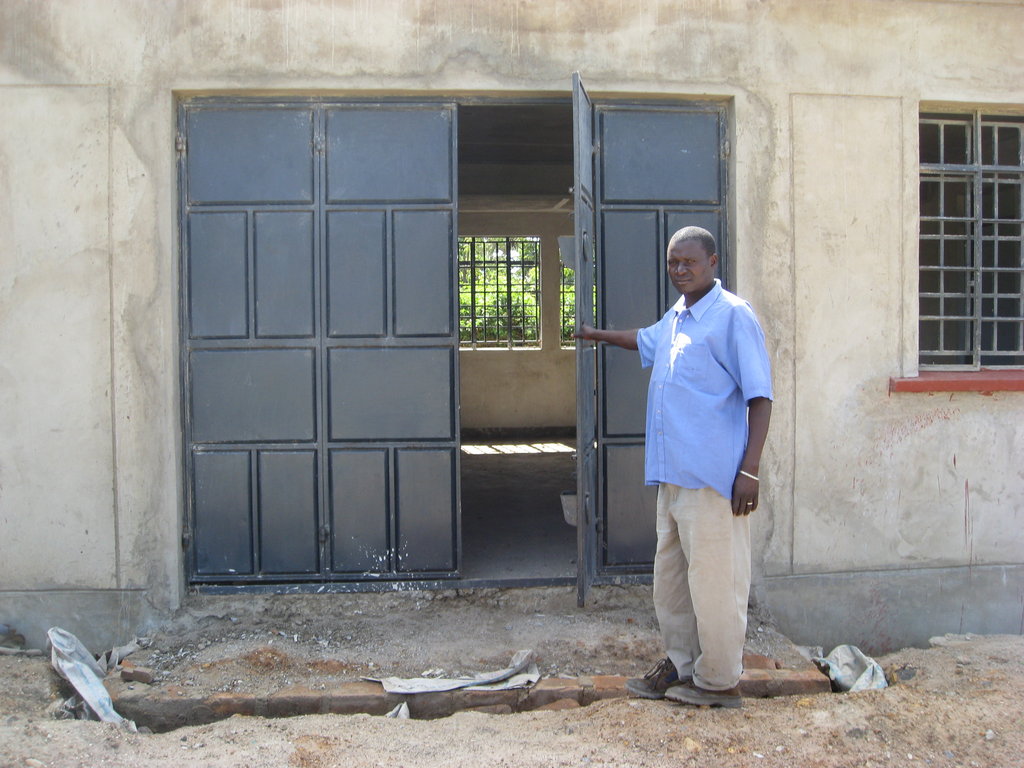
With a number of others, my wife and I helped to build the workshop. It is a great joy to stand just outside it and hear the hammering and banging going on in every available space inside, and to see the youngsters' growing skills and confidence.
They just need a bit of help
$15 would buy some training materials
$30 would provide some timber with which to work
$45 would pay the exam fees for one trainee
$75 would provide lunch every day of the year for one trainee
$180 would sponsor a youngster for a year at the workshop
Thank you for your support through GlobalGiving!
They have also recently fitted windows. They, like many other parts of the world this year, have been experiencing heavier rainfall than usual. This needs to be kept out of the workshop.
These are still early days, but Paul wants to start the way he wants to carry on; setting the trainees good standards and getting them into good habits.
Hopefully the number of trainees will increase next year but this will mean that the need for training materials will also increase so any help with funding would be much appreciated.

£5 would buy a trainee lunch for a month
£10 would provide training materials
£25 would pay for the exam fees for one trainee.


Project Reports on GlobalGiving are posted directly to globalgiving.org by Project Leaders as they are completed, generally every 3-4 months. To protect the integrity of these documents, GlobalGiving does not alter them; therefore you may find some language or formatting issues.
If you donate to this project or have donated to this project, you will get an e-mail when this project posts a report. You can also subscribe for reports via e-mail without donating or by subscribing to this project's RSS feed.