By Akanksha Singh | Programme Officer
Reach – 80,533
Direct
Fishers – 55,215
Students- 25,318
Indirect Reach- 260 million
Whale Shark Conservation Project:
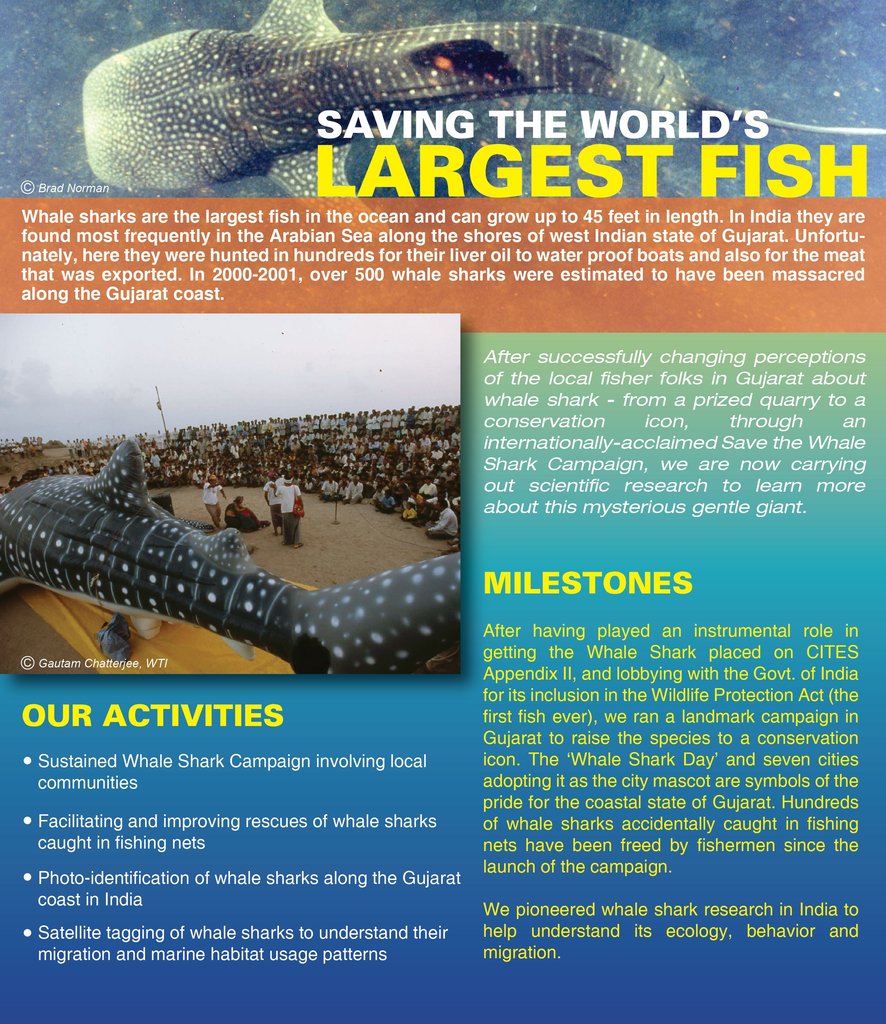
The Pan-India Whale Shark Conservation Initiative, led by the Wildlife Trust of India (WTI) in
partnership with State Forest Departments, has evolved from a flagship programme in
Gujarat into a multi-state conservation model spanning Gujarat, Kerala, Goa, and
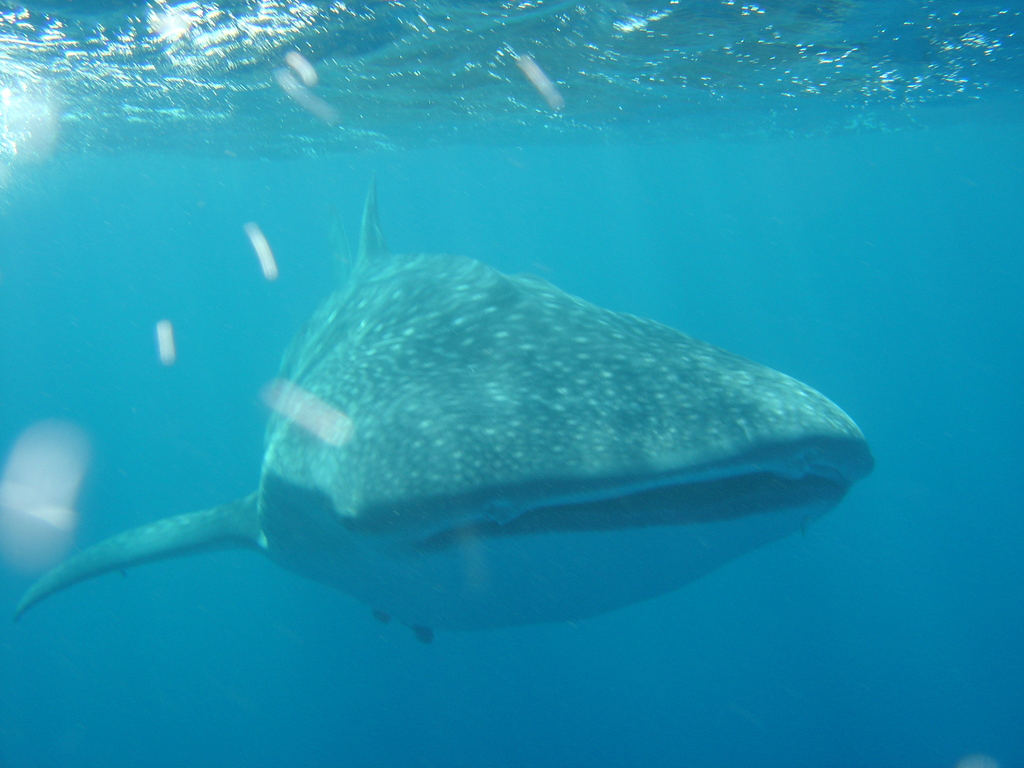
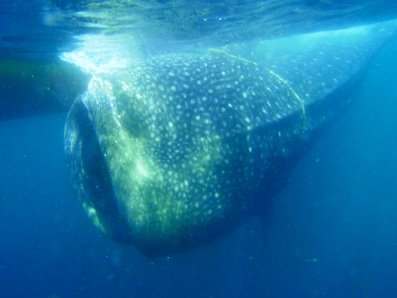
Lakshadweep. The initiative focuses on protecting the endangered whale shark (Rhincodon
typus) through a combination of community stewardship, science-based interventions, and
policy engagement.
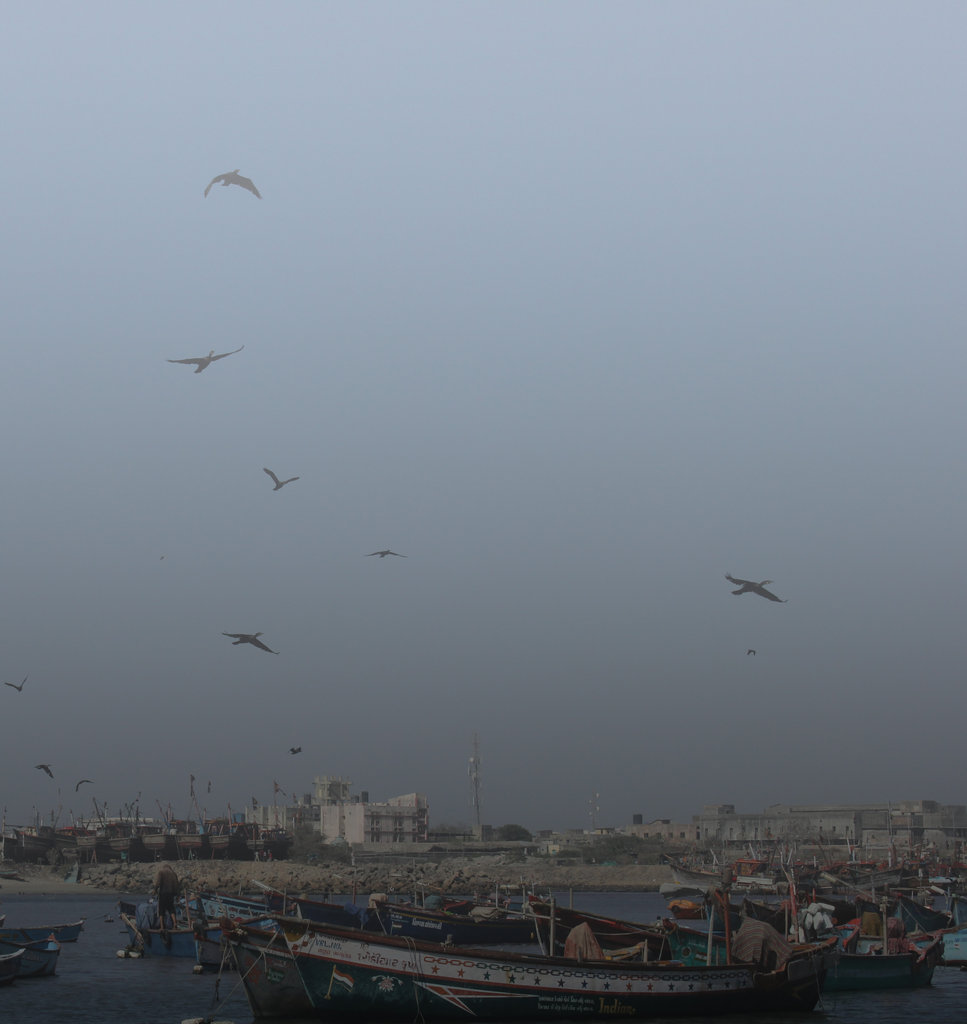
In Gujarat, where the programme was first initiated, the project has achieved significant
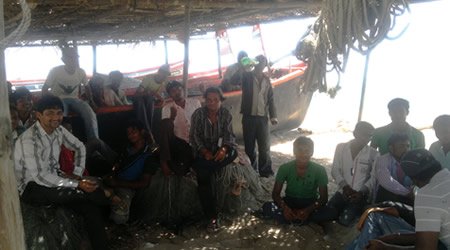
success by transforming local fishing communities into conservation champions. Through
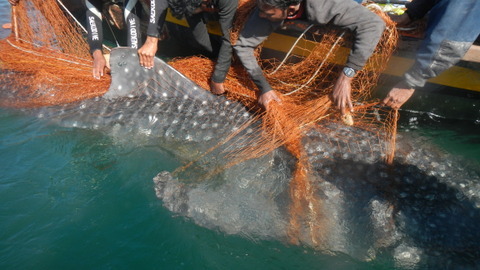
the Self Documentation Scheme (SDS), fishers actively participate in the rescue and safe
release of accidentally entangled whale sharks, contributing to over 1,000 successful
releases. The state also leads in scientific advancements, including satellite tagging to
understand migration patterns across the Arabian Sea.
Building on this success, the initiative expanded to Kerala, where efforts have focused on
strengthening fisher networks, capacity building, and increasing rescue reporting along a
more dispersed coastline. In Goa, the programme integrates awareness and rapid response
systems while leveraging public outreach platforms to build visibility for marine
conservation. In Lakshadweep, the approach is more ecosystem-centric, combining
community engagement with emerging efforts to understand whale shark presence in island
ecosystems.
Across all regions, tools such as the Whale shark mobile application and targeted training
programmes enable real-time documentation and response. The initiative has also invested
in sensitisation, institutional partnerships, and scientific research, including tagging and
ecological monitoring.
Overall, the programme represents a scalable and adaptive model of marine conservation in
India—demonstrating how local communities, when empowered and supported, can drive
the protection of a globally threatened species while contributing to broader ocean .
Activity 1: Pre-Campaign Survey
To prepare for the Goa whale shark conservation campaign, a baseline survey of 240 stakeholders across 11 villages revealed that while there is high awareness of the species' presence and a 93% belief in the importance of releasing entangled sharks, significant gaps remain regarding their Schedule I protected status and actual rescue practices. Despite being viewed as "majestic," misconceptions persist, with 39% of respondents incorrectly believing the species is still hunted for meat. Leveraging the finding that 90% of the community relies on smartphones and television for information, and backed by the official support of the Goa Forest and Fisheries Departments, the focus for the project will be on bridging the gap between belief and action through community-led, education-based outreach.
Activity 2: Campaign activities (school and community events)
Across Goa, Kerala, and the Lakshadweep islands, a series of 47 targeted awareness and sensitization activities were conducted to engage youth and key stakeholders in marine conservation. In Goa, events included the project launch on International Whale Shark Day, Wildlife Week outreach for Drishti lifeguards, and a specialized seminar at Carmel College, which were complemented by a three-day educational stall at the Aqua Goa Mega Fish Festival. 38 youth-focused programs were conducted across Kerala and Lakshadweep that used creative formats such as quizzes, drawing competitions, sand sculptures, and seminars to promote whale shark protection. By integrating school-based education with large-scale community festivals, the campaign successfully fostered a deep understanding of marine biodiversity among a diverse demographic of students and local community members.
Activity 3: Fisher community sensitization and conservation awareness activities
Building on the outreach efforts across both regions, a total of 66 sensitization programs were successfully conducted along the coasts of Goa, Kerala, and Lakshadweep. These activities, in 193 kms Goa and 600.15 km of the Kerala and Lakshadweep coastline, focused on elevating the whale shark’s status as a protected species through ecological education, technical training and promoting local environmental stewardship.
Activity 4: Marine Megafauna Stranding Response Training for Veterinarians and Frontline Forest officials
To strengthen institutional response mechanisms for marine megafauna, the Kerala and Goa Forest Departments, Animal Husbandry Department of Kerala and Goa, Fisheries Department of Goa in collaboration with the Wildlife Trust of India, conducted specialized stranding response training for 46 veterinarians in Goa and 151 veterinarians and forest officials. Held across Alappuzha, Kollam, and Thiruvananthapuram, and North and South Goa, these programs provided theoretical and practical instruction on rescue protocols, necropsy procedures, and disease management. This initiative helped coordinate capacity for handling both live and dead stranding along the Kerala and Goa coasts.
Activity 5: Awareness through Mural arts on Whale shark conservation
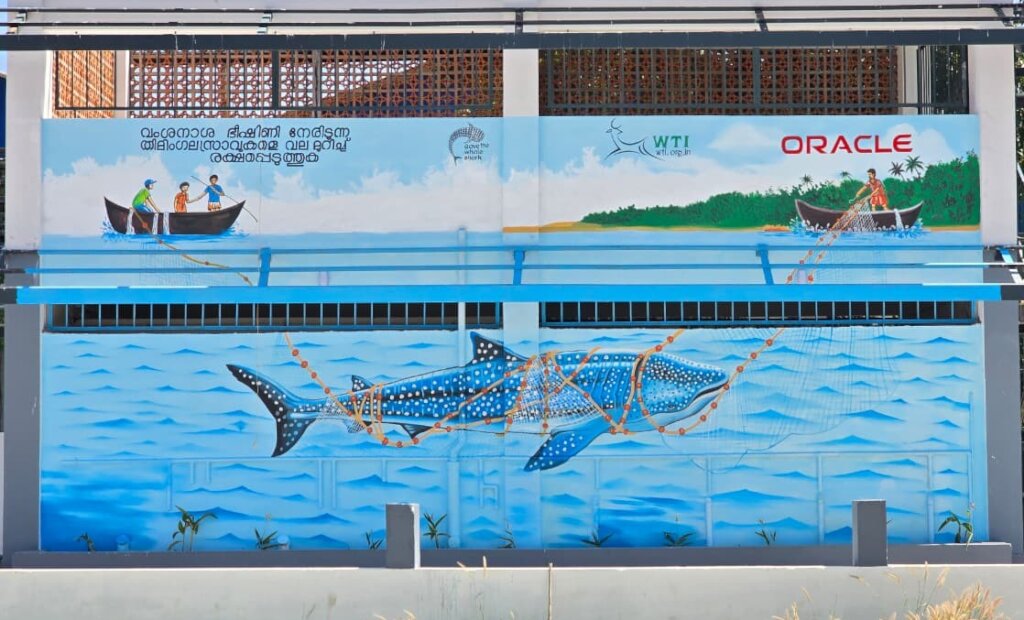
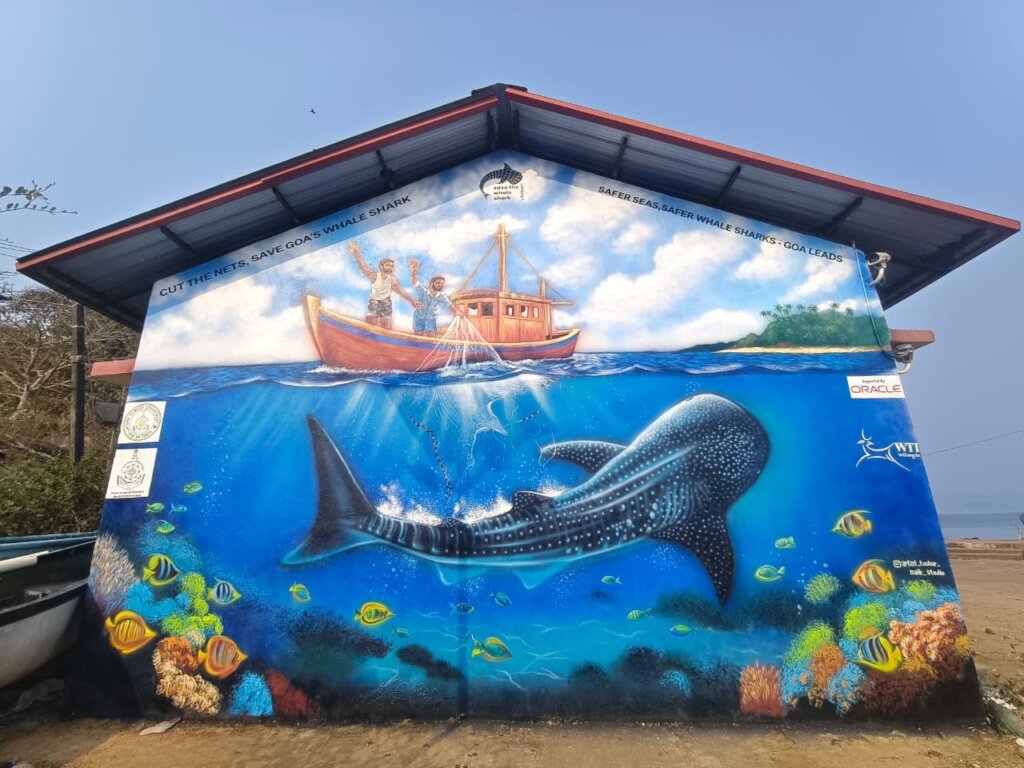
To visually anchor the project’s conservation message, vibrant mural arts were painted at key locations, including the Chettuva and Azhikkal Harbours and the Kannur Kerala, as well as the Betim and Talpona jetties in Goa. These large-scale wall paintings serve as a creative bridge between scientific conservation and public understanding, transforming high-traffic areas into storytelling platforms that highlight the beauty of the whale shark. These artworks foster an emotional connection and a sense of collective responsibility among local fishers and visitors alike. Ultimately, this artistic engagement strengthens the call for sustainable practices and environmental stewardship, turning local infrastructure into a lasting visual reminder of the need to protect these gentle giants.
Gujarat Training
Multiple capacity-building initiatives were undertaken to strengthen on-ground response and data systems. Training workshops were conducted with fishermen across four major fishing harbours on the operational use of the Vhali Watcher mobile application under the Self Documentation Scheme (SDS). In addition, targeted field-based training sessions were held with Rapid Response Teams (RRTs) to prepare them for satellite tag deployment protocols. Capacity development programmes were also organised for Forest Department officials and collaborative training sessions were conducted with Indian Coast Guard (ICGS) officers to enable coordinated offshore operations. Continuous one-on-one handholding support was provided to fishers to improve app adoption and reporting efficiency.
Sensitisation
Sustained community engagement efforts were carried out to reinforce fisher-led conservation. Sensitisation during training workshops emphasised the ecological importance of whale sharks and the role of fishers in ensuring safe release. The Vhali Watcher application was positioned not only as a reporting tool but also as a conservation enabler, encouraging behavioural change and ownership among fishing communities. Engagements with government stakeholders also focused on strengthening the application’s integration as a formal monitoring tool, including processes related to security audits and system validation.
Rescues
The project continued to achieve high rescue success through the SDS approach. Between April 2025 and March 2026, a total of 53 whale shark rescues (including 4 pups) were recorded along the Gujarat coast, despite seasonal fishing bans for two months. All reported entanglements were responded to promptly, ensuring safe release back into the wild. These rescues demonstrate the effectiveness of long-term community engagement and the reliability of the fisher-led rapid response network.
Tagging
The project maintained its leadership in whale shark satellite telemetry in India, with a total of 11 satellite tags deployed to date. The most recent tagged individual, Vhali-5, was tracked for 104 days, covering approximately 3,000 km, including movement towards the Gulf of Oman and return trajectories linked to favourable sea surface temperatures (25–30°C). Efforts to deploy additional tags continued through multiple offshore expeditions; however, tagging is undertaken strictly based on animal health and suitability. In one instance, a rescued whale shark was released without tagging due to poor health condition, reflecting adherence to ethical protocols. Preparations are ongoing to deploy two additional fin-mounted tags in coordination with the Gujarat Forest Department.
Links:
By Goutham Sambath | Project Lead, Whale Shark Conservation Project
By Farukhkha Husenkha | Sociologist - Whale Shark Conservation Project
Project reports on GlobalGiving are posted directly to globalgiving.org by Project Leaders as they are completed, generally every 3-4 months. To protect the integrity of these documents, GlobalGiving does not alter them; therefore you may find some language or formatting issues.
If you donate to this project or have donated to this project, you can receive an email when this project posts a report. You can also subscribe for reports without donating.