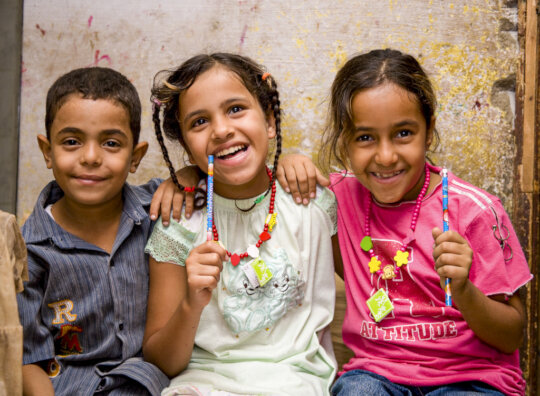
Our B'edaya* projects help fatherless households gain self-suffiency they lost with the death of their provider, in a country with little support for female-headed households.
Here is a story from one mother we have helped take charge of her family's livelihood.
Om Youssef
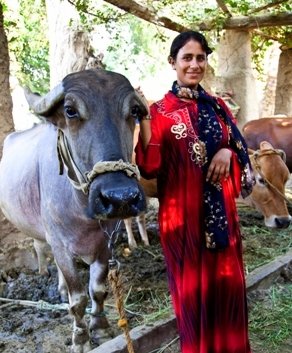
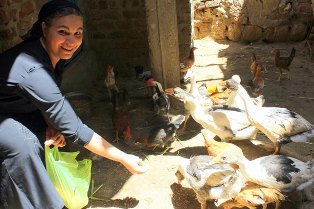
In 2001 Om Youssef’s** husband died of Meningitis leaving an illiterate wife with 2 helpless children. Om Youssef vowed that her children will get an education no matter the cost. She was willing to do whatever it takes, but did not know where or how to start. B’edaya helped Om Youssef start raising livestock, and to date she has made 450 Egyptian Pounds in income all while paying back her loan in full. That's about 6 times the government widow pension that Om Youssef and her family had to live on before.
*"B'edaya" is Arabic for "with my own hands."
**"Om" is Arabic for "mother of." In Egypt, it is common to refer to women by the name of their oldest sons.

Inflation and insecurity have driven Egypt's markets to become more local, and more focused on the basics. The result has been hard-hitting for Egypt's widowed households, who already struggle for life's necessities. But the new, more informal local economies has also opened up new market opportunities for household businesses who could not compete with larger, more regional retailers before the current crises.
The Problem: Inflation, Insecurity Drive Market Changes in Egypt
The government has already begun easing Egypt's heavy food and fuel subsidies. While so far only fuel has been first, the cost of food has also already gone up. Egyptians are beginning to hoard rice and other staples as a hedge against the future. The Egyptian pound has fallen to its lowest value in eight years, and imports on grains and other necessities are increasing.
The soaring cost of transportation is putting local economies at an advantage by making it more difficult to ship goods across larger areas. Meanwhile, the lack of police presence in many Egypt neighborhoods and villages, and rising crime rates, are also shifting the economic advantage to neighborhood-based businesses. Local residents throughout the country have responded by blockading roads and forming neighborhood watches, making it even more difficult to bring goods to market from outside local areas.
The 2013 Opportunity: Widowed Mothers Strategically Positioned in New Neighborhood Economies
Inflation in the cost of food staples and fuel always hit the poor hardest, including widowed households. Yet as these changes unfold in Egypt, there is also an opportunity for widows.
Last year, B'edaya offered widows the opportunity to open small mini-marts from their homes or other places in their local neighborhoods. But it was difficult to compete with larger, more regionally connected merchants.
Widows in Egypt tend to travel much less than other groups, because of poverty and because of the social stigma of widowhood. Recent market changes in Egypt have turned this to an advantage for widowed mothers who start small grocery shops from their homes or sell livestock that they raise. These female-owned village shops are now poised to become neighborhood mainstays for daily goods in increasingly closed and self-contained villages.
Timeline for B'edaya 2013
January starts a new business cycle for B'edaya, (Arabic for "with my own hands") Coptic Orphans' microcredit program for widowed mothers in Egypt.
We are accepting applications this month from widowed mothers who will benefit from Egypt's new, more local market space in order to break the cycle of poverty and finally reach the dream of self-sufficiency for their families.
On March 25, 2013, we will choose finalist projects that will begin thereafter.

B’edaya (Arabic for “with my own hands”) has gained sustainability in 2012 as the culture of entrepreneurship has spread from training workshops for widowed mothers into the very culture of 400 village-based volunteers who visit the homes of orphaned families.
So what does that mean? Here’s an example that should show how the effects of B’edaya are spreading beyond its implementation periods.
In the village of Deir Reefa in Assuit, village volunteer Mariam was a part of B’edaya during the 2011 cycle. Since then, she has kept her eyes open to find widowed mothers with the greatest potential to generate their own income.
One of those was Hala. Through a Coptic Orphans partnership with the local NGO, Assuit Businessman’s Association, Mariam connected Hala to micro-credit grant funds beyond the B’edaya budget in her area.
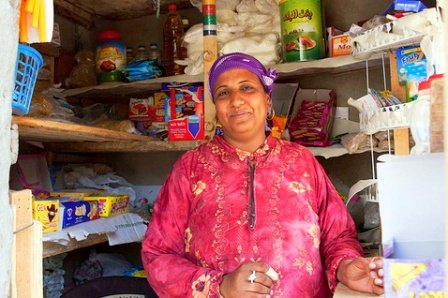
Hala got a loan for 1,000 Egyptian pounds to start a convenience store in her village. There were other stores in her area, but because of her strong relationships with others and shrewd eye for scouting deals around the village to create a wide-ranging inventory, she was able to overcome the stiff competition and attract more customers than the stores around her.
At the beginning, she began by selling candy bars and staples such as soap, sugar, and tea. Eventually, she was able to buy a refrigerator and freezer that enabled her to add meats to her stock. She also started selling rice, pasta, phone cards, and oil to the village.
Hala has paid back her loan in full, and now has 3,000 Egyptian pounds in capital. Her income ranges between 400- 500 pounds every month, compared to the standard Government widow pension of 13 pounds, on which she struggled to feed her family before.
The most remarkable thing is that she has done all of this within nine months.
In a village culture that expects widows to wear black and stay at home, she has become a highly visible example of an industrious, independent business woman not only among other widows, but to all the women of her village.

It has been a tumultuous year for many in Egypt. The price of cooking fuel and food have both skyrocketed. Meanwhile, the streets of many villages remain unsafe. Both have been especially hard on widowed families. This made microfinance projects funded by Coptic Orphans life-saving for many widows throughout Egypt.
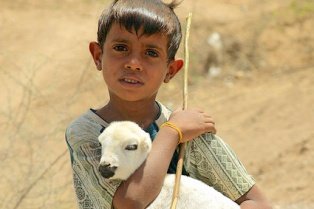
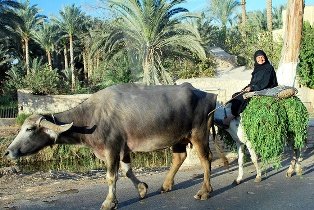
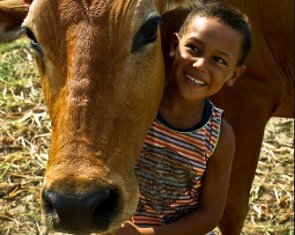
Shenouda, a 13-year-old boy from the town of Manfalout in Upper Egypt, recently became the proud father a new calf buffalo. The buffalo is not only a point of pride for Shenouda, but a real means of livelihood for him and his widowed mother.
Prudent savings from Coptic Orphans contributions enabled him to purchase the buffalo. “I bought it to help us in our life,” he says proudly as he strokes the animal. His mother has also been inspired to raise a water buffalo herself to help support the family, embodying the purpose of B'edaya.
Shenouda's mother then lead the way in their family. When she realized she could provide, she helped Shenouda become more self-sufficient, too.
He says today that he has a deeper sense of responsibility and integrity after these experiences.
Grateful for this means to earn a living for his family and more, Shenouda plans on sharing the butter and cheese that he produces from the buffalo with others in his village.
Links:
The project year started in December with 74 active projects in Assiut, Minia, Monofiya
and some slum areas in Cairo. Projects funded were in one of three categories: 1) Services such as a beauty salon; 2) Livestock such as raising poultry and cattle and 3) Retail such as a grocery store or a retail store selling shoes and outfitsProject Reports on GlobalGiving are posted directly to globalgiving.org by Project Leaders as they are completed, generally every 3-4 months. To protect the integrity of these documents, GlobalGiving does not alter them; therefore you may find some language or formatting issues.
If you donate to this project or have donated to this project, you will get an e-mail when this project posts a report. You can also subscribe for reports via e-mail without donating or by subscribing to this project's RSS feed.
Merrifield,
Virginia,
United States
http://www.copticorphans.org