There's a new focus on women worldwide. The New York Times magazine dedicated their entire issue one week in August on women in the developing world. Of particular focus was a newly launched book written by the well-known Pulitzer winning couple Nicholas Kristof and Sheryl DuWunn titled: "Half The Sky: Turning Oppression Into Opportunity for Women Worldwide". The press focus on this timely book is significant- from reviews in Harvard and People magazine, to upcoming segments on shows like "The Today Show", the time has come for women and their issues worldwide to be in the spotlight.
Sakena Yacoobi and her organization the Afghan Institute of Learning is one of the topics in Chapter Nine of the book. Dr. Yacoobi grew up in Herat, Afghanistan and then came to the United States to study at the University of the Pacific and Loma Linda University. Concerned about the condition of her people back in Afghanistan, Sakena returned to Pakistan to work in Afghan refugee camps and later went to Afghanistan. Although the Taliban forbade girls from getting an education in Afghanistan, Sakena was instrumental in establishing a string of secret girls schools with community support.
Today, the Afghan Institute of Learning has multiple education programs in Pakistan and in seven provinces of Afghanistan. There are educational learning centers for women and children, preschool programs, post-secondary institutes, a university, and teacher training programs. In addition, AIL has an in-depth program of health education and treatment for women and small children. Since its start in 1995, AIL has trained nearly 16,000 teachers and over 3.5 million women and children have received a quality education. With the health programs included, AIL has directly impacted over 6.7 million Afghans.
Sakena has been and continues to be recognized for her work. Her philosophy is to develop a program from the grass-roots level so the community members are an integral part of the process. State Kristof and DuWunn in their book Half The Sky- "American organizations would have accomplished much more if they had financed and supported Sakena, rather than dispatching their own representatives to Kabul...The best role for Americans who want to help Muslim women isn't holding the microphone at the front of the rally, but writing the checks and carrying the bags in the back."
Dr. Yacoobi and the work of the Afghan Institute of Learning have been supported by multiple grantors and organizations over the years. "I wish to thank everyone who has helped in this important work," states Sakena. "I want to share with each and every contributor the joy of seeing a young woman, who has a renewed interest in life because she can now read, or the happiness of a widow who has learned a skill that will allow her to support her children.
"We now have children who are healthy because of inoculations, and women who did not die during childbirth who have happy, healthy babies. My wish is that these small steps that allow awareness and growth in families will lead to the growth of our country."
Recently, we spoke with Sakena, and she has this message to all the supporters of AIL:
"It is an honor to be included in Nicholas' and Sheryl's book Half The Sky. So many foundations and individuals have contributed to the work that the Afghan Institute of Learning has been able to do in Afghanistan.
"From the bottom of my heart I want to thank all who have understood the plight of Afghan women and children, and have reached out with compassionate, caring support.
"May God reward your generosity......."
Sakena
Recently, AIL was asked by the Afghan Ministry of Women’s Affairs to report on the impact AIL’s programs have had. We were amazed by our findings. Since beginning in 1996 through May 2009, 220,970 Afghans have been educated and received skills training in AIL schools, centers and post-secondary programs. Over 16,000 teachers (more than 70% female) have received pedagogy or capacity-building training and have gone back to their classrooms to provide a higher quality education to more than 3.4 million students. Overall 6,778,026 Afghan lives have been directly impacted by AIL programs.
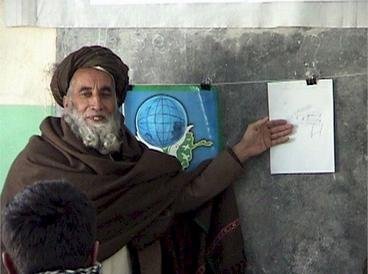
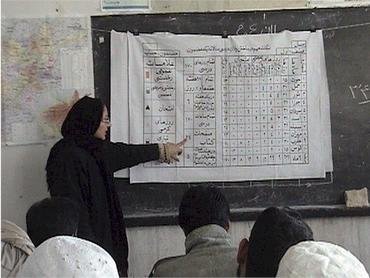
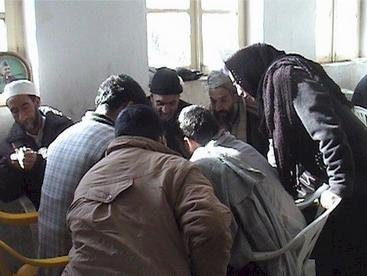
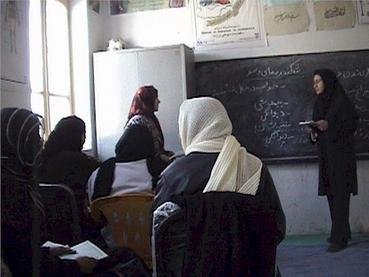
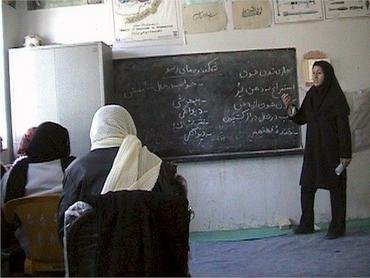
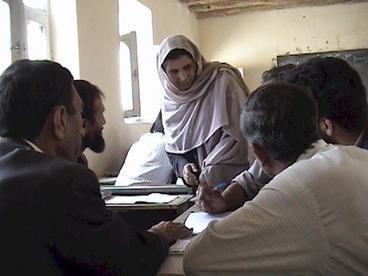
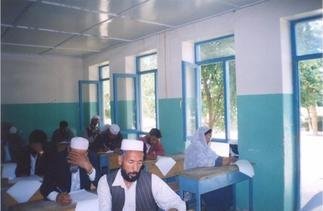
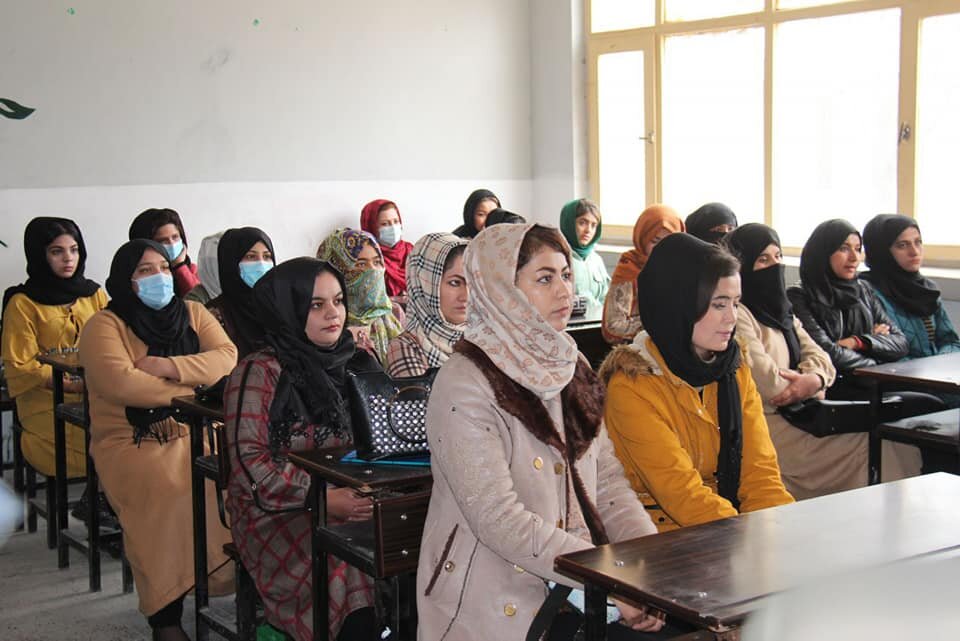
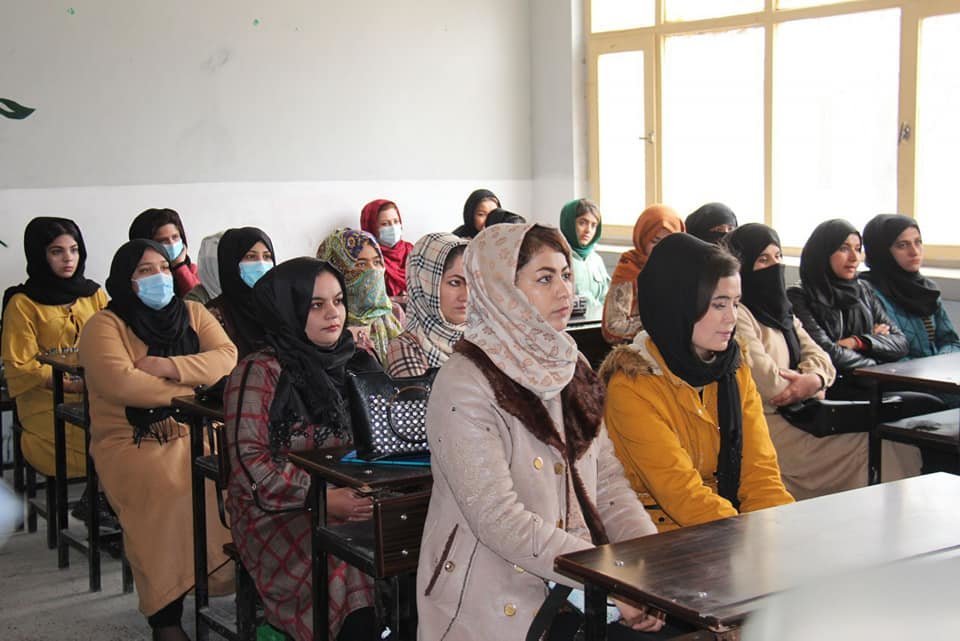
In Afghanistan most teachers instruct students using rote memorization as their only method. The students are rarely taught critical thinking skills, skills which are necessary for the future of their society. AIL is working to change this by hosting workshops where teachers can learn how to use critical thinking in their classrooms, as well as how to plan lessons, organize their classrooms and much more. During the first 6 months of 2009, AIL has trained 746 teachers in such workshops. Assuming these teachers each teach 30 children (usually teachers in Afghanistan teach more than 30 children), AIL has helped 22,380 students receive a higher quality education thanks to your donations.
One teacher trained in AIL workshops had this to say, “I am a third grade math teacher. The students are so young that they get tired quickly and cannot learn everything they need to learn. During this workshop, I learned how to make math interesting for my students. I learned how to make them active during class using group work and competitions as well as how to use different materials during my lessons.”
Teachers participating in a recent AIL “Teaching Literacy” seminar had the following to say about their experiences:
One teacher said, “There have been so many changes in myself, I can’t believe it. I now understand that the method I was using to teach my class was wrong. I didn’t teach my students regularly because I didn’t know the best teaching methods. Now I have learned how to stand in front of the class, and how to teach my students confidently. I have learned that having a lesson plan and having it all together can improve the level of my students.”
Another participant said, “Although I have been teaching literacy courses for about three years, my teaching was just reading and having my students repeat after me. I didn’t know how to have the students actively participate, I just lectured in front of the class. Now I understand that I must have lesson plans, how to use the student centered methods and how to teach different subjects to my students. I hope this will help me teach the students well and help society.”
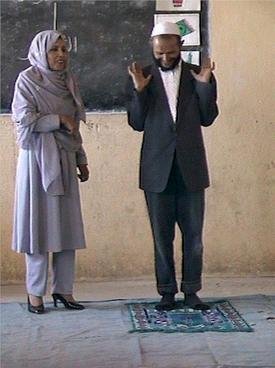
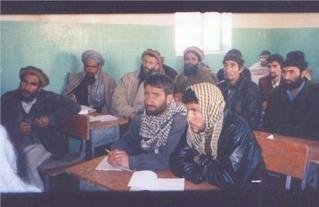
During 2008 the Afghan Institute of Learning held 96 education workshops and seminars for a total of 1448 participants. About 80% of those attending these education training sessions were women.
At a recent pedagogy seminar, teachers in attendance were asked what they learned from attending the seminar. Here is a sampling of what they had to say:
“We plan to use what we have learned and practiced here in our classrooms. We learned that one lesson could be taught using many different methods. We learned how to plan a lesson, how to specify the duration and steps of a lesson. Also, we learned how to begin and end a lesson.” “We learned that a good quality teacher has responsibilities beyond just teaching; they also must establish a good relationship with their students.” “During our psychology lesson, we learned that we must understand our students and their problems. From this understanding, we have to find a way to solve their problems. “ “While discussing exams, we learned what they are, what their purpose is and the differences between exams and evaluations. We also learned how to make a question sheet, and answer key. “ “We learned how to prepare materials for the lessons we want to teach, and we came to understand that students must be the center of everything we do as teachers.”
The Afghan Institute of Learning (AIL) continues to make training teachers a priority. AIL has now trained over 14,000 teachers. Thus far in 2008, AIL has trained 263 teachers in AIL’s intensive, one-month, foundational pedagogy seminar and has trained 356 teachers in various workshops.
Feedback from participants in pedagogy seminars in Herat included the following comments:
Wazir, one of the participants says, “Before I came to this seminar I would write the whole lesson on the blackboard, and then explain it to the students. The class was always centered on the teacher. From this seminar I learned that students must be center of the activities.”
One of the participants that used the seminar’s methods in her classroom says, “As I used the methods in my class room I saw that the atmosphere of the class was completely changed. The students paid attention to the lesson and they took part in the activities and I really enjoyed teaching them. Her students asked her why she has not used these methods before she told them that she learnt it from AIL seminar and from now she will teach them in the same way.”
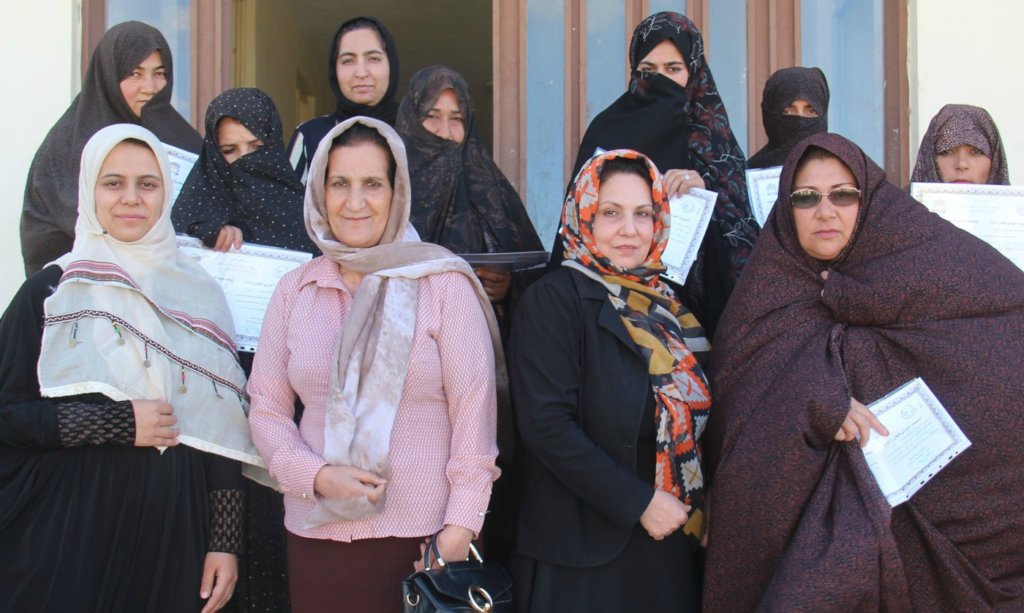
At the graduation ceremony for the seminar, Sima Shir Mohammadi head of the Ministry of Women’s Affairs spoke. She compared AIL with other organizations and said that AIL had the best educational and health programs for women and they really help the women to increase their knowledge and capacity through the trainings. She added “I know some organizations get a great deal of funding from donors for women’s projects but do nothing and waste the money. AIL runs big projects with less funds I must thank AIL. The women have been trained by AIL do good work in their jobs.”
Project Reports on GlobalGiving are posted directly to globalgiving.org by Project Leaders as they are completed, generally every 3-4 months. To protect the integrity of these documents, GlobalGiving does not alter them; therefore you may find some language or formatting issues.
If you donate to this project or have donated to this project, you will get an e-mail when this project posts a report. You can also subscribe for reports via e-mail without donating or by subscribing to this project's RSS feed.
Dearborn,
Michigan,
United States
http://www.afghaninstituteoflearning.org