By Kristina Walter | Volunteer with Friends of the World Food Program
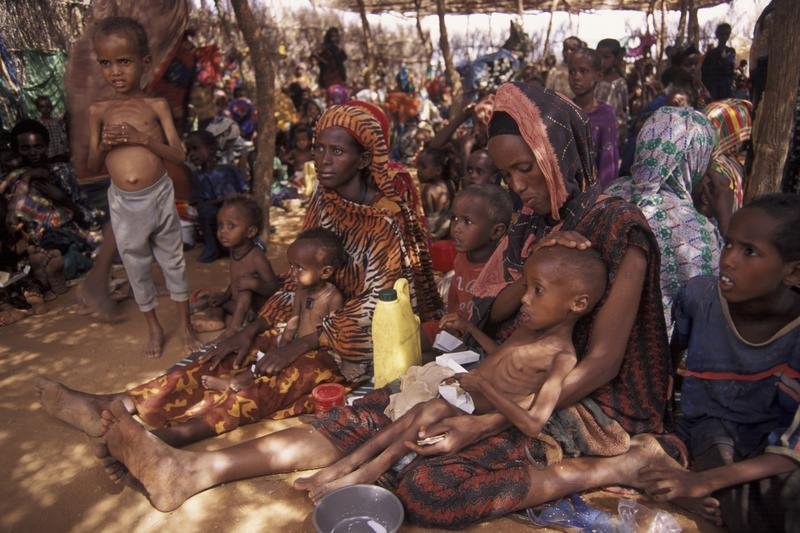
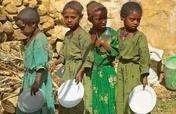
“For the last four months, people suffered a lot because of the drought,” says Abdi Ali Sheer, a village elder in the Somali region of Ethiopia. “A lot of livestock passed away during this period, and people also. People are malnourished and some are dying. Since yesterday, I only had tea and there is no food to eat.”
The serious drought that struck Ethiopia throughout most of 2008, coupled with a surge in food prices, drove over 10 million people into hunger last year. The after-effects of the drought continue to plague the country. Hunger and malnutrition still threaten nearly five million people, forcing families to reduce the number of meals they eat each day, and borrow food and money to survive.
The predominantly agricultural Somali region of Ethiopia has seen significant land and animal loss that will continue to affect families for several seasons to come. In fact, before the drought Abdi Ali Sheer had 50 cattle, now he only has two or three; he says that he’s never seen it so bad in his 85 years. “In past droughts, we had places to go with our livestock, but now everywhere is the same – there’s nowhere for livestock to go and they’re dying here from disease.”
Africa’s second-most populous country, Ethiopia ranks 169 out of 174 countries according to the UNDP Human Development Index, making it one of the five least developed countries in the world. Its people suffer from high rates of malnutrition, one of the lowest primary education enrollment rates in the world and HIV/AIDS prevalence. Six major droughts in just two decades combined with the effects of extreme poverty have left many families on the brink of survival, unable to ever fully recover.
Since 2007 the World Food Program (WFP) has assisted millions in Ethiopia through interventions that include assistance to drought and flood-affected households, malnourished children, pregnant and breast-feeding mothers, people affected by HIV/AIDS, and refugees.
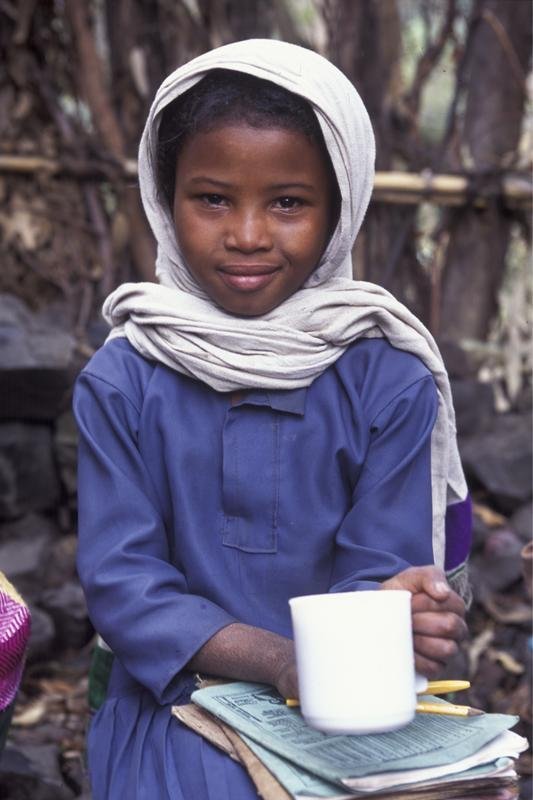
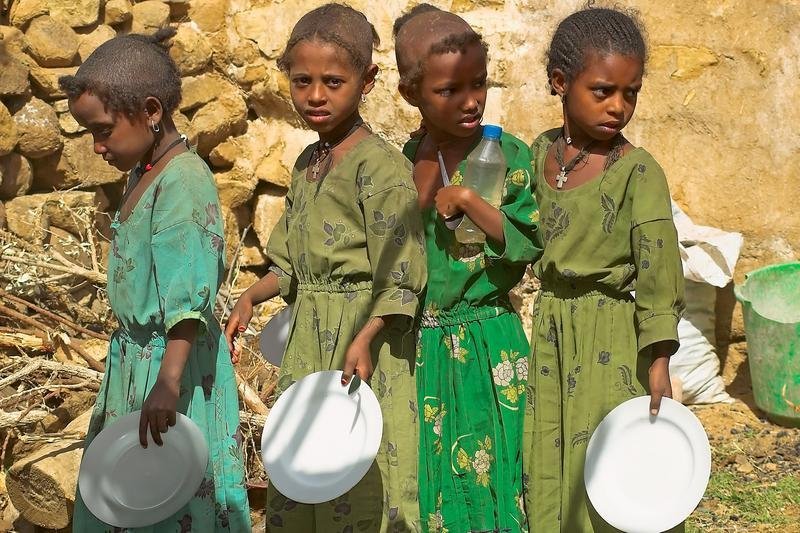
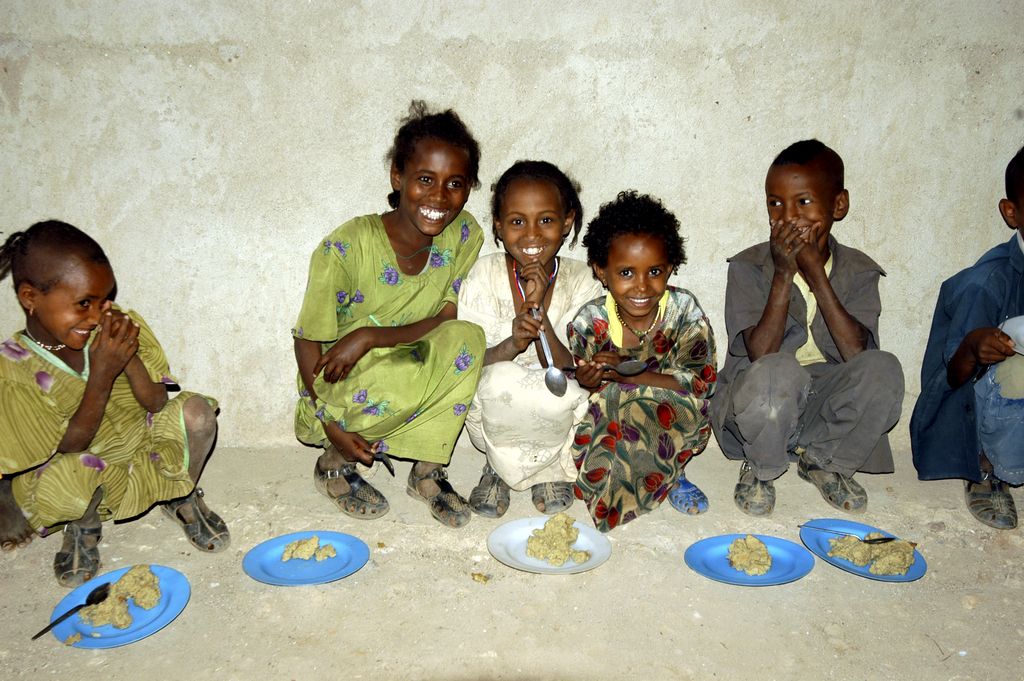
WFP operates two core programs in Ethiopia: Food for Assets and School Meals. The Food for Assets operation currently reaches an average of 1.3 million beneficiaries in 600 different communities each year. It focuses on managing environmental resources to increase food productivity in food-insecure communities. The school meals operation focuses on a community based approach to support both formal education and to develop schools into community resource centers that will promote good nutrition and environmental awareness.
WFP has responded to drought and floods with relief food distributions on a large scale. Yet, current funding and in-country food stocks in Ethiopia are inadequate to respond to the humanitarian needs.
In order to continue these programs and provide for those severely affected by the recent droughts, WFP needs further financial support. Generous, caring individuals like you enable those affected by the drought to survive and recover with WFP’s assistance. Thank you for your support!
Project reports on GlobalGiving are posted directly to globalgiving.org by Project Leaders as they are completed, generally every 3-4 months. To protect the integrity of these documents, GlobalGiving does not alter them; therefore you may find some language or formatting issues.
If you donate to this project or have donated to this project, you can receive an email when this project posts a report. You can also subscribe for reports without donating.