The SUSTAINABLE RURAL ENERGY DEVELOPMENT IN PERU project has installed photovoltaic systems for community services in 8 communities. 15 solar-power systems were installed, as follows: 8 in schools, 4 in community buildings and 3 in health clinics. The Pico Hydro system is in construction and will provide domestic energy for 30 homes, 2 educational centers, a health clinic and a community site, among other uses.
The photovoltaic systems will be managed by local organizations in each community, which are receiving administration, operation and maintenance training. The Pico Hydro system will be managed by an organized and
formally incorporated community-based micro-company, the managers of which will also be trained to run, operate and maintain the system.
THE COMMUNITIES
The communities were identified in accordance with the participatory budgets defined each year by the district municipality after consulting with representatives of the civil society. The list of communities included in the project appears in the following table:
Solar panels:
Shulalapa: school, community building
La Tranca: school, health clinic
Indoamérica: school, health clinic
Santa Lucía: school, health clinic
San Francisco: school, community building
Pampa La Quinua: school, community building
Nuevo Paraíso: school
San Pedro: school
Pico hydroelectic installation: Balcones
During this phase of the project, we are working with 9 villages. The full program consists of 20 villages, thus funds are still being raised for the remaining 11 villages.
ACTIVITIES
The activities carried out during the first stage of the project are detailed below:
An agreement to operate and implement the project was signed between the Municipality of Chirinos and participating NGOs, including commitments by both parties to implement the activities successfully.
Meetings were held with the Mayor and officials of the Municipality of Chirinos and representatives of the communities proposed in the project.
At these meetings, agreements were reached to prioritize the communities,as well as the community services that will have access to electricity in each community.
Visits were made to the 9 communities involved in the project, obtaining the necessary information to determine the existing resources in each community, their energy requirements and details of the location of community buildings, in order to draw up the technical design for each system.
The local people were informed of the benefits, potential and limitations of the use of renewable energies for isolated areas, particularly solar photovoltaic energy and Pico hydroelectric energy.
Technical designs were made of 15 photovoltaic systems for 8 communities, considering the energy requirements in each place. Materials and equipment were selected, considering the sustainability of the installation, maintenance facilities, accessible costs and stocks of
spares in the local market.
Quotations were obtained and purchases were made of the equipment for the photovoltaic systems to be implemented in 8 communities.
The technical design for the Pico hydro system for the Balcones community was prepared and pre-construction survey was carried out in order to start the civil works.
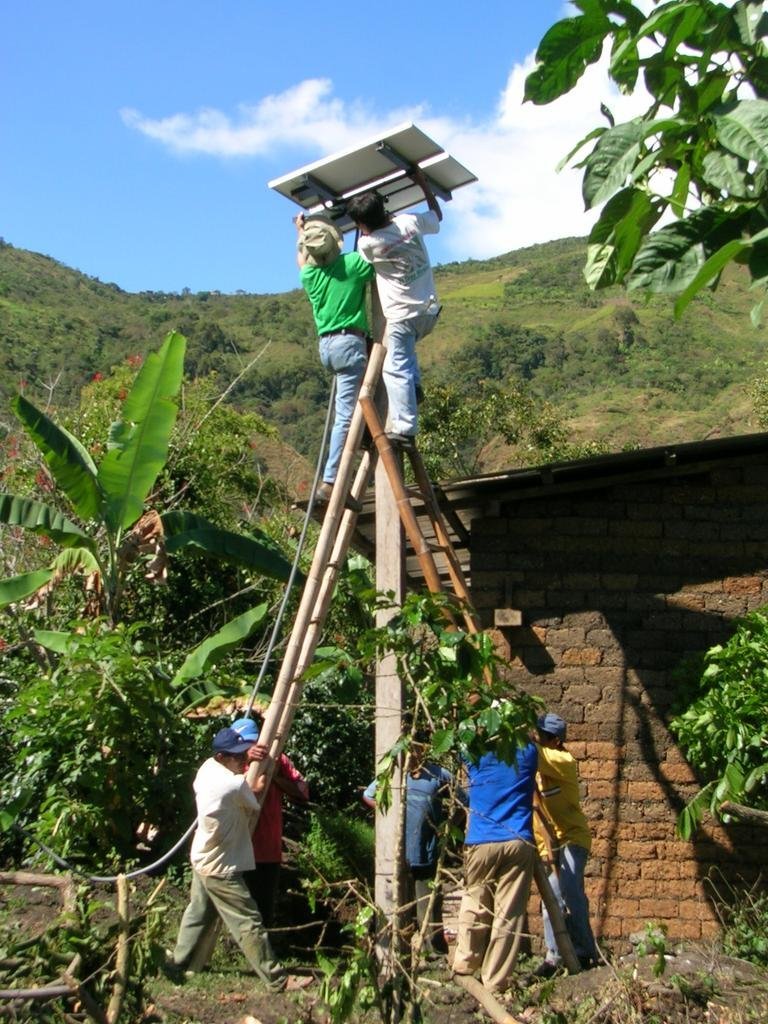
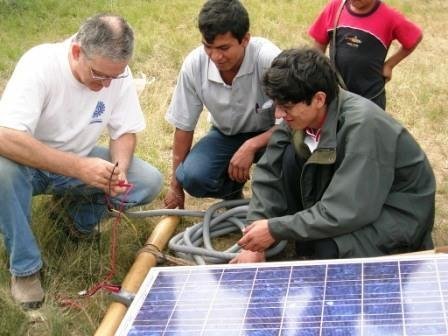
15 solar modules were installed, as follows: 8 in schools, 4 in community buildings and 3 in health clinics. The Pico Hydro system is under construction to provide domestic energy for 30 homes, 2 educational centers, a health clinic and a community site.
In each of the 9 villages in this phase of the project, Community Committees have been elected and organized to administer the project at the community
level.
Links:
![Share on Twitter]()
![Share on Facebook]()