Index of Updates from the Field
Your gift helped during lean season
By Karen Sendelback - President & CEO, August 14, 2008 01:01 PM
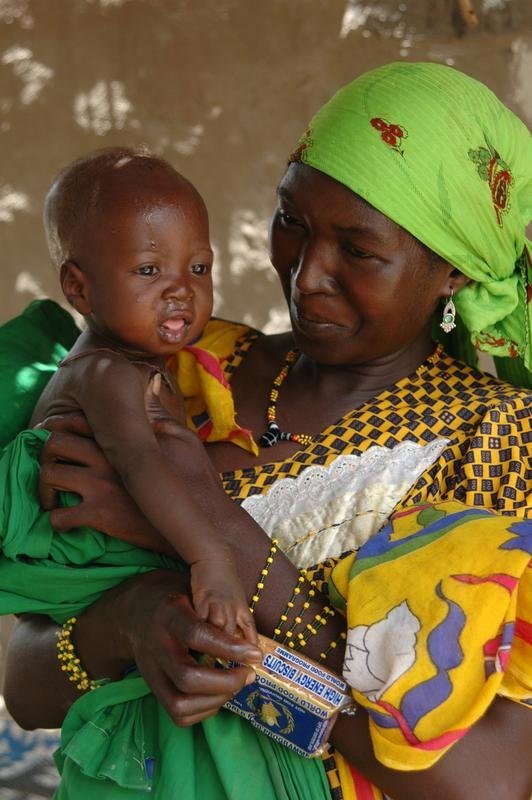
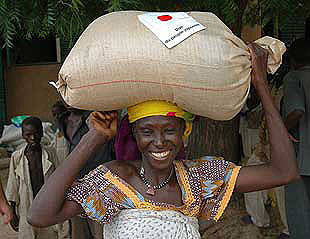
Fatouma is a widow and mother of two who receives assistance from World Food Program (WFP) cereal (grain) banks. “When my family’s cereal stocks ran out, I was able to purchase cereals from the bank at moderate prices,” says Fatouma. Towards the end of the lean season when all of her financial resources were exhausted, she was then also able to purchase cereal on credit which she hopes to pay back with her next harvest. “I am glad the cereal bank was there for me and my family when we needed it the most.”
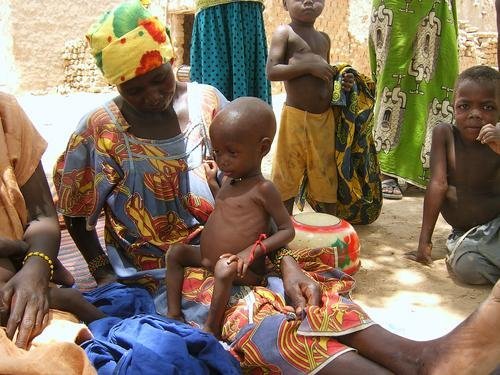
Over 70 percent of Niger’s 13 million inhabitants live below the poverty line and are suffering greatly under the impact of the current global food crisis, just as Fatouma has. The country’s weak economy is almost entirely fueled by agriculture, which is constantly hindered by drought and locust invasion. Nearly 44 percent of children experience chronic malnutrition and one in five children in Niger does not live to see their fifth birthday.
World Food Program assistance in Niger is designed to address the root causes of poverty by promoting rural development and increasing education rates, while also responding to immediate relief needs, such as the treatment of children suffering from malnutrition. WFP supports several programs in Niger including food-for-training and food-for-work (FFW) projects to increase independent food production.
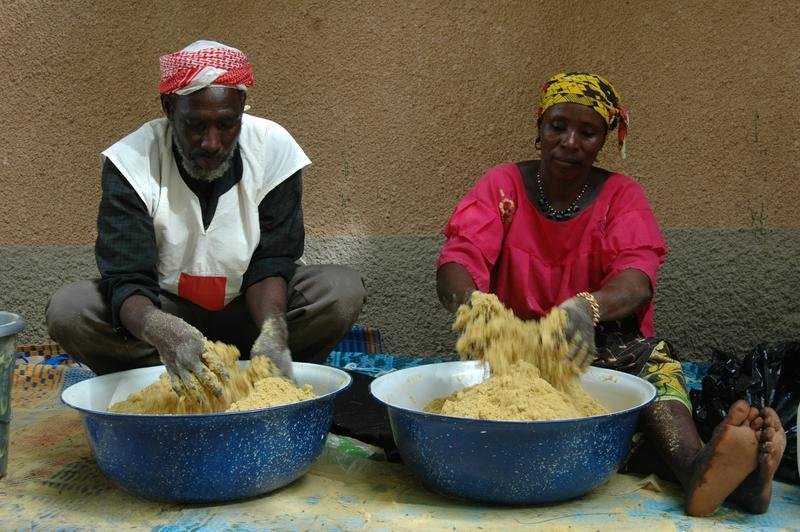
But, recently, WFP has given special attention to the impact of the global food crisis in Niger. The price of rice in Niger has risen 51 percent compared to the price average over the past five years. The increase in cost of other similar items is of particular concern to the people of Niger as grain serves as a staple of the local diet. WFP is working to combat this growing issue by setting up village-level cereal banks to ensure the availability of grain at reasonable prices. This program allows families to afford the food they need when they need it and has significantly softened the blow of the global food crisis on Nigeriens.
WFP Niger is assisting about 1.3 million people this year and plans to maintain this level of service, if not increase it, but has further financial needs to continue improving the quality of nutrition for Niger’s vulnerable populations throughout 2008. Your contribution has had an important impact on allowing Friends of the World Food Program assist WFP in initiating vital projects like village-level cereal banks, which have saved countless lives. Thank you for your continued support.
As Food Prices Skyrocket, Help Us Keep Feeding!
By Karen Sendelback - President and CEO, March 26, 2008 11:34 AM
Hello GlobalGiving donors,
Thank you so much for your incredible support of our "Fight child hunger in Niger" project. Your generosity has put us well on our way to raising our goal of $50,000 to feed the children in Niger who rely on us – in fact, we are over halfway there!
I’d like to update you on the current status of our global hunger relief efforts. As you may already know, food and fuel prices around the world have soared in recent months. For this reason, the World Food Program (WFP) is now facing a $500 million shortfall.
Record level food and fuel prices, combined with climate change and decreasing food stocks, have created a so-called ‘perfect storm’: hunger is hitting the most vulnerable harder than ever and our ability to assist them is weaker than ever.
Food rations may soon be drastically reduced without additional funds. This means that children currently relying on WFP for their one hot meal a day may be forced to go without. WFP needs your help now to continue to reach those most at risk.
Josette Sheeran, WFP Executive Director, explains that “Of particular concern is the emergence of what I call the new face of hunger – hunger characterized by markets full of food with scores of people simply unable to afford it.”
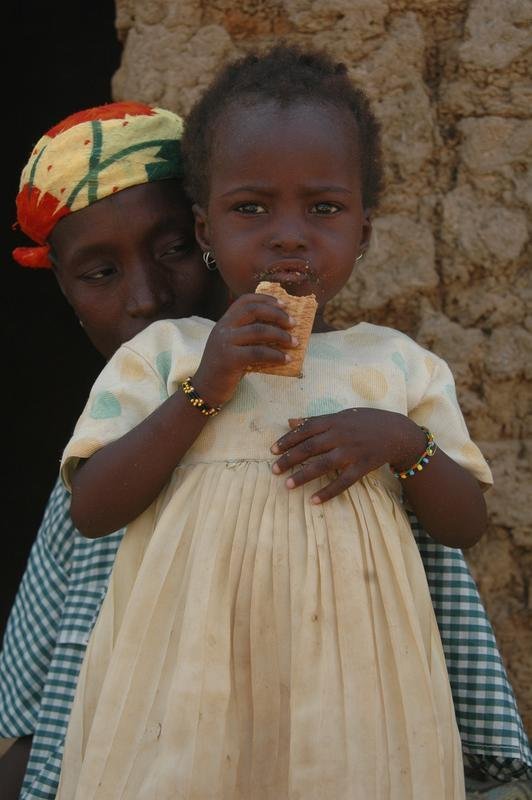
Just as demands are increasing, WFP is able to purchase much less than it could even six months ago for the same contribution. But we cannot be discouraged by these challenges. Remember that for just 25 cents, WFP can provide a meal to a child in school. The World Food Program appreciates your ongoing support to help us continue to save lives and provide hope to those who need it most. Any additional gift you can give will help us reach even more children.
Thank you so much!
Sincerely,
Karen Sendelback President and CEO Friends of the World Food Program
Attachments:
Hot meals entice Niger's children into schools
By Marcus Prior - World Food Programme, November 26, 2007 05:48 PM
Hot Meals Entice Niger's Nomadic Children into Schools - A story from the field.
Akarana, Niger - The wandering lifestyle of Niger's nomads need not rule out a steady education for their children thanks to WFP's school feeding programme. Marcus Prior reports.
“You do know it’s not term time?” asked my colleague Nafiou Issiaka as we piled into cars at the WFP office in Tahoua.
Not term time? Not term time?!
How on earth were we supposed to show our French journalist visitor the dramatic impact on attendance rates and learning of WFP’s school feeding programme in Niger if there were no students at all at school? What were we going to show him? An empty classroom and a disused kitchen? My heart sank.
But the primary school at Akarana, a tiny hamlet of mud and straw dwellings set in a sea of sand some 60 kilometres off the nearest decent road, was unlike any other I had visited.
As we arrived, a crowd of children lined up to one side of the car, all screaming ‘PAM!* PAM! PAM!" and clapping their hands in welcome.
School, it seemed, was very much in. Except it was out.
Akarana is a school for the children of families who continue to pursue a life of nomadic pastoralism.
For nine months of the year, the children are quite literally left behind to attend school, while their parents attend to the business of managing their livestock, often many hundreds of miles away in the bush.
During the long holidays, the pupils rejoin their family in their nomadic existence.
Even the head, Abdullahi Hamed Ibrahim, profits every year from the three-month break to gather his own family together on camel and horseback and venture out into the desert to join his wandering brothers.
We arrived during the Easter school holiday, but at least 60 of the 133 students were still being looked after by the head and his small team.
A rudimentary dormitory was home to those who were not housed with local families.
Almost half the students are girls and all pupils wanting to go on to secondary education were successful in their exams.
A proper education is clearly highly prized within the community.
Crucially, parents are able to leave their children at Akarana for lengthy periods for one reason, and one reason alone – WFP provides the school with enough food to ensure three hot meals per day to every child, term-time or not.
For the nomads, if there were no school meals for their children, there would be no schools.
“All the food we distribute here comes from WFP,” said the head, pointing out spoons, plates and two large cooking vats which are also provided by the organisation.
The children wolfed down their lunch before gathering under the shade of the schoolyard trees to play traditional games of ‘catch’ using small stones or simply to idle the time away.
It was the holidays and everyone seemed content. But Akarana is poor – very poor.
Last year the villagers received a general distribution of food from WFP because they had been driven right to the edge by the impact of drought and the locust invasions of 2004 which left their traditional grazing lands stripped bare.
Cattle and other livestock simply keeled over and died.
Prices on the market for their enfeebled animals plummeted.
The distribution was a welcome answer to their prayers.
This year, with pasture more plentiful, their animals are stronger and likely to fetch a better price on the market.
The villagers remain very concerned that the hunger season will again be tough, but they are more confident about prospects than at the same time last year.
Amidst the annual struggle to make ends meet, the school at Akarana is a symbol of hope; a starting point from which education and knowledge offer the best chance of escape from the cycle of poverty.
[PAM – Programme Alimentaire Mondial, the French title by which the World Food Programme is known in some countries.]
Attachments:
Niger Emergency Operation Report
By World Food Programme - Project organization, January 23, 2007 03:14 PM
In February 2005, the World Food Program (WFP) launched an Emergency Operation initially aimed at preventing vulnerable populations from sliding into a crisis situation. Supporting Niger’s National Mechanism for the Prevention and Management of Food Crises (DNPGCA), WFP provided food aid in a variety of ways. This included take-home rations for the families of malnourished children undergoing treatment in therapeutic feeding centers; food for nomadic herders; and rations to support Food for Work activities.
In July, as the DNPGCA’s stocks of food and funding dwindled, WFP expanded its operations to provide free food to households severely impacted by malnutrition. Principal WFP food aid activities are outlined below. To date, WFP’s Emergency Operation has provided food for nearly 3 million people.
Click below to read the complete report on WFP's work in Niger. Attachments:
|