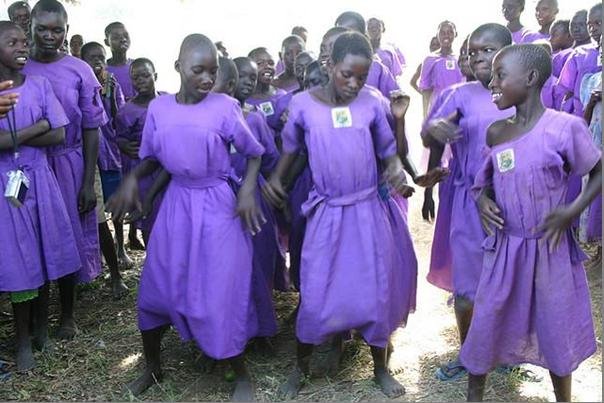
Affordable Sanitary Pads for 1500 Ugandan Girls
Summary
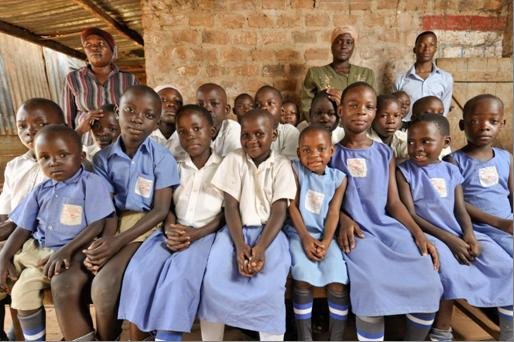
To develop sustainable production of locally produced eco-friendly sanitary pads, provide health education, latrines, washing facilities, and education to girls in Kabarole District, Uganda.
|
Actions
Printer Friendly
Add to Favorite Projects
Add to Registry
Add to Fundraiser
Subscribe to Email Updates
Subscribe to RSS Feed
Share & Save this Project
Spread the Word
Tell a Friend
Share on Facebook
Share on Twitter
Tag on del.icio.us
More Information About this Project
Project Needs and Beneficiaries
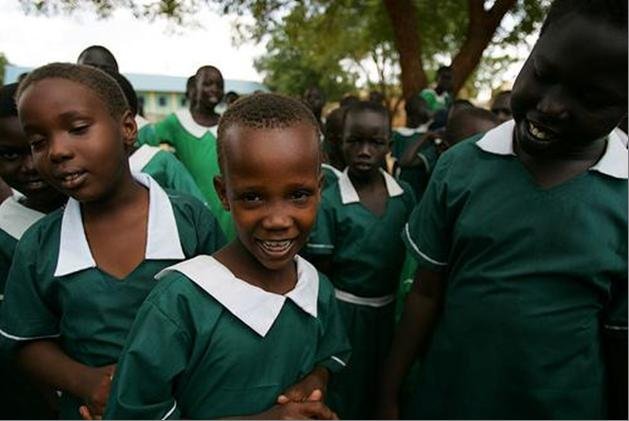
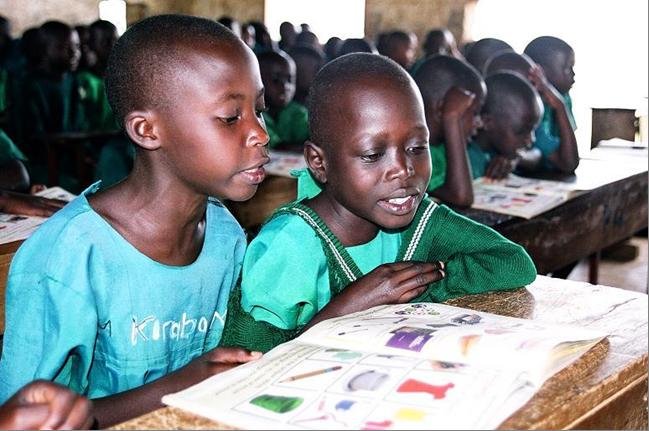
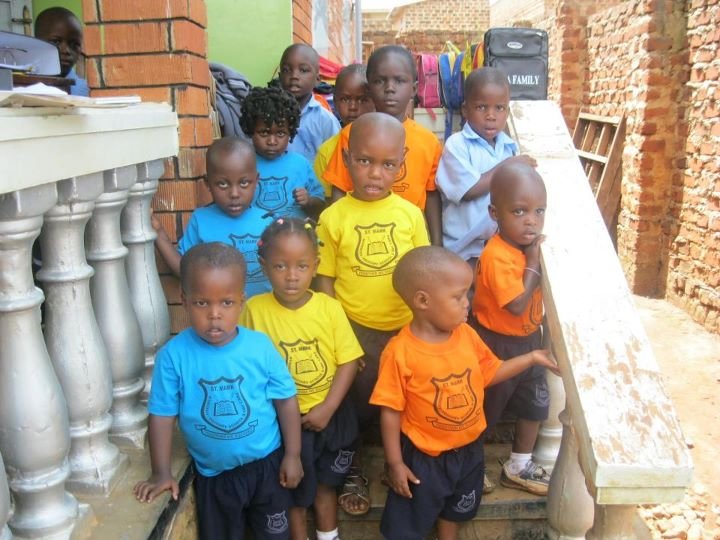
Many rural Ugandan girls drop out of school at puberty because of a lack of sanitary pads, teen pregnancy and early marriage. Only 38% of today's kindergarten girls in Uganda will complete primary school. Only 13% will attend secondary school. This project will improve access to education for poor rural girls in Kabarole District, Western Uganda through peer education programs, improved sanitation and the self-sustainable production of locally produced, ecologically friendly sanitary pads.
Activities
We will keep girls in school which in turn will affect the entire community through local production of cheap, ecologically sound sanitary pads, training to student to act as peer leaders about reproductive health, and much more.
Funding Information
Total Funding Received to Date: $38,010
Remaining Goal to be Funded: $161,990
Total Funding Goal: $200,000
Additional Documentation
This project has provided additional documentation in a PDF file (projdoc.pdf).

Resources
- Project's External Homepage (http://www.kasiisiproject.org/KPGirlSupport/KP_Girls_Support_Program.html)
- Kasiisi Project (http://www.kasiisiproject.org/)
- Kasiisi Girls Support Programs (http://www.kasiisiproject.org/KPGirlSupport/KP_Girls_Support_Program.html)
- Peer Education Video (http://www.youtube.com/watch?v=FoKyF6G6VIM)
- MakaPads (http://www.t4tafrica.com/Page1Pads.html)
Why this Project is Important
Potential Long Term Impact
This project will provide 1500 Ugandan girls with a sustainable source of affordable sanitary pads, accessible knowledge about reproductive health, and facilities at school to keep them in school for a healthy and prosperous future for the community.
Project Message
"At my school giving girls free pads and good information so they understand their bodies has greatly reduced absenteeism. They can now perform as well as the boys and are very happy."
- Lydiah Elizabeth Kasenene, Principal, Kasiisi Primary School, Uganda
Who is Running This Project
Contact
Alice Bator
Kasiisi Project Vanderbilt Co-Director
78 School Street
Weston, MA 02493
United States
1-781-454-9811
Email:
Project Sponsor
Organization
The Kasiisi Project (Girls Support Program)
64 Linnaean St.
Cambridge,
MA
02138
United States
671 493 5775
http://www.kasiisiproject.org/KPGirlSupport/KP_Girls_Support_Program.html
Where this Project is Located
Country
This project is located in
Uganda
and can also be found under
Women and Girls.
For more information about Uganda, read the Human Development Report on Uganda or the Wikipedia entry for Uganda.
When this Project was Updated
Last Updated
This project was last updated on September 30, 2009.
Date Added to GlobalGiving
This project was added to the GlobalGiving project catalog on April 13, 2009
Latest Update from the Field
Next Steps...
By Alice Bator - Kasiisi Girls Support, September 28, 2009 02:16 PM
***
Check out the attached report from this summer's work
***
Here's a sample of some of the questions girls asked me during small group meetings. The girls in P5 – P 7 (4th grade – 6th grade) asked a ton of really valuable questions. Some were alarmingly false (the first one for example…) and others were remarkably intelligent and based in a good understanding of STDs, hygiene, sexual behaviors, and relationships.
Q: Is it true that if I don’t play sex by the time I’m 17 years old I will develop a bone in my private part and never be able to have children?
Q: Why do girls get their menstrual period and boys do not?
Q: What are the signs of Chlamydia?
Q: If someone with HIV coughs on me, can I get it?
Q: Can I share clothing with someone with HIV, or will I get HIV?
Q: How can I make my breasts develop? Does playing sex make them come faster?
Q: How can I best protect myself against STDs?
Q: If someone has HIV, what is a good way for them to eat to stay healthy?
Q: How can I help a girl who has a habit of playing sex with boys?
Q: I only have one pair of knickers and I have to walk to school when I have my menstrual period. I do not have pads at home and by the time I get to school my knickers are spoiled and then I have nothing to wear with my pad. What should I do?
Q: I live with my uncle and I am ashamed to ask him to buy me a pair of knickers. What should I do?
Q: Are there condoms for primary students even though we are told we have to abstain?
Q: My school gives me pads, but what do I do when I go to secondary school. I cannot afford to buy one for myself.
Q: Is it normal to get my period for more than 3 days?
Q: If I count the number of reeds on my wall can I decide how many days I will get my period?
Q: Is it ok to sit in the sun when I have my menstrual period?
*****
Check out the attached "New Project Document" and pay particular attention to our updated budget.
Here's a brief annotation of the first year budget:
Program Supervisor will ensure accountability on the ground and will provide communication and transparency.
Motorbike will provide transportation for the supervisor to travel between schools.
Imported sanitary pads and underwear are important as the girls reported having insufficient pads and having one (if any) pair of underwear. The imported pads will begin to be phased out as the MakaPad plant takes form (most realistically 5 years out)
Peer Education and teaching aids will continually increase the human capitol within these schools and develop further the knowledge based education.
The trained peer educators reported a urgent need to show videos on sexual health to their peers. They reported that their peers occasionally doubt the validity of the information, so the leaders believe that showing films they saw during training workshops will give increase accountability. (Thus the projector, generator, screen, batteries and Rutooro language films).
Girl-Friendly latrines are important because they provide a private place for girls as to avoid the embarrassment the girls report in co-ed latrines.
****
Again, thank you thank you thank you for your continued support.
Best Wishes!
Links:
Pictures:
Attachments:
Want to support this project's continued work? 
Read 3 more "Updates from the Field"
Subscribe to "Updates from the Field" by E-Mail
Subscribe to RSS Feed


Uganda
Women and Girls