In Uganda, each year an estimated 6,000 women and 35,000 infants die each year from childbirth related complications. Access to skilled health care and appropriate technologies can save many lives. But in many countries, the difference between life and death for many dependent depends upon reliable light and electricity. Without that, health workers cannot provide life-saving care. Midwives struggle to deliver babies by candlelight, life-saving procedures are attempted by flashlight, and patients suffer delays in care or are turned away from health centers unable to function in darkness.
We Care Solar is gearing up for our Saving Lives at Birth Grand Challenge Grant installation in Uganda. This project will cover an entire region of Southwest Uganda, providing Solar Suitcases to 200 health facilities. Additionally, it provides an innovative package of interventions to improve service delivery, including a fetal Doppler to detect fetal well-being, phone charging to enhance patient referrals, an electronic learning curriculum for nurses, and an electronic health management information system, and community-based awareness campaigns.
Hospital power outages in Uganda are not an unusual occurrence. “There are so many stories about the power going off in operations, I can’t even tell them all, ” bemoaned Dr. Kato from Iganga hospital. “When the power goes off during an operation, we use whatever is around – a torch. This is very stressful during an operation, and the light is not sufficient, but this is all we had.”
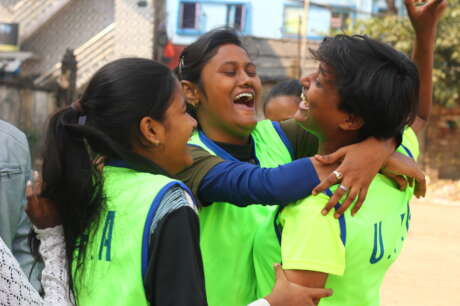
In preparation for the Saving Lives at Birth grant and other installation requests, 14 women from the US, India, Africa, and Mexico joined We Care Solar in Berkeley, California in October for a six-day training in Solar Energy, Maternal Health and Solar Suitcase installations. They wired a Solar Suitcase, climbed on rooftops, learned to fix broken solar electric systems, and practiced teaching medical providers to use the Solar Suitcase.
Links:

We Care Solar founders Hal Aronson and Laura Stachel are working in Uganda conducting Solar Suitcase trainings and working with the community to install 19 suitcases in maternal heath centers. The team has met with midwives who talk about how much the Solar Suitcase has improved their deliveries, and surgeons who tell us that many tragedies have been averted by using the Solar Suitcase-powered LED lights. This current Uganda program is conducted in partnership with AMREF Uganda and Safe Mothers Safe Babies.
And more good news, We Care Solar along with partners AMREF Uganda and The White Ribbon Alliance for Safe Motherhood, won a Saving Lives at Birth Grand Challenges Award in Seattle. This award will help fund a project to bring Solar Suitcases to 200 health facilities in Southwest Uganda. The partnership was also named the winner of the Peer Choice Award, which is given to "the innovator who best demonstrated innovative thinking and having the greatest potential for transformational change as chosen by the Saving Lives at Birth finalists."

In January 2012, the Sierra Leone Ministry of Health and Sanitation and UNFPA invited We Care Solar to Sierra Leone. We Care Solar brought a team to conduct a pilot project - installing seven Solar Suitcases in rural health facilities throughout the country. The trip was coordinated by midwife Isha Daramy-Kabia (Friends of Maternity Hospitals) and the We Care team included We Care Co-founder and Executive Director Laura Stachel, MD, MPH; Solar Energy International electrician and educator, Carol Weis; and documentary filmmaker Lisa Russell.
Sierra Leone has some of the poorest health indicators in the world. The most recent DHS survey (SLDHS, 2008) reports a maternal mortality ratio of 857 per 100,000, an infant mortality rate of 89 per 1000 live births, and a newborn mortality rate of 36 per 1000 live births. Most of the 1,200 rural health centers in Sierra Leone lack reliable electricity, making it difficult to deliver critical services- particularly at night. On several occasions our team was greeted by communities who showed their excitement about the Solar Suitcase by singing and dancing, inventing lyrics about our mission. “Welcome!” they chanted in Krio. “You have brought light. Now we can get treatment.”
On this trip, We Care demonstrated that rural health workers can quickly learn basic solar electricity, that a rugged entry-level solar electric system can be easily installed in remote health centers, and that communities can become instant partners in our efforts to reduce energy poverty and promote safe motherhood. But this is just the beginning…and we hope that one day we will fulfill Isha’s dream to ensure that all the labor rooms in Sierra Leone have reliable lighting.
Links: