Just over a year after the launch of the uprising that toppled late Libyan ruler Muammar Gaddafi last August, problems of displacement remain in the North African country while the stream of people from sub-Saharan Africa arriving in Libya on mixed migration routes to Europe is picking up again. Some are refugees and asylum-seekers from countries such as Somalia, Eritrea and Sudan. Emmanuel Gignac arrived in Tripoli last September to head UNHCR office, resume operations and consolidate the agency's presence in the eastern city of Benghazi. UNHCR is waiting to establish a formal agreement with the new authorities, but there are many challenges to tackle, including helping refugees, returnees, the internally displaced and people at risk of statelessness. Gignac talked to UNHCR Web Editor Leo Dobbs in Tripoli about these issues. Excerpts from the interview:
What has been the main focus of UNHCR's work in Libya?
We have been very busy with the [internally] displaced people and third country nationals stranded in the country. That kept us preoccupied until December. Regarding the refugees, we have progressively resumed our activities. We have also been very busy with the Somalis [arriving in Libya on mixed migration routes], who are not yet recognized as refugees because we haven't resumed refugee status determination. And we haven't resumed registration documentation issuance because we're waiting to get our agreement with the authorities. We would like to work directly with the new Libyan authorities [Ministry of Foreign Affairs, Ministry of Interior] and see how we can assist in finding solutions for refugees.
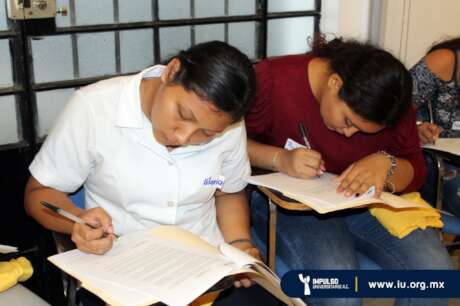
We are also conducting, through universities, through civil society, sensitization sessions on refugee law, on UNHCR. This is an important area.
What about the refugees?
We have presently registered in our database 9,400 refugees and asylum-seekers. [These people were registered prior to last year's uprising]. The refugees account for about 6,600, while the remaining 2,700 are asylum-seekers. The majority are still here, most of them in Tripoli. Some are in Misrata, some are in Benghazi. From an initial total of 10,600 registered people of concern, some 1,200 left Libya during the uprising and were registered at Choucha camp in Tunisia or Sallum in Egypt.
The largest group of registered refugees is the Iraqis, followed by the Palestinians. Then come Eritreans, Sudanese and Somalis. I believe most of the Iraqis came during [President] Saddam Hussein's rule; we're talking about 3,100 refugees and asylum-seekers. The Palestinians are officially the second largest group, with 2,700, but reports say there could be up to 40,000.
We stopped doing new registrations in June 2010. A crisis arose when the government at the time asked UNHCR to leave the country. A high-level mission came from Geneva and they negotiated a new arrangement which meant we no longer registered, but just looked after the group of people we had already. We still lack an agreement with the authorities.
Read more at: http://www.unhcr.org/4f637acc6.html
Links:

This year is the 20th anniversary of the world's biggest refugee camp, Dadaab in north-eastern Kenya.
The UN High Commissioner for Refugees (UNHCR), which manages the Dadaab complex, set up the first camps there between October 1991 and June 1992. This followed a civil war in Somalia that in 1991 had culminated in the fall of Mogadishu and overthrow of the central government.
"The original intention was for the three Dadaab camps to host up to 90,000 people," said UNHCR spokesman Andrej Mahecic. "However today they host more than 463,000 refugees, including some 10,000 third-generation refugees born in Dadaab to refugee parents who were also born there."
During last year's famine in Somalia, arrival rates frequently exceeded 1,000 people a day. Around 30,000 arrived in June, 40,000 in July and 38,000 in August. This has placed additional strain on existing resources. Together with the local authorities and humanitarian agencies, UNHCR managed to address the influx by establishing reception centers and rapid response assistance for new arrivals.
"That Dadaab has been able to provide refuge for so many years and to so many people is thanks first and foremost to the Government and people of Kenya," the UNHCR spokesman said.
UNHCR, together with the Government of Kenya and working with other aid agencies has provided protection, shelter and humanitarian assistance, often under difficult and complex circumstances. Chronic overcrowding, risk of disease, and seasonal floods are among the challenges.
"On the occasion of this anniversary UNHCR is renewing its appeal to the international community to ensure continued support to the approximately 1 million Somali refugees in the region, and to Kenya and the other countries that are hosting them," Mahecic said.
A third of this refugee population left Somalia in 2011 in the face of crippling conditions of drought, famine, and violence.
The 20 years that have passed since the camps opened also underline the need for peace in Somalia, an end to the violence there, and the possibility of refugees being able to return home.
"UNHCR hopes that deliberations during the London Somalia Conference, which starts on February 23, will act as a catalyst for a permanent solution to the perennial issue of the Somali situation – something that UNHCR has long pressed for," the UNHCR spokesman said.
Currently, the situation at Dadaab is extremely challenging. The kidnapping of three aid workers last autumn and more recently, the killing of two refugee leaders and several Kenyan policemen, as well as threats against humanitarian staff have forced UNHCR and its partners to rethink the way that aid is delivered.
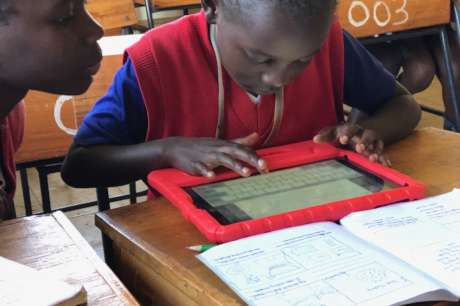
Since October and until recently, there were security restrictions on movement around the camp. However, life-saving assistance such as the provision of food, water and health care never stopped and has always been UNHCR's priority. In addition, schools run mostly by refugee teachers have been open and managed to conduct Kenyan national exams at the end of 2011 despite the insecure environment.
Since the end of last year, humanitarian actors have looked at various ways to resume activities, using different methodologies and most importantly, shifting more responsibilities to the refugee communities.
As such, the crisis also presents an opportunity to more actively empower refugees to manage the day-to-day aspects of camp life. This includes the engagement of youth in providing informal education to new arrivals in Kambioos, water committees coordinating and ensuring sufficient water per household, refugee reporters publishing their own newspaper, and women forming groups for livelihood opportunities for mothers.
Services in the areas of health, water and sanitation have also been scaled up. On a typical day, some 1,800 refugees now get outpatient treatment in hospitals and health posts in the camps. Service provision in Kambioos has also improved. However, UNHCR is still seeing new measles cases (11 in the last week) and is focusing on vaccinating all new arrivals over 30 years of age.
UNHCR teams are involved in protection and community-services work including carrying out regular protection monitoring and livelihoods projects. Refugee teachers are receiving training on child-centered approaches, classroom management and psycho-social support. Activities focused on youth, women and refugees with disabilities are running again.
Earlier this month, UNHCR also resumed the relocation of refugees from the less secure outskirts of Dagahaley camp to Ifo 2 camp, where they receive family tents and basic assistance and services. Some 2,000 refugees have been moved so far, with another 3,500 set to join them in the coming weeks. By the end of the exercise, the entire camp of Ifo 2, with a capacity for 80,000 people, will be filled.
More than 968,000 Somalis live as refugees in countries neighboring Somalia primarily in Kenya (520,000), Yemen (203,000) and Ethiopia (186,000). A third of them fled Somalia in the course of 2011. Another 1.3 million people are internally displaced within Somalia.
Links:

CHOUCHA CAMP, Tunisia, January 17 (UNHCR) – The UN Refugee Agency has helped resettle a group of 33 unaccompanied children who had spent months living in a special camp set up in Tunisia to provide shelter for people fleeing last year's political turmoil in neighboring Libya.
The children were among 90 who arrived unaccompanied from Libya during 2011. Some were already without parents when they first arrived in Libya; others lost their parents or became separated from them subsequently. Most are from Somalia, Sudan, Ethiopia or Eritrea.
They had been staying in Tunisia's Choucha camp, which is home to 3,400 refugees. The unaccompanied children have relied on help from friends and relatives, as well as local and international aid workers. In total, 39 of these 90 children have now been resettled – most to Norway, Sweden and Denmark.
"As they had formed strong bonds among each other, the departure has been painful for many of them –not least those still awaiting resettlement," UNHCR spokesman Adrian Edwards told reporters in Geneva. "Life at Choucha camp remains difficult, with windswept conditions and bitter cold. UNHCR and its partners hope that solutions can quickly be found for the unaccompanied children who remain there –as well as for the other refugees who await solutions."
UNHCR provides assistance at Choucha, works with the children and their communities to establish the best interests of each child, advocates for resettlement and submits cases to resettlement countries. The International Organization for Migration (IOM) provides child-friendly orientation and arranges transportation to new homes. It arranged the weekend flight to Norway.
Edwards stressed that UNHCR considers resettlement to be the only viable option for the majority of recognized refugees who fled Libya to Tunisia and Egypt last year. Both countries allowed hundreds of thousands of migrants to stay temporarily before being repatriated in a joint IOM-UNHCR operation. UNHCR and IOM have called upon states, especially European countries, to offer more resettlement places for the remaining refugees at the borders of Egypt and Tunisia.
UNHCR has completed refugee status determination for all 2,500 applicants in Choucha camp and 2,200 have been recognized as refugees. Together, with an additional 800 people who were recognized as refugees in Libya before the unrest of 2011, more than 3,000 refugees have been submitted for resettlement from the camp.
Meanwhile at Egypt's Saloum border crossing with Libya, around 1,400 people have been submitted for resettlement out of 1,830 there.
Resettlement referrals for both Choucha and Saloum have been submitted and accepted by Australia, Belgium, Canada, Denmark, Finland, Ireland, the Netherlands, Norway, Portugal, Sweden and the United States. Most recently, Germany, New Zealand and Spain have joined the resettlement effort by planning to send selection missions to the two camps.
UNHCR is calling on resettlement countries to expedite decisions on submissions. Currently only one out of five refugees submitted has been accepted, and only one out of six, or 731 refugees, has actually departed. UNHCR's emergency transit centers in Romania and Slovakia are providing crucial additional space for refugees to be interviewed for onward resettlement from both Tunisia and Egypt, notably to the United States and the Netherlands.
Links: