
The Lambi Fund of Haiti staff members recently visited projects throughout the country and met with grassroots partners to receive updates and to learn more about the daily challenges they are facing. One such memorable meeting was with the Saint Martin Youth Association for Community Development (AJSDC). This group, founded by youth members in the community, is doing fantastic work to increase economic opportunities in their area and to improve overall living conditions for its members.
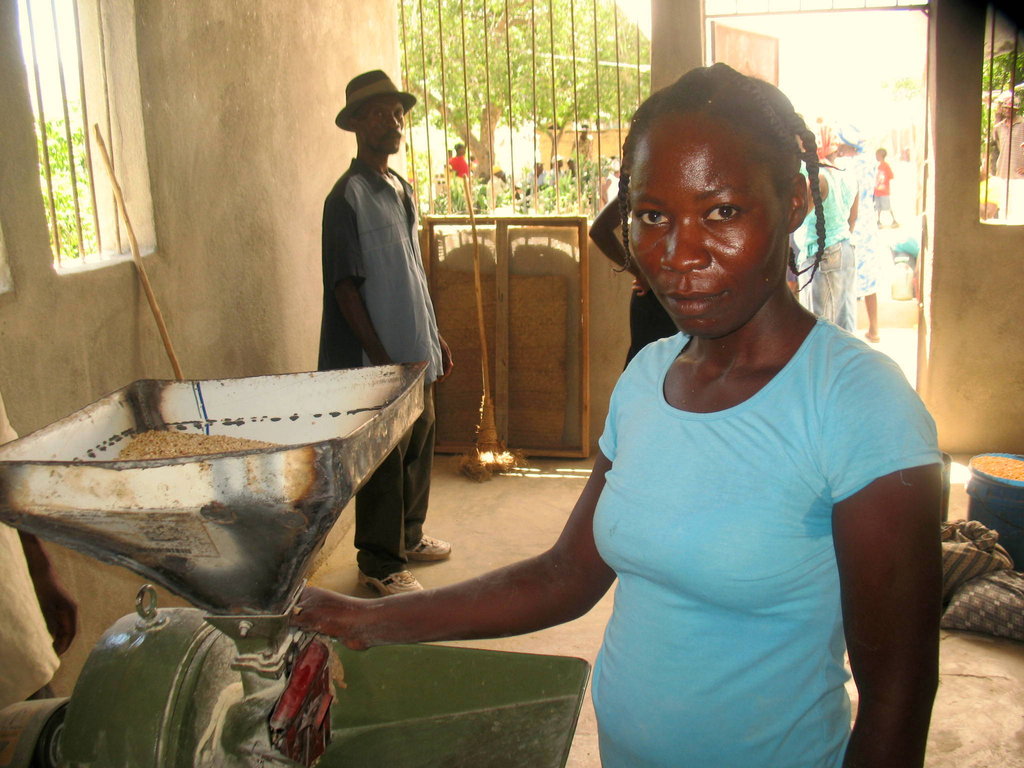
AJSDC partnered with Lambi Fund to build a grain mill in their community and one component of this project was building latrines adjacent to the mill. During this visit we had the opportunity to not only tour the grain mill, but to see the bright and shiny latrines out back!
While latrines may sound like the most glamorous addition to a project, these latrines are making a significant impact in the community. Before their installation, grain mill customers were left to "do their business" wherever they could find a bit of privacy. As you can imagine, this is both difficult and unsanitary. Now, the latrines are providing proper bathrooms to grain mill customers and the surrounding environment is cleaner and healthier - while cross-contamination with grains is now no longer a concern.
Mesi ampil for helping make these latrines a reality in AJSDC's community! Lambi Fund's work is not complete though as we have numerous locations that continue to require the installation of latrines and we hope that you continue to support these efforts.
Links:
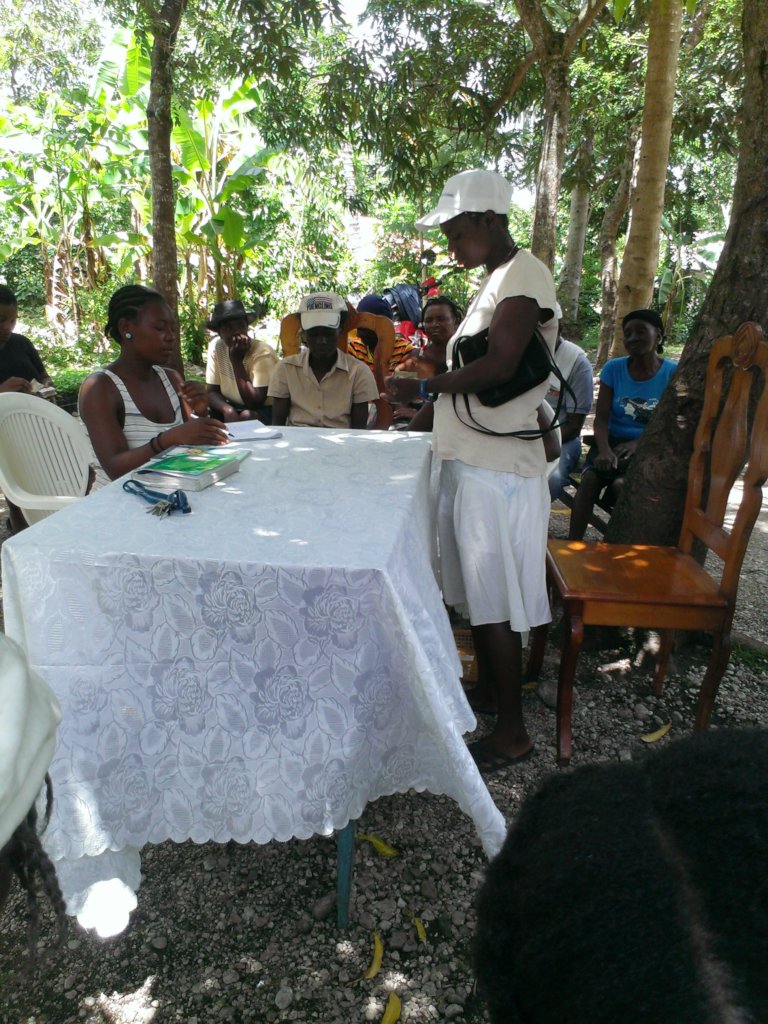
It was a warm, sunny day in Les Cayes, Haiti. The city was bustling with activity – merchants hustling to sell their merchandise, moto taxis weaving in and out of traffic and school children with their cleanly pressed uniforms walking to and from school. Amidst this hustle and bustle, representatives from 14 grassroots organizations throughout southern Haiti filed into an airy meeting room. They were there to discuss life since October with the Lambi Fund of Haiti.
Last October, just before Hurricane Sandy moved on to batter the eastern coast of the United States, the storm cycle hit Haiti with days of unrelenting rain. While the brunt of the storm sidestepped the island, rains pounded the South for four days straight, resulting in widespread crop damage and loss of livestock. Haiti's Ministry of Agriculture estimated that 70-90% of planted agricultural crops were lost, resulting in severe food security concerns.
With these dire prospects in mind, Lambi Fund field staff mobilized 14 grassroots organizations to assess damage and to determine how best to respond.
As a result, emergency relief grants were provided to each of the organizations to purchase seeds and fertilizers needed to replant crops, to repair damaged irrigation canals and to replace animals lost in the storm. Now, on this sunny day in late February, Lambi Fund staff met with representatives from each of these organizations to discuss the impact of these relief grants.
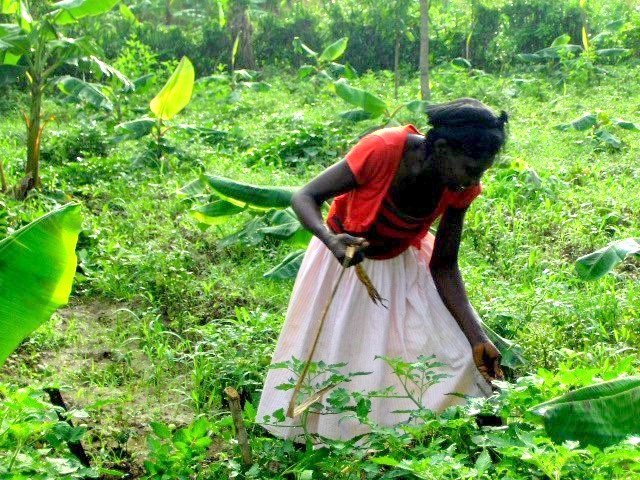
A member of AFDL explained, "The emergency relief was an opportunity for us. Sandy was during the planting season, so we weren't prepared to repair the land. With this money we re-tilled the land. We planted again. Now we have corn, nuts, and black beans… we have begun harvesting." Another said that, "Lambi Fund provided support to our members when they weren't sure how they were going to undo the mess of Sandy. They helped us replant and start again."
As Lambi Fund staff sat and listened while representatives shared with the group how the emergency relief grants were used, it quickly became apparent that several vulnerabilities were making it difficult for farmers to move forward.
As an elderly member of ODRO shared with the group, "I remember when I was young hurricanes really shook the country - they were a rarity. At the age of 25 I'd only experienced two hurricanes. Now, we have them almost every year. I can tell you that Haitians are not a lazy group of people. Unfortunately though, it seems that every year there is an event that shakes the country more and more. The rains, the sun, the cholera… every event in our country is a hurricane."
The most troublesome news was that it has not rained since Hurricane Sandy. At the time of the meeting, it had been four straight months without rainfall. A member of TK-Bedo said, "After every hurricane there is a major drought. The land is dry and hard." He continued on to explain that, "When there is rain, it is guaranteed to flood. In January, everyone was ready to plant, but there was no rain. We continue to wait and wait and the rain never comes."
One after another, grassroots leaders shared their woes regarding the drought. It seems that organizations located in areas near a river or with irrigation fared much better. Members were able to take the emergency relief grants, purchase seeds, make repairs and replant.
For those less fortunate organizations with no means to water their crops aside from rainfall, the outcomes were not as significant. Most were waiting to plant their crops until the rain arrived.
These types of circumstances are typical in Haiti. Living a life of poverty leaves Haitians open to numerous vulnerabilities. A degraded environment from years of deforestation leaves the soil devoid of nutrients essential for growing bountiful crops. Climate change is bringing unpredictable growing seasons and lowering crop yields. Farmers that lack access to irrigation canals and water pumps are at the mercy and unreliability of rainfall. High interest loans with untenable loan requirements tie hardworking Haitians to a never ending cycle of debt.
It is a compounding of circumstances like these that has lessened the overall impact of Lambi Fund's emergency relief. While the Lambi Fund of Haiti clearly would have desired to see more marked impacts, this meeting has required the organization to take a long, hard look at its efforts and realize that life in Haiti is changing. Each and every day life gets harder and the multitude of struggles that rural Haitians face continues to mount.
This hard reality is what makes Lambi Fund's partnerships with grassroots organizations so important. As an organization, Lambi Fund realizes that it will never have, nor should it have the capacity to address the myriad of issues that leave communities vulnerable and make development in Haiti difficult. It is in the face of these vulnerabilities, however, that Lambi Fund recognizes the ever present importance of communities uniting, working together and calling on the government to make changes that will benefit the greater whole of society.
This is why Lambi Fund's work to strengthen organizational capacities and teach civil rights is an irreplaceable part of its efforts. Providing communities with the tools they need to respond to changing needs, problem solve and advocate for change in their community will be an integral part to advancing Haitian's quality of life.
Take the Women's Organization of Jabwen (OFJ). Every year there is an event that shakes the country more and more. A member said, "At first, our husbands would always ask, ‘Why are you part of that organization? It takes up too much time.' Then we became partners with Lambi Fund [for goat breeding efforts] and they began to see our projects and the impact. Now our husbands will ask, ‘What are you doing home? Go to your meeting!' They see the value of our work and want to be organized too."
Organizations like OFJ are an exemplary model of what can be done when communities unite and go beyond the work of an individual. This group has gone beyond just this project to launch numerous efforts that are working to strengthen the community. When organizations like OFJ transcend unitary efforts to address a number of initiatives, the true power of being united is realized.
So, in the short-term, as communities continue to recover from the impacts of Hurricane Sandy, the true rebuilding continues as local organizations work to improve their communities and strengthen their voice.
Links:
Staff from the Lambi Fund of Haiti met with representatives from 14 grassroots organizations on February 25, 2013 in Les Cayes, Haiti to receive an update on Hurricane Sandy relief efforts. Following the immense flooding that led to widespread loss of crops and livestock, Lambi Fund mobilized to provide emergency relief grants to 14 affected organizations in Southern Haiti. These grants were used to help organization members that were the most adversely affected purchase new seeds, fertilizers and supplies to replant their crops. Funds were also used to repair irrigation canals and replace livestock that were lost in the storm.
Thanks to support from donors like you, Lambi Fund was able to swiftly provide partners with the resources they needed to recover. A member of the Women’s Organization of Jabwen explained that, “Following the storm, the peasant population thought we couldn’t stand up again - all was lost. Members were depressed and complaining about their circumstances. Everyone was wondering - what are we going to do? How will we move forward? The emergency funding gave the people a change to till our land and plant again. We worked together and plowed for other organizations and members in the community.”
Another recipient and member of the local organization AFDL shared that, “Before relief funding from Lambi Fund came, people weren’t sure when they could plant and harvest again. This was a major concern for everyone. The Lambi Fund of Haiti helped us till the land again…we have gardens again. The emergency relief was an opportunity for us. Hurricane Sandy came during planting season and we weren’t sure how we were going to repair the land. With Lambi Fund’s support, we re-tilled the land and planted again. Now we have corn, nuts, and black beans and harvesting has begun.”
Despite these successes, many organization members shared their struggles with the current drought. For most, it has not rained since the hurricane and this has made replanting and growing food near impossible. A member of Tet-Kole Bedo said, “We’re having a hurricane of sun now. The land is dry and hard – it is impossible to plant and difficult to grow feed for animal husbandry projects.” He continued on explaining, “In January everyone was ready to plant, but there was no rain. So we wait. We keep waiting for the rain to come.”
It is external circumstances like these that make farming in Haiti difficult. The environment and increasing unpredictability of precipitation leave impoverished farmers at the mercy of the land. Given these realities, Lambi Fund is working with organizations on capacity building so that they can work to address these vulnerabilities (through irrigation canals and mobile water pumps, for example). When organizations begin advocating and petitioning the government for policies that will benefit the community, it is then that key concerns begin to be resolved.
A member of OFJ explained the value of organizing best when she said, “At first, our husbands would always ask, ‘Why are you part of that organization? It takes up too much time.’ Then we received assistance from the Lambi Fund of Haiti [for goat breeding efforts] and they began to see our projects and the impact. Now our husbands will ask – ‘What are you doing home? Go to your meeting!’ They see the value of our work and want to be organized too.”
Links:

