Lifeline Energy

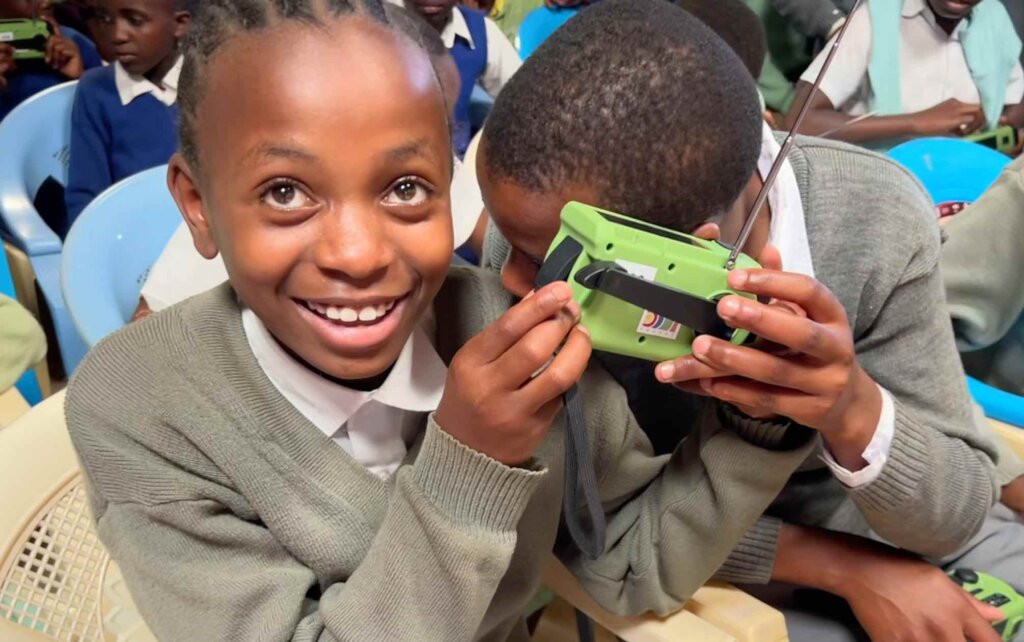
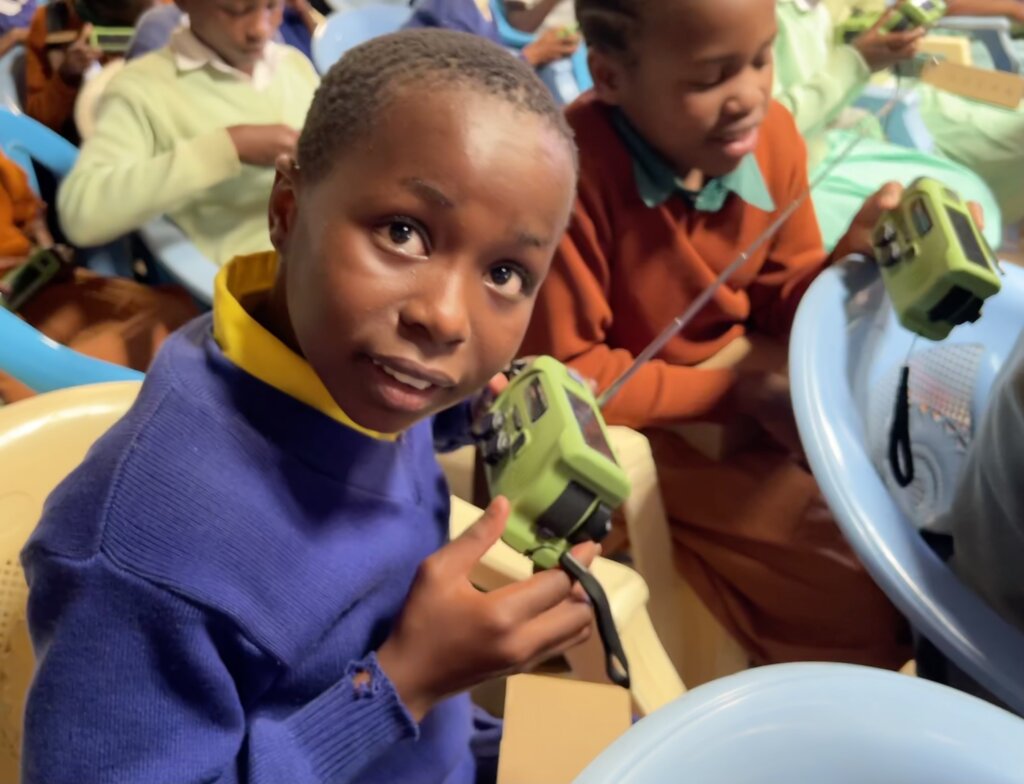
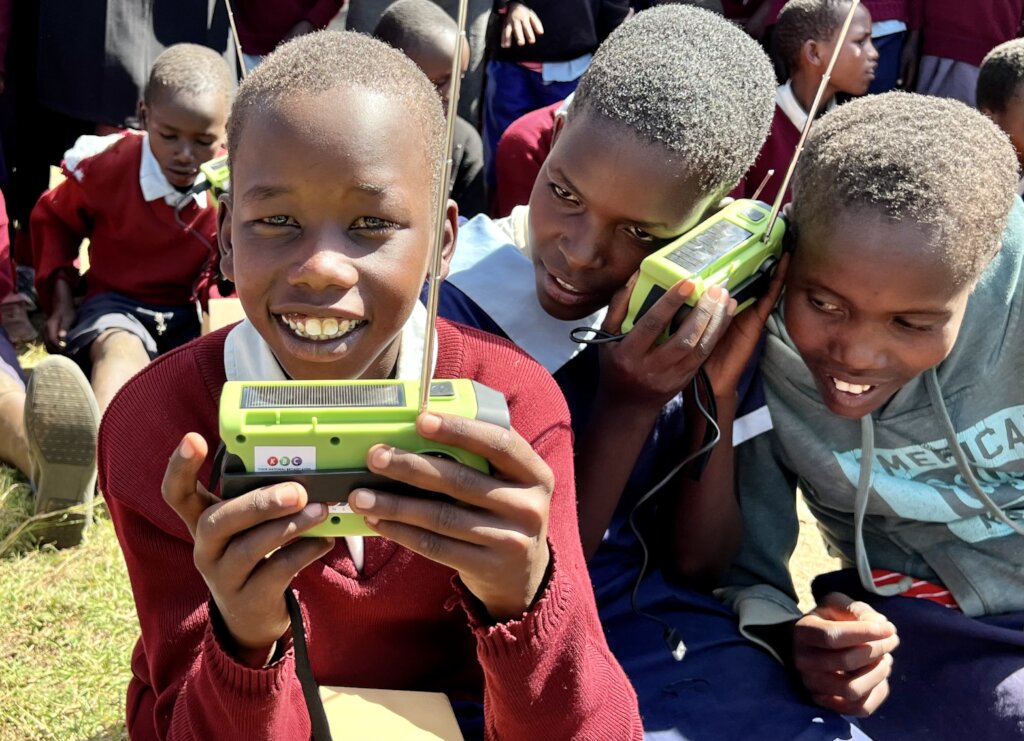
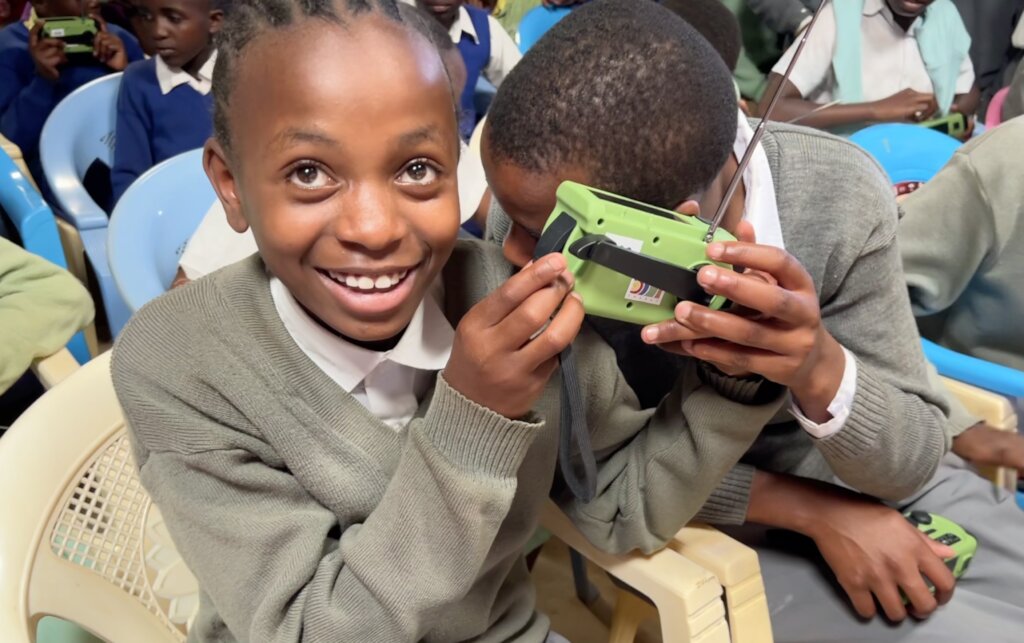
Lifeline Energy is a non-profit social enterprise that provides sustainable information and education access to vulnerable populations. We achieve this by designing, manufacturing and distributing solar and wind-up media players and radios for classroom and group listening. Since 1999, we have distributed more than 500,000 power independent radios to provide on-demand access to information and education, mainly in sub-Saharan Africa. Over the years we have received numerous awards including the Tech Museum of Innovation Award, a World Bank Development Marketplace Award and an Index: Design to Improve Life Award. In addition, our founder and CEO Kristine Pearson was named one of TIME magazi...
Jul 27, 2012

You've made an impact for women in Dadaab!

Dear Supporter

We can proudly announce that the radios and lights that our GlobalGiving supporters have donated are on route to Dadaab. We’d like to thank you for your generosity and compassion at a time when information access in the Dadaab camps is dire, especially for women. Thanks to you hundreds of women will finally be able to listen to critical and practical information about health, hygiene and female genital cutting, in addition to announcements, news and current events.

Only a fraction of women refugees have radio access and our solar and wind-up Prime radios will make a huge and lasting difference to them and the decisions they make.

In addition to the radios, a small number of Nokero solar lights are also being distributed to secondary school girls who have no means to study after dark. Nokero is a partner organisation of Lifeline Energy.

But we’re not going to stop here, and neither should you!

Tens of Thousands of women urgently need information access. That reality is closer than you think as a new radio station, Dadaab FM, has recently started broadcasting to the refugee population. The station will increase local content offerings in the Somali language and open up a world of possibilities.  

We will be working closely with the Lutheran World Federation (LWF), the agency appointed by the UNHCR to run the camps. LWF will take an active role in distributing of radios, to cultivate this promising radio station, as well as monitoring the women’s listening groups. Although nascent, Dadaab FM is keen to give women a key role in content creation and presentation. Somali women will have a voice and a say in what they learn and how they develop. But remember, this station is limited in its reach without listening access!

With the constant negative media reports about Somalis in general, it's increasingly difficult to fundraise for this high impact initiative supporting at-risk women. We are reaching out to our supporters to spread the word and help us to continue to assist Somali women refugees.  

Tweet your support with #Information4Dadaab.

Again, Lifeline Energy and the hundreds of women that you’ve helped thank you.  

Best wishes,

Uzma Sulaiman

Jul 2, 2012

A #ToangaMarket child's view on solar v batteries

Moon City Community School, Lusaka

When Lifeline Energy recently went to the Moon City community school in Lusaka we had the pleasure of meeting Sharon Banda, a remarkable 14-year old who told us how much she adored the Toanga Market programme. She explained how the radio distance initiative had given her an education and future. What struck us most of all was not only her love for education but also her admiration for solar-energy. 

When asked why solar and wind-up radios are important, she immediately responded: 

"We had a radio that needed batteries but when the battery went flat we didn’t have money to buy new ones. Now we have a new radio that doesn’t need batteries, so we won’t suffer and we can use it all the time."

Sharon is just one of close to 900,000 #ToangaMarket children. Tweet #ToangaMarket to show your support for this truly unique educational programme.  


Jun 26, 2012

Much more than mentor to Zambian children

Christopher Banda and Mwenya Mvula

Tall, well-spoken and smartly dressed in a grey blazer, Christopher Banda, 21, proudly tells me that he’s studying at a technical institute to become a procurement specialist.  He credits his academic devotion to his ‘teacher’, Mwenya Mvula and the solid primary school education that he received from the Learning at Taonga Market interactive radio instruction (IRI) programme.  The youngest of four children, he was raised in a Lusaka township by his mother, a domestic worker, who could not afford to send him to a government school. Despite primary education being free in Zambia, buying a uniform, books and other items were beyond her means.

Radio schools don’t require uniforms or books. Entering Taonga Market in Grade 3, Christopher said that learning for him was enjoyable and he still remembers the Taonga Market songs.  A field trip to the international airport that Mr Mvula organized made a lasting impression because he met a pilot who had seen the world. Christopher added that Mr Mvula inspired him to study hard and to reach for his dreams.

Mr Mvula is not a qualified teacher. He’s a volunteer ‘mentor’ who has been trained in IRI methodology which actively guides teachers and learners through lessons on the radio. As one of the first Taonga Market mentors who started in the programme more than a decade ago, he estimates that nearly 90% of his students have gone on to secondary school. This is an exceptional achievement as a significant number of children were orphaned.  Pupils in radio school, who at time learn under a tree, take the same exams as children in wealthier government schools.

I first met Mr Mvula in early 2007 when I visited community learning centres that used our radios.  Despite it being just a 20-minute drive from central Lusaka, the ongoing cost of batteries to power a radio was too expensive for this impoverished township. The electrical poles were visible in the background, but they didn’t light up this part of town. At that time one of his classes met in a one-room house; another assembled on the grass in front of a maize field. Now they have small, dedicated classrooms. His enthusiasm for the programme, his pride in his work, and his love for the children were as palpable then as they are today.

The 46-year old Mr Mvula grew up in Katete, a farming village near the Mozambique border. In 1991 he headed to Lusaka to seek a better life and where he married Monica.  They have six children and one grandchild.  Mrs Mvula makes and sells chipati bread and sweets along the side of the road. Although he tutors students in the afternoon to earn income, sometimes parents can only afford to pay with vegetables or a chicken.

Mr Mvula has encouraged hundreds of young learners over years to strive for their dreams.  He’s not giving up on his own dream either, to qualify as a teacher.

Support a Taonga Market classroom by donating a Prime radio! 

An anonymous donor will match all new monthly recurring donations, but only if 75% of donors upgrade to a recurring donation today.
Terms and conditions apply.
Make a monthly recurring donation on your credit card. You can cancel at any time.
Make a donation in honor or memory of:
What kind of card would you like to send?
How much would you like to donate?
gift Make this donation a gift, in honor of, or in memory of someone?

Reviews of Lifeline Energy

Great Nonprofits
Read and write reviews about Lifeline Energy on GreatNonProfits.org.
